


- Jul 2, 2018
- 3,680
 |
Headquarters |
 |
Sirius Building, Phillip, Australian Capital Territory |
Ministers |
| Office: | Officeholder: | Image: |
|---|---|---|
| Minister for Health | The Honourable Tanya Plibersek, MP | |
| Minister for Sport | The Honourable Kate Ellis, MP | |
| Assistant Minister for Health | The Honourable Mark Butler, MP | |
| Secretary of the Department of Health | Jane Halton, AO, PSM |  |
| Chief Medical Officer | Nicola Spurrier, PSM | 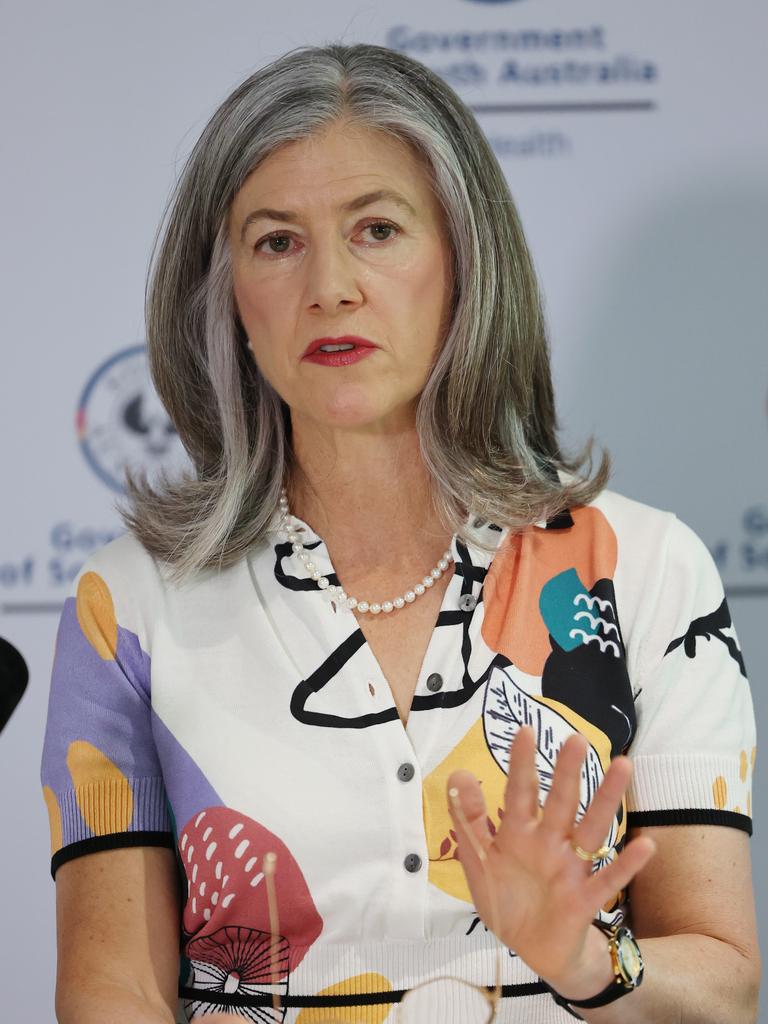 |
.png) |
Headquarters |
 |
Darwin International Airport, Eaton, Northern Territory |
Main Operating Base |
 |
Royal Darwin Hospital, Tiwi, Northern Territory |
Overview |
The National Critical Care and Trauma Response Centre (NCCTRC) provides clinical and academic leadership in disaster and trauma care. Based in Darwin, it has emergency medical response facilities, provides education and training, and has state-of-the-art research facilities. Strategically located in Darwin, it allows the Department of Health to rapidly respond to sudden health emergencies both onshore and offshore throughout the Asia-Pacific region. The NCCTRC can quickly deploy Australian Medical Assistance Teams (AUSMAT) to these areas when needed. The NCCTRC also:
|
Personnel |
| Type: | Amount: | Image: |
|---|---|---|
| Australian Medical Assistance Team Members | 700 | 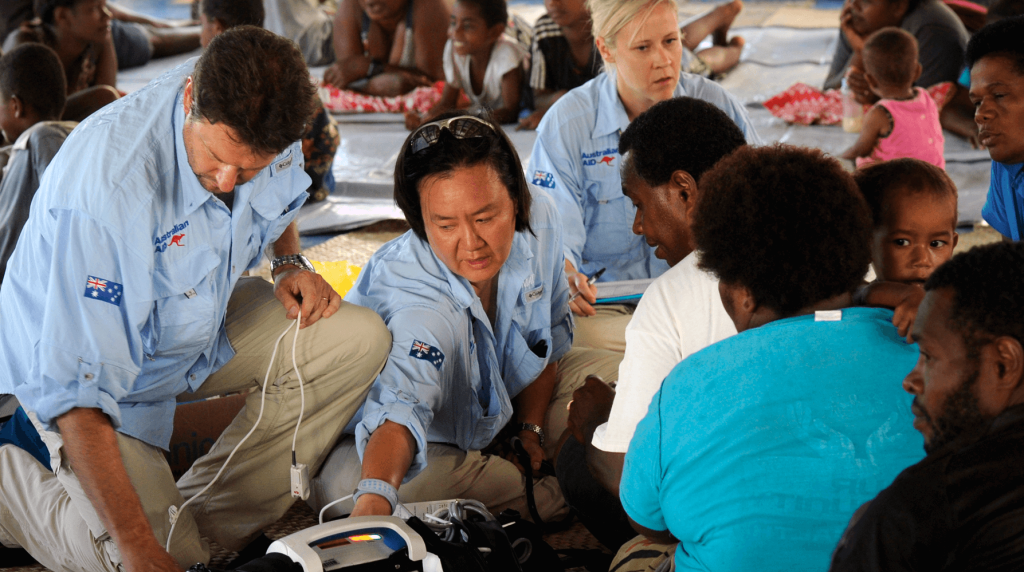 |
 |
Overview |
The Australian Centre for Disease Control (CDC) was established to enhance Australia's preparedness and response to public health emergencies. It aims to improve health outcomes for all Australians and protect the country from future health threats. The CDC has responsibilities that include:
|
National Incident Centre |
The National Incident Centre (NIC) is the CDC's emergency response centre. It coordinates national responses to health emergencies, significant events and emerging threats. In the event of an emerging threat to human health or health system, the Chief Medical Officer activates the NIC. Emergencies involving NIC activation include:
|
 |
Overview |
| The Australian Institute of Health and Welfare (AIHW) is Australia's national agency for information and statistics on Australia's health and welfare. Statistics and data developed by the AIHW are used extensively to inform discussion and policy decisions on health, community services and housing assistance. Under Australia's constitution, health and welfare services are primarily delivered by the states and territories, who are also mainly responsible for the collection of statistics on these services. A fundamental aim of the institute is to promote consistency among national, state and territory statistics, in order to produce comprehensive national data of the highest standard. The AIHW is an Australian Government statutory agency established under the Australian Institute of Health and Welfare Act 1987. The Act contains very strong confidentiality protections for all data held, and requires the AIHW to publish two key biennial reports in alternate years: Australia's health and Australia's welfare. Numerous other reports are produced each year, all of which are available free of charge on the AIHW website. |
 |
Overview |
The Australian Radiation Protection and Nuclear Safety Agency (ARPANSA) is a regulatory agency under the Commonwealth of Australia that aims to protect Australian citizens from both ionising and non-ionising radiation. ARPANSA works under the guidance of the Australian Radiation Protection and Nuclear Safety Act of 1998 as the national regulatory body of radiation in Australia, with independent departments within each state and territory that regulate radiation within each of their jurisdictions. ARPANSA's responsibilities include:
Under the ARPANS Act of 1998, the founding of ARPANSA also established the formation of the Radiation Health and Safety Advisory Council, the Radiation Health Committee and the Nuclear Safety Committee. All of these groups consist of the CEO and an individual to represent the interests of the general public, as well as other specialty members. The functions of the Radiation Health and Safety Advisory Council include identifying emerging issues relating to radiation protection and nuclear safety and examine concerning matters, among others. The members include:
|
 |
Overview |
The National Health and Medical Research Council (NHMRC) is the main statutory authority of the Australian Government responsible for medical research. It is the eighth largest research funding body in the world, and NHMRC-funded research is globally recognised for its high quality. Around 45% of all Australian medical research was funded by the federal government, through the NHMRC. As an independent arm of the Department of Health, the NHMRC funds high quality health and medical research, builds research capability in Australia, support the translation of health and medical research into better health outcomes, and promote the ethics and integrity in research. Non-health research is funded by the Australian Research Council. The National Health and Medical Research Council Act 1992 provides for NHMRC to pursue activities designed to:
|
 |
Overview |
| The National Mental Health Commission (the Commission) is an Australian Government executive agency established to provide robust policy advice and evidence on ways to improve Australia’s mental health and suicide prevention system, and to act as a catalyst for change to achieve those improvements through monitoring and reporting on investment in mental health and suicide prevention initiatives and ongoing engagement with stakeholders across the mental health and related sectors. The Commission's role is purely advisory and does not advocate for specific individuals or groups, but for better system outcomes and accountability. |
 |
National Suicide Prevention Office |
The National Suicide Prevention Office (NSPO) was established as a specialist office located within the National Mental Health Commission. The NSPO is tasked with leading a coordinated, whole-of-governments approach to suicide prevention. The NSPO provides robust, evidence-based insights and advice to ensure an effective suicide prevention system by:
|
 |
Overview |
| Food Standards Australia New Zealand (FSANZ) (Māori: Te Mana Kounga Kai – Ahitereiria me Aotearoa) is the statutory authority in the Australian Government Health portfolio that is responsible under the Joint Food Standards Treaty for developing the Australia New Zealand Food Standards Code, which contains food standards for Australia and New Zealand. FSANZ develops the standards in consultation with experts, other government agencies and stakeholders; the standards are enforced by state and territory departments, agencies and local councils in Australia, the Ministry for Primary Industries in New Zealand, and the Australian Department of Agriculture, Fisheries and Forestry for food imported into Australia. According to legislation, the recommendations made by the body should be open and accountable, and based upon a rigorous scientific assessment of risk to public health and safety, though FSANZ's commitment to this has been disputed by leading public health and consumer representatives across Australia and New Zealand. All decisions made by FSANZ must be approved by the Australia and New Zealand Food Regulation Ministerial Council, which is composed of the Health Minister from each of the Australian states and territories, and the Health Minister from New Zealand, and other participating Ministers nominated by each jurisdiction. |
 |
Overview |
| The Therapeutic Goods Administration (TGA) is the medicine and therapeutic regulatory agency of the Australian Government. As part of the Department of Health, the TGA regulates the safety, quality, efficacy and advertising in Australia of therapeutic goods (which comprise medicines, medical devices, biologicals and certain other therapeutic goods). Therapeutic goods include goods that are represented to have a therapeutic effect, are included in a class of goods the sole or principal use of which is (or ordinarily is) a therapeutic use, or are otherwise determined to be a therapeutic good through a legislative instrument under the Therapeutic Goods Act 1989. Goods that are therapeutic goods must be entered on the Australian Register of Therapeutic Goods (ARTG), or otherwise be the subject of an exemption, approval or authority by the TGA under the Therapeutic Goods Act 1989, Therapeutic Goods Regulations 1990 or Therapeutic Goods (Medical Devices) Regulations 2002 before they can be imported, supplied, exported or manufactured in Australia. |
Main Laboratories |
 |
Symonston, Australian Capital Territory |
Australian Register of Therapeutic Goods (In-character additions) |
| ARTG ID: | ARTG Name: | ARTG Date: | Therapeutic good type: | Manufacturer: | Ingredients: | Status: |
|---|---|---|---|---|---|---|
 |
Office of Drug Control |
| The Office of Drug Control regulates and provides advice on the import, export and manufacture of controlled drugs, as well as the cultivation of cannabis for medicinal purposes to support Australia's obligations under international drug agreements. The Office exercises powers conferred through a number of international treaties and domestic legislation and regulations. |
  |
Overview |
| The Australian Digital Health Agency (ADHA) is a corporate Commonwealth entity responsible for leading the development and implementation of digital health initiatives in Australia. Its primary goal is to improve healthcare for all Australians through the use of digital technologies and systems. ADHA manages national digital health services and systems, including the My Health Record, e-Prescriptions, and Telehealth services. ADHA is also tasked with developing and implementing the National Digital Health Strategy, which guides the direction of digital health in Australia. Authorised prescribers (such as doctors, nurse practitioners, midwives, and dentists) are able to issue digital prescriptions in Australia. Most pharmacies in Australia are set up to dispense digital prescriptions, with each item receiving a unique prescription token. |
 |
My Health Record |
| My Health Record (MHR) is the national digital health record platform for Australia, and is managed by the Australian Digital Health Agency. The purpose of the MHR is to provide a secure electronic summary of people's medical history which includes information such as current medications, adverse drug reactions, allergies and immunisation history in an easily accessible format. The MHR is stored in a network of connected systems with the ability to improve the sharing of information amongst health care providers to improve patient outcomes no matter where in Australia a patient presents for treatment. MHR is an opt-out system with a unique individual healthcare identifier (IHI) being assigned to participants and the option of masking and limiting information available for viewing controlled by the patient or a nominated representative. The Individual Healthcare Identifier (IHI) is a unique 16 digit reference number that is used to identify individuals within the healthcare system. The healthcare provider can retrieve a registered patients IHI via the Healthcare Identifier Service by entering in the correct name, DOB, and Medicare number which will automatically retrieve the patients unique IHI from the system. This then links the patients with their MHR, allowing the healthcare provider to view all the uploaded material. |
 |
Overview |
| Cancer Australia is the lead cancer control agency to the Government of Australia. The organisation was founded to raise cancer awareness to support those affected by cancer within Australia and its territories. The main focus of the organisation is to advise the Government on cancer control, develop policies, and to assist those living with cancer. In order to accomplish this, Cancer Australia works with many government and non-government organisations. Cancer Australia collaborates with a wide range of groups, including those affected by cancer, service providers with an interest in cancer control, as well as stakeholders. The agency also focuses on populations who experience poorer health outcomes, including Indigenous Australians living in remote areas within Australia. Cancer Australia collaborates with the following non-government organisations:
|
 |
Overview |
| The Australian Sports Commission (ASC) is the Australian Government commission responsible for supporting and investing in sport in Australia. The Commission incorporates the Australian Institute of Sport. The ASC is a statutory authority of the Australian Government, that is governed by a board of Commissioners appointed by the Minister for Sport. The ASC's roles and responsibilities are prescribed in the Australian Sports Commission Act 1989. The ASC attempts to promote an effective national sports system that offers improved participation in quality sports by all Australians. In addition, the ASC helps those who are talented and motivated to reach their potential excellence in sports performance. The ASC achieves these objectives by administering and funding national sporting programs on behalf of the Government and providing leadership, co-ordination and support for the sport sector. The ASC works closely with a range of national sporting organisations, state and local governments, schools and community organisations to ensure sport is well run and accessible so that everyone can participate and enjoy the benefits. The ASC supports participation in sport, from grass roots participation to participation at the elite level. |
 |
Headquarters |
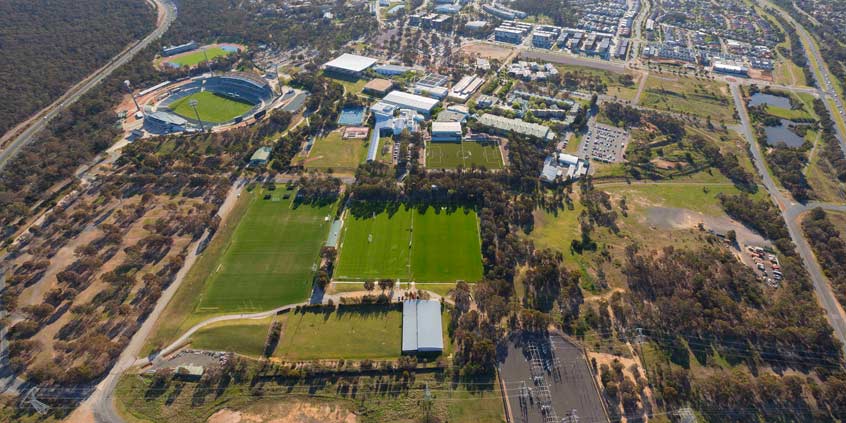 |
Bruce Campus, Bruce, Australian Capital Territory |
Australian Institute of Sport |
| The Australian Institute of Sport (AIS) is a high performance sports training institution in Australia. The institute's 66-hectare (163-acre) headquarters were opened in 1981 and are situated in the northern suburb of Bruce, Canberra. The AIS is a division of the Australian Sports Commission (ASC), part of the Australian Government under the Department of Health. The AIS employs a number of staff who primarily work in Sports Science and Sports Medicine, which includes disciplines such as sports nutrition, performance analysis, skill acquisition, physiology, recovery, biomechanics, athlete career education, strength and conditioning, psychology, physical therapies, talent identification, and applied performance research. The AIS Arena is a 4,200 capacity indoor stadium which has been used for sports such as basketball, gymnastics and volleyball as well as music concerts. Directly adjacent to, but not strictly part of the institute is the 25,000 capacity outdoor Canberra Stadium which has hosted matches of all the major forms of football played in Australia. The AIS offers scholarships to athletes across 36 programs in 26 different sports:
|
  |
Overview |
| The Australian Sports Anti-Doping Authority (ASADA) (trading as Sport Integrity Australia) is a government statutory authority tasked to protect Australia's sporting integrity through the elimination of doping. The agency focuses on countering prohibited substances and methods, child abuse in sporting environments, unfair manipulation of games, and failures to protect those involved. The ASADA drug tests Australian athletes who compete at state and national levels. ASADA also tests international athletes if they are competing in events held in Australia. It is also ASADA's role to inform the sporting community of drugs and related safety issues. |
 |
Overview |
| The Aged Care Quality and Safety Commission (ACQSC) is the national regulator for Australian aged care services. The ACQSC works to protect and enhance the safety, health, wellbeing, and quality of life of people receiving aged care. It does this by approving providers, monitoring compliance with standards, resolving complaints, and managing serious incidents. The Aged Care Quality Standards define what quality care looks like and are designed to improve care outcomes. They cover areas like dignity and respect, choices and independence, assessment and planning, personal and clinical care, services and supports, the service environment, feedback and complaints, and workforce. |
 |
Overview |
| The National Blood Authority (NBA) is an Australian government statutory body responsible for managing and coordinating the nation's blood supply. The NBA manages the supply of blood, blood products, and related services on behalf of all Australian governments. It operates under the National Blood Authority Act 2003 and works in accordance with the National Blood Agreement which outlines the objectives of ensuring an adequate, safe, secure, and affordable blood supply, as well as promoting its safe and efficient use. The NBA is responsible for risk management, including the National Blood Supply Contingency Plan, which outlines procedures for managing crises affecting blood supply. |
 |
Overview |
| The Australian Organ and Tissue Authority (OTA) was established by the Australian Organ and Tissue Donation and Transplantation Authority Act to deliver a nationally coordinated program to increase organ and tissue donation to improve opportunities for transplantation in Australia. The DonateLife program is delivered in partnership with the DonateLife Network, state and territory governments, the donation and transplantation sectors, the eye and tissue sectors, hospitals, community organisations and the public. |
 |
Overview |
The Australian Industrial Chemicals Introduction Scheme (AICIS) is the Australian Government's regulatory body for industrial chemicals. AICIS is designed to help protect workers, the public and the environment from the harmful effects of industrial chemicals. It makes risk assessment and safety information on chemicals widely available and provides recommendations for their safe use. AICIS also informs importers and manufacturers of their legal responsibilities. The objectives of the NICNAS are to provide a national assessment and notification scheme for the following purposes:
|
 |
Overview |
The Office of the Gene Technology Regulator (OGTR) administers the gene technology regulatory system. The OGTR is responsible for protecting the health and safety of people and the environment by identifying and managing risks posed by, or as a result of gene technology and Genetically Modified Organisms. The Gene Technology Regulator is an independent statutory office holder responsible for administering the Gene Technology Act 2000 and corresponding state and territory laws. The Regulator is appointed by the Governor-General only with the agreement of the majority of all jurisdictions. The Regulator has specific responsibility to protect the health and safety of people, and to protect the environment, by:
|
 |
Overview |
| This Office of the Inspector-General of Aged Care (OIGAC) is an independent agency established to oversee and review the aged care system to ensure it better meets the needs of older people in Australia. It provides informed, system-wide oversight of how aged care is delivered and administered by the Australian Government. It does this by identifying what works, highlighting serious issues, and making recommendations to promote dignity, human rights, and quality care. |
Last edited:

