


- Jul 2, 2018
- 3,680
 |
Headquarters |
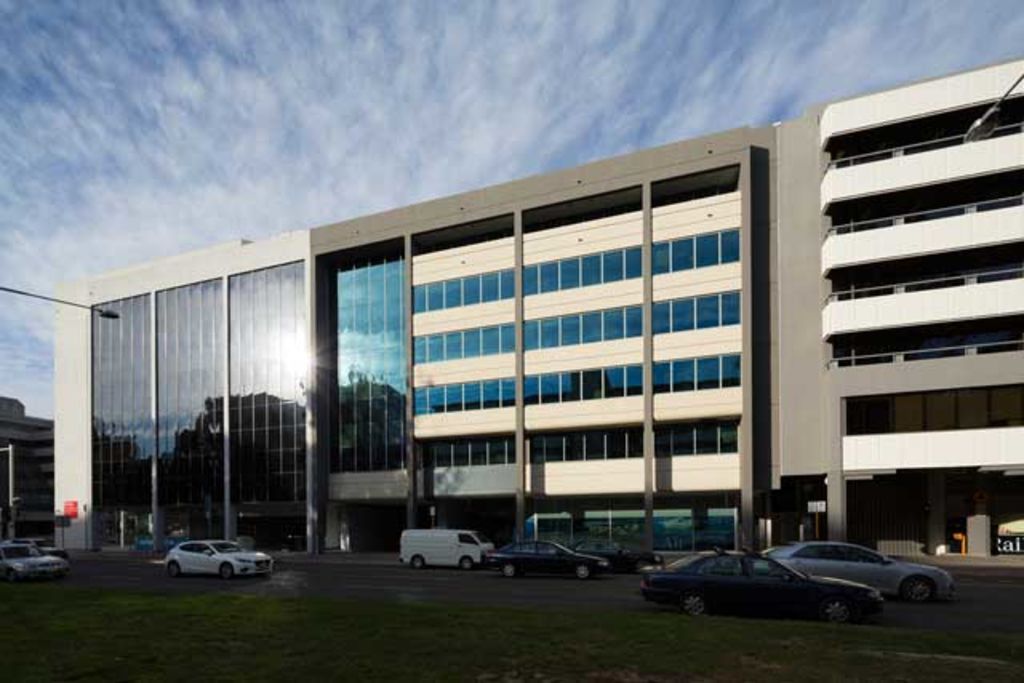 |
62 Northbourne Avenue, Canberra City, Australian Capital Territory |
Ministers |
| Office: | Officeholder: | Image: |
|---|---|---|
| Minister for Regional Development, Local Government and Territories | The Honourable Warren Snowdon, MP |  |
| Minister for Northern Australia | The Honourable Gary Gray, MP | |
| Assistant Minister for Regional Development, Local Government and Territories | Dick Adams, MP | |
| Secretary of the Department of Regional Australia, Regional Development and Local Government | Glenys Beauchamp, AO, PSM |  |
| Program: | Description: | Funding Amount: | Open Date: | End Date: | Allocations and Amount: |
|---|---|---|---|---|---|
| Growing Regions Program | The program is providing funding of between $500,000 and $15 million to local government entities and incorporated not-for-profit organisations for capital works projects that will enhance liveability, bolster social cohesion and support local amenity throughout Australia's regions. | ||||
| Major and Local Community Infrastructure Program | The purpose of the program is to deliver vital community and sporting infrastructure, open space improvements and other community priorities. | ||||
| Investing in Our Communities Program | The Investing in Our Communities Program has been developed to deliver important community and social infrastructure projects that represent value with relevant money and improve social and economic viability in local areas. | ||||
| Priority Community Infrastructure Program | The Priority Community Infrastructure Program has been developed to deliver important community and social infrastructure projects that represent value with relevant money and improve social and economic viability in local areas. | ||||
| Murray-Darling Basin Regional Economic Diversification | The purpose of the program is to assist Basin communities increase economic diversification and adjust to a water constrained environment. Each of the Basin States of New South Wales, Victoria, South Australia and Queensland selects projects within their jurisdictions in consultation with the Minister. | ||||
| Regional Precincts and Partnerships Program | This program seeks to support transformative investment in regional, rural and remote Australia based on the principles of unifying regional places, growing economies and serving communities. The program supports both precinct development proposals and the delivery of construction-ready precinct projects. | ||||
| Stronger Communities Program | The Stronger Communities Program provides grants of between $2,500 and $20,000 to community organisations and local governments for infrastructure projects that deliver social benefits for local communities. |
| Program: | Description: | Funding Amount: | Open Date: | End Date: | Allocations and Amount: |
|---|---|---|---|---|---|
| Mobile Black Spot Program | The Mobile Black Spot Program (the MBSP) is an Australian Government initiative that invests in telecommunications infrastructure to improve mobile coverage and competition across Australia. | ||||
| Regional Connectivity Program | The Regional Connectivity Program (RCP) is a grants program funding the delivery of 'place-based' telecommunications infrastructure projects to improve digital connectivity across regional, rural and remote Australia. | ||||
| Regional Roads Australia Mobile Program | The Regional Roads Australia Mobile Program (RRAMP) is a government initiative to improve multi-carrier mobile coverage on highways and major roads in regional and remote Australia. | ||||
| Broadcasting Resilience Program | The Broadcasting Resilience Program (BRP) provides funding to Broadcast Australia to improve the resilience of ABC AM and FM broadcast sites across Australia. | ||||
| Telecommunications Disaster Resilience Innovation Program | The Telecommunications Disaster Resilience Innovation (TDRI) program promotes the development of new technologies to provide solutions for telecommunications disaster resilience, particularly in regional, remote and First Nations communities. | ||||
| Peri-Urban Mobile Program | The Peri-Urban Mobile Program (PUMP) is a grants program that provides funding to improve mobile connectivity in bushfire and other natural disaster-prone areas along the edges of Australia's major cities. | ||||
| On Farm Connectivity Program | The On Farm Connectivity Program (OFCP) provides funding to enhance agricultural productivity across the country by supporting the use of connected machinery and sensor technology. | ||||
| Mobile Network Hardening Program | The Mobile Network Hardening Program is an Australian Government initiative funding upgrades to improve the resilience of Australia's mobile network telecommunications infrastructure in regional and peri-urban Australia to prevent outages during a natural disaster, strengthen the resilience of telecommunications facilities to allow them to operate for longer during natural disasters and support the rapid restoration of services following an outage. | ||||
| First Nations Digital Inclusion Program | The First Nations Digital Inclusion Program is aimed towards closing the digital gap for Aboriginal and Torres Strait Islander people and communities when it comes to access to communications. |
| Region: | State/Territory: | Funding Amount: | Recovery From: | Investments: | End Date: |
|---|---|---|---|---|---|
| Victorian Alps | Victoria | 2001 Alpine Bushfires | |||
| Snowy Mountains | New South Wales | 2001 Alpine Bushfires | |||
| Canberra Region | Australian Capital Territory | 2001 Alpine Bushfires | |||
| Eastern Wheatbelt Region | Western Australia | 2006 Ex-Tropical Cyclone Clare | |||
| Esperance Region | Western Australia | 2006 Tropical Low Isobel | |||
| East Arnhem Land | Northern Territory | 2006 Tropical Cyclone Monica | |||
| Far North Queensland | Queensland | 2006 Tropical Cyclone Larry |
Overview |
The department provides the Australian Government with strategic policy advice in relation to the Commonwealth's interests in the three self-governing territories. The department manages the Commonwealth's residual responsibilities for these territories. This includes:
|
| Flag: | Coat of Arms: | State/Territory: | Type: | Administered by: | Administrator: | Head of Government: | Local Government Areas: | Subject to laws of: | Subject to courts of: | House of Representatives Electorate(s): | Senate Electorate: | Police: | Ambulance: | Fire: | Volunteer Rescue: | Marine Rescue: |
|---|---|---|---|---|---|---|---|---|---|---|---|---|---|---|---|---|
 |  | Australian Capital Territory | Internal Territory | Self-Governing | None: Governor-General acts as Administrator | Chief Minister | None | Australian Capital Territory | Australian Capital Territory | Division of Canberra Division of Fraser | Australian Capital Territory | Australian Federal Police | ACT Ambulance Service | ACT Fire and Rescue ACT Rural Fire Service | ACT State Emergency Service | Australian Federal Police |
 |  | Northern Territory of Australia | Internal Territory | Self-Governing | Administrator of the Northern Territory | Chief Minister | City of Darwin City of Palmerston Town of Alice Springs Litchfield Council Town of Katherine East Arnhem Shire Roper Gulf Shire West Arnhem Shire Barkly Shire MacDonnell Shire Central Desert Shire West Daly Shire Victoria Daly Shire Tiwi Islands Shire Coomalie Community Government Council Wagait Shire Belyuen Shire | Northern Territory | Northern Territory | Division of Solomon Division of Lingiari | Northern Territory | Northern Territory Police Force | St John Ambulance Northern Territory | Northern Territory Fire and Rescue Service Bushfires NT | Northern Territory Emergency Service | Australian Volunteer Coast Guard Surf Life Saving Northern Territory |
 |  | Territory of Norfolk Island | External Territory | Self-Governing | Administrator of Norfolk Island | Chief Minister | None | Norfolk Island | Norfolk Island | Division of Canberra | Australian Capital Territory | Australian Federal Police | St John Ambulance New South Wales | New South Wales Fire and Rescue | New South Wales Volunteer Rescue Association | Marine Rescue New South Wales |
 |
Overview |
| The Australian Government has responsibility for the external territories of Christmas Island and the Cocos (Keeling) Islands, collectively known as the Indian Ocean Territories (IOT). The Government, through the department, facilitates the delivery of services normally expected from a state government. State-type services are delivered through Service Delivery Arrangements (SDAs) with the Western Australian Government, directly by the private sector under contract, or by the department. Additional government services, such as those involving quarantine and customs, are the responsibility of the relevant Australian Government agencies. |
| Flag: | Coat of Arms: | State/Territory: | Type: | Administered by: | Administrator: | Head of Government: | Local Government Areas: | Subject to laws of: | Subject to courts of: | House of Representatives Electorate(s): | Senate Electorate: | Police: | Ambulance: | Fire: | Volunteer Rescue: | Marine Rescue: |
|---|---|---|---|---|---|---|---|---|---|---|---|---|---|---|---|---|
 |  | Territory of Christmas Island | External Territory | Department of Regional Australia, Regional Development and Local Government | Administrator of the Australian Indian Ocean Territories | None | Shire of Christmas Island | Western Australia | Western Australia | Division of Lingiari | Northern Territory | Australian Federal Police | St John Ambulance Western Australia | Western Australia Volunteer Fire and Emergency Services | Western Australia Volunteer Fire and Emergency Services | Marine Rescue Western Australia |
 |  | Territory of Cocos (Keeling) Islands | External Territory | Department of Regional Australia, Regional Development and Local Government | Administrator of the Australian Indian Ocean Territories | None | Shire of Cocos (Keeling) Islands | Western Australia | Western Australia | Division of Lingiari | Northern Territory | Australian Federal Police | St John Ambulance Western Australia | Western Australia Volunteer Fire and Emergency Services | Western Australia Volunteer Fire and Emergency Services | Marine Rescue Western Australia |
Overview |
| The Department of Environment has responsibility for the Australian Antarctic Territory and the Territory of Heard Island and McDonald Islands. They are managed through the Australian Antarctic Division. These territories are currently under the occupation of the Kingdom of Sweden. |
| Flag: | Coat of Arms: | State/Territory: | Type: | Administered by: | Administrator: | Head of Government: | Local Government Areas: | Subject to laws of: | Subject to courts of: | House of Representatives Electorate(s): | Senate Electorate: | Police: | Ambulance: | Fire: | Volunteer Rescue: | Marine Rescue: |
|---|---|---|---|---|---|---|---|---|---|---|---|---|---|---|---|---|
 |  | Australian Antarctic Territory | External Territory | Department of the Environment | Minister for the Environment and Water | None | None | Australian Capital Territory | Australian Capital Territory | Division of Canberra | Australian Capital Territory | Australian Federal Police | Australian Antarctic Division | Australian Antarctic Division | Australian Antarctic Division | Australian Antarctic Division |
 | | Territory of Heard Island and McDonald Islands | External Territory | Department of the Environment | Minister for the Environment and Water | None | None | Australian Capital Territory | Australian Capital Territory | Division of Canberra | Australian Capital Territory | Australian Federal Police | Australian Antarctic Division | Australian Antarctic Division | Australian Antarctic Division | Australian Antarctic Division |
| Flag: | Coat of Arms: | State/Territory: | Type: | Administered by: | Administrator: | Head of Government: | Local Government Areas: | Subject to laws of: | Subject to courts of: | House of Representatives Electorate(s): | Senate Electorate: | Police: | Ambulance: | Fire: | Volunteer Rescue: | Marine Rescue: |
|---|---|---|---|---|---|---|---|---|---|---|---|---|---|---|---|---|
 | | Jervis Bay Territory | Internal Territory | Department of Regional Australia, Regional Development and Local Government | Minister for Regional Development, Local Government and Territories | None | Wreck Bay Aboriginal Community Council | Australian Capital Territory | Australian Capital Territory | Division of Fraser | Australian Capital Territory | Australian Federal Police | New South Wales Ambulance | New South Wales Rural Fire Service | New South Wales State Emergency Service | Marine Rescue New South Wales |
| | Territory of Ashmore and Cartier Islands | External Territory | Department of Regional Australia, Regional Development and Local Government | Minister for Regional Development, Local Government and Territories | None | None | Northern Territory | Northern Territory | Division of Lingiari | Northern Territory | Northern Territory Police Force | St John Ambulance Northern Territory | Northern Territory Fire and Rescue Service | Northern Territory Emergency Service | Marine Rescue Western Australia |
| | Coral Sea Islands Territory | External Territory | Department of Regional Australia, Regional Development and Local Government | Minister for Regional Development, Local Government and Territories | None | None | Australian Capital Territory | Norfolk Island | Division of Canberra | Australian Capital Territory | Queensland Police Service | Queensland Ambulance Service | Queensland Fire and Rescue Service | Queensland State Emergency Service | Marine Rescue Queensland |
Overview |
The Australian Government provides funding under the Financial Assistance Grant to Local Government program since 1974–75. The grant is provided under the Local Government (Financial Assistance) Act 1995. The Financial Assistance Grant program consists of two components:
|
Funding for 2007-08 |
| Jurisdiction: | General Purpose: | Local Roads: | Total: |
|---|---|---|---|
| New South Wales | $0 | $0 | $0 |
| Victoria | $0 | $0 | $0 |
| Queensland | $0 | $0 | $0 |
| Western Australia | $0 | $0 | $0 |
| South Australia | $0 | $0 | $0 |
| Tasmania | $0 | $0 | $0 |
| Australian Capital Territory | $0 | $0 | $0 |
| Northern Territory | $0 | $0 | $0 |
Overview |
| The National Awards for Local Government are the peak awards for the sector and showcase inspirational projects local governments are delivering in communities across Australia. They highlight the diversity of successful projects at the grassroots level and the positive impact local governments have on bringing communities together. The National Awards are an annual celebration to recognise innovative and future-focused projects of excellence across the nation. Taking part in the National Awards demonstrates commitment and pride in the community, and is an opportunity to show the nation the exciting and inspiring projects that are happening across Australia. |
| Year: | Aboriginal and Torres Strait Islander People's Recognition: | Addressing Violence Against Women and Children: | Affordable Housing: | Arts and Culture: | Cohesive Communities: | Disaster Readiness and Recovery: | Environmental Sustainability: | Outstanding Rural and Remote Council: | Productivity Through Infrastructure: | Regional Growth: | Road Safety: | Women in Local Government: | Workforce and Skills: |
|---|---|---|---|---|---|---|---|---|---|---|---|---|---|
 |
Overview |
| The Australian Council of Local Government (ACLG) showcases the important partnership the Australian Government has with local governments across Australia. Local governments are a trusted partner and fundamental to the development and delivery of policies and programs for all Australians. The ACLG provides them an important opportunity to engage with Ministers on opportunities and challenges in their areas. |
 |
Overview |
The Australian Local Government Association (ALGA) is the principal organisation representing all 537 Local Government councils in Australia, and acts as the independent interest body for Australian local mayors, councillors and local government employees. The association is the federation of local government associations in each state and territory, which are:
|
 |
Overview |
The National Capital Authority (NCA) is a statutory authority of the Australian Government that was established to manage the Commonwealth's interest in the planning and development of Canberra as the capital city of Australia. Under the Australian Capital Territory (Planning and Land Management) Act 1988, the NCA has the authority to prepare and administer a National Capital Plan. The functions of the National Capital Authority are:
|
National Capital Plan |
The National Capital Plan (the Plan) is the strategic plan for Canberra and the Territory. It ensures that 'Canberra and the Territory are planned and developed in accordance with their national significance.' The key matters of national significance include:
|
Approved Works Approval |
| Application Number: | Project Name: | Approved Date: |
|---|---|---|
| WA-000901 | Block 26 Section 44 YARRALUMLA - Construction of Chancery, Ambassador's Residence and associated structures of the Embassy of the Russian Federation | 01/01/2009 |
Diplomatic Missions |
| The following sections of the Global Assembly's Resolution on International Diplomacy are applicable to the operations of the National Capital Authority in regards to the diplomatic missions of Global Assembly members and inform its practice when dealing with such inside the designated area. They do not apply to the diplomatic missions of non-Global Assembly members. Article 1. 6. The location and size of the Diplomatic Mission is decided by the Host Nation. a. The Host Nation may decide to move a Diplomatic Mission, but must give the Sending Nation 30 days advanced notice. Article 6. 1. If a Host Nation desires to close a Diplomatic Mission, they must first directly inform the Head of Mission, and the Foreign Ministry (or equivalent) of the Sending Nation's government, and do so 48 hours before the Mission is to be closed. c. Once a Diplomatic Mission is closed, it ceases to be the sovereign territory of the Sending Nation, and becomes the sovereign territory of the Host Nation again. i. Therefore, everything inside of the Mission after it has been closed becomes the property of the Host Nation. Chapter 11 of the Department of Foreign Affairs and Trade's Protocol Guidelines (under Protocol Branch) are applicable to the operations of the National Capital Authority and inform its practice when dealing with diplomatic missions inside the designated area. |
Works Approval |
In accordance with the Australian Capital Territory (Planning and Land Management) Act 1988 (Commonwealth) (the PALM Act), any alteration to buildings or structures, demolition, landscaping or excavation works within the Designated Areas require the prior written approval of the National Capital Authority (NCA) or a 'Works Approval'. There are no exemptions for ‘Works Approval’ under the PALM Act. In summary, if the answer to the following two questions is ‘Yes’, then Works Approval from the NCA is required:
|
Designated Areas |
| The NCA has detailed planning authority (including ‘Works Approval’ in place of development approval) in areas of the ACT, which exhibit special characteristics of the National Capital. The Designated Areas include all major approach routes to Canberra, the Parliamentary Zone, Lake Burley Griffin and surrounding parklands, the Australian National University, Russell Defence Precinct, Duntroon and Australian Defence Force Academy. Designated Areas also include the Inner Hills of the National Capital including Mount Majura and Mount Ainslie, Black Mountain, O'Conner Ridge, Red Hill, Oakey Hill, Mount Painter, The Pinnacle and Stromlo Forest. |
Definition of ‘works’ |
| The PALM Act defines ‘works’ as: a) the construction, alteration, extension or demolition of buildings or structures; b) landscaping; c) tree felling; or d) excavations. This includes proposals ranging from a site redevelopment to the removal of a single tree or excavation required to installing underground services. Temporary signs or fencing must be consistent with the ACT Government's Hoarding Signage Guidelines. Temporary ‘works’ such as the installation of temporary signs or fencing also require ‘Works Approval’ from the NCA. Some of the most common types of works that require a ‘Works Approval’ are:
|
Letter of Consistency |
A Letter of Consistency application is required to be submitted to the NCA for proposals on National Land outside of Designated Areas located at:
|
How to lodge a Works Approval application? |
| The NCA's role is to assist applicants through a process of negotiation and design development to achieve outcomes appropriate to those areas, which embody the special characteristics of the National Capital. Contact the NCA to organise a pre-application meeting by phoning (02) 6271 2888 or by emailing the Works Approval section. Discussions held with the NCA in the early stages of developing designs for a proposal will help identify any major issues that require resolution prior to ‘Works Approval’ application being lodged. A sketch design, which shows the development intention, may also be submitted to the NCA for consideration and comment, before proceeding with detailed design development. |
Overview |
National memorials is an important way to mark the contribution and sacrifice made by extraordinary Australians to their country and to their fellow citizens. The character of nationally significant areas within the National Capital is the responsibility of the National Capital Authority and it is required to undertake projects for the enhancement and maintenance of the public places in these areas. Public commemorative sites and objects include sculptures, memorials, parks, gardens, tree plantings, fountains, paths, car parks, jetties, signage and lighting. Specifically, the Authority’s responsibilities in relation to commemorative works are to:
|
 |
Overview |
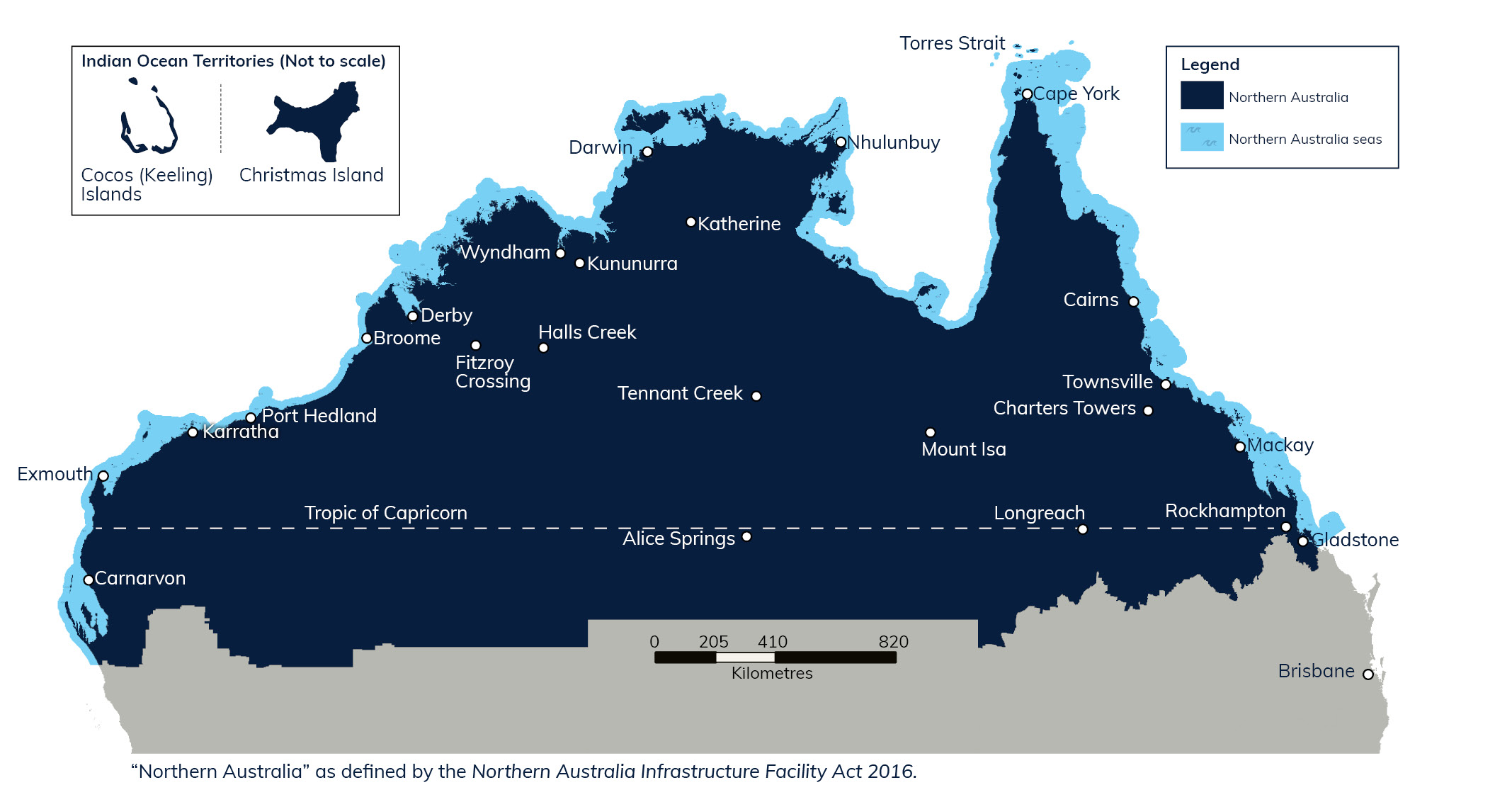
| The Office of Northern Australia (ONA) is the Australian Government's area of expertise for Northern Australia. The ONA oversees the government's Northern Australia policy agenda to achieve sustainable and resilient northern economic and social development. The ONA provides policy advice, supports the Northern Australia Ministerial Forum and working group, works collaboratively with the northern jurisdictions, community and industry representatives and its partners, and supports First Nations economic participation including through the Northern Australia Indigenous Reference Group. Northern Australia is defined as all of the Northern Territory and those parts of Queensland and Western Australia that intersect with the Tropic of Capricorn, including Gladstone and Carnarvon, as well as the Indian Ocean Territories of Christmas, Cocos and Keeling Islands. The Australian Government is committed to supporting resilient and sustainable economic growth to secure a strong and sustainable future for Northern Australia. The region is large, diverse and vibrant with many exciting opportunities for market development and diversification. |
 |
 |
Overview |
The Northern Australia Infrastructure Facility (NAIF) was established by the Northern Australia Infrastructure Facility Act (NAIF Act). NAIF’s projects stimulate economic growth by attracting private investment, fostering infrastructure development and supporting various industries across Northern Australia. The NAIF helps create both direct and indirect jobs, benefiting local communities and contributing to the region’s workforce. The NAIF’s function, as described in the NAIF Act, is to:
|
Projects and Investments |
| Project: | Description: | Proponent: | Investment Amount: | Investment Decision Date: | Project Status: | Location: | Sector: |
|---|---|---|---|---|---|---|---|
 |
Overview |
The Cooperative Research Centre for Developing Northern Australia (CRCNA) delivers industry-led research collaborations to develop new technologies, products and services for the north. Investments are developing new technologies, products and services which address industry issues unique to Northern Australia across agriculture (inc horticulture and forestry), aquaculture, water security, First Nations-led business development, and health service delivery. The objectives of the centre are:
|
Projects |
| Project: | Summary: | Funding: | Project Status: | Project Timeframe: | Project Research Participant(s): | Location: |
|---|---|---|---|---|---|---|
 |
Overview |
Regional Development Australia (RDA) is a national network of 50 committees across Australia and represents a broad range of experiences including local government, private sector, community and not-for-profit sectors. RDA committee members are dedicated leaders who advise the government on critical regional development issues, opportunities and challenges in their regions. All RDA Committees are responsible for:
|
 |
Overview |
The Regional Telecommunications Review occurs every 3 years and is an opportunity to examine the existing and future telecommunications needs in regional, rural and remote communities across Australia. The Terms of Reference for the committee are:
|
Reviews |
| Year: | Date Published: | Section 4 Policies: | Stakeholder Consultations: | Findings: | Recommendations: |
|---|---|---|---|---|---|
 |
Overview |
| The Australian Government established the Regional Education Commissioner role in response to recommendations in the National Regional, Rural and Remote Education Strategy and the Independent Review into Regional, Rural and Remote Education. These called for a national, sustained focus on the progress and outcomes of regional tertiary education initiatives. The National Regional, Rural and Remote Education Strategy found individuals living in regional and remote locations are less than half as likely as their city counterparts to obtain a university degree by the age of 35. The primary goal of the Commissioner is to work with the Australian Government to improve education outcomes for regional, rural and remote students so these students can access and participate in education at all levels to achieve their aspirations. Working with all tiers of government and with a broad remit across a student’s educational lifespan, from early childhood education and care to tertiary education, the Commissioner brings together the efforts of Commonwealth, state and territory governments to provide an ongoing national focus on regional, rural and remote education outcomes. The independent nature of the role allows the Commissioner to engage widely to help bridge the educational gaps between city and regional students. This role is a non-statutory ministerial appointment. |
| Office: | Officeholder: | Image: |
|---|---|---|
| Regional Education Commissioner | The Honourable Tim Fischer, AC, FTSE |  |
 |
Overview |
The Torres Strait Regional Authority is an Australian Government body established in 1994 to administer the Torres Strait Islands. It consists of 20 elected representatives. The primary function of the authority is to strengthen the economic, social and cultural development of the peoples of the Torres Strait area. The Torres Strait Islands lie to the north of Tropical Queensland's Cape York Peninsula and comprise 274 small islands, of which 17 are inhabited, located in Torres Strait which separates Australia and Papua New Guinea. Each island community elects a member to the Torres Strait Regional Authority. The five major island groups of the Torres Strait include:
|
 |
 |
Overview |
| The Northern Land Council (NLC) is an independent statutory authority of the Commonwealth. It is responsible for assisting Aboriginal peoples in the Top End of the Northern Territory to acquire and manage their traditional lands and seas. It does this through consulting with traditional owners and other Aboriginal people who have an interest in Aboriginal land about land use, land management and access by external tourism, mining and other businesses. This sometimes involves facilitating group negotiation and consensus-building among scores of traditional Aboriginal landowner groups, and many other affected Aboriginal people. Many Aboriginal people in the Northern Land Council's area live in the major towns. There are about 200 communities scattered over Aboriginal land in the NLC's area, ranging in size from small family groups on outstations to settlements of up to 3,000 people. The NLC is also the Native Title Representative Body for the northern region, including the Tiwi Islands and Groote Eylandt. This includes land that does not fall under ALRA, such as crown land or other lands in towns, national parks, and land vested in the Northern Territory Land Corporation, pastoral leases and offshore areas. |
 |
 |
Overview |
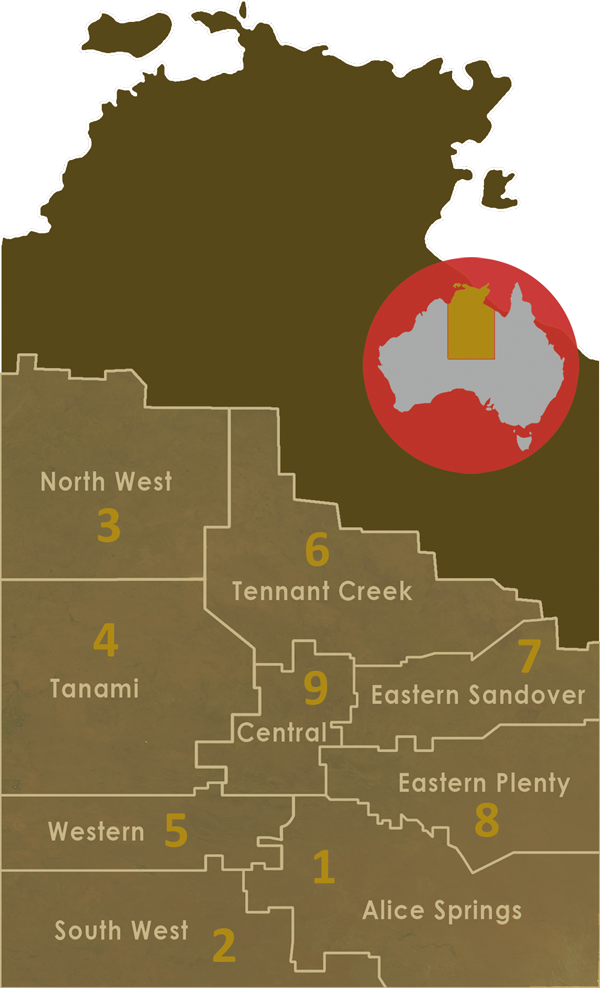
The Central Land Council (CLC) is a Council of 90 Aboriginal people elected from communities in the southern half of the Northern Territory. The Central Land Council is a representative body promoting Aboriginal rights. It is a statutory authority under the Aboriginal Land Rights (Northern Territory) Act 1976 and PGPA Act. It also has functions under the Native Title Act 1993 and the Pastoral Land Act 1992. The CLC provides a number of services for the benefit of traditional owners and other Aboriginal residents of the CLC region, including:
|
 |
 |
Overview |
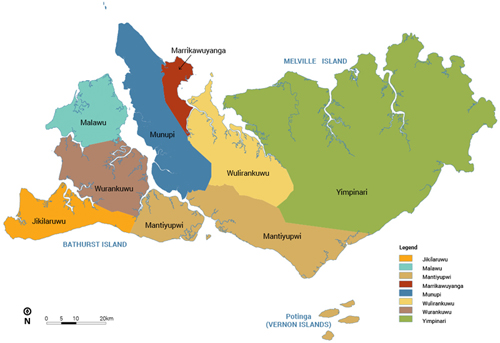
The Tiwi Land Council (TLC) is a land council in the Northern Territory established to represent Aboriginal Australians living on the Tiwi Islands. The land council's area of operation is Bathurst Island, Buchanan Island, Melville Island and every island within the distance of 6 kilometres of Melville Island. The TLC operates to ensure and support the good management, protection and development of land pursuant to the wishes of those who own the land, having regard to the opinions of others who also live on that land. Timeliness, resource allocation and priority protection mandates are stipulated by enabling legislation. The TLC provides a number of services for the benefit of traditional owners and other Aboriginal residents of the Tiwi region, including:
|
 |
 |
Overview |
| The Anindilyakwa Land Council (ALC) represents the Traditional Owners of the Groote archipelago. The ALC functions to ascertain and express the wishes and opinions of the Anindilyakwa people as to the management of the land in the Groote archipelago region, to protect interests of Traditional Owners, assist in protection of sacred sites, to consult with Traditional Owners with respect to proposals relating to use of land, to assist Traditional Owners in carrying out commercial activity and to supervise and provide administrative and other assistance for Land Trusts holding Indigenous land in the Groote archipelago region. The ALC is responsible for land visitation to its area of control by non-indigenous people, monitoring illegal entry to lands, issuing of permits for visitation rights, ranger inspections and other daily management issues. The land controlled by the ALC includes Groote Eylandt, Bickerton Island and other islands of the Groote archipelago. It is mandatory for all non-Indigenous people visiting Groote Eylandt to hold a permit to visit non-leasehold Indigenous lands. The ALC administers this system on behalf of the Traditional Owners. |
 |
 |
Overview |
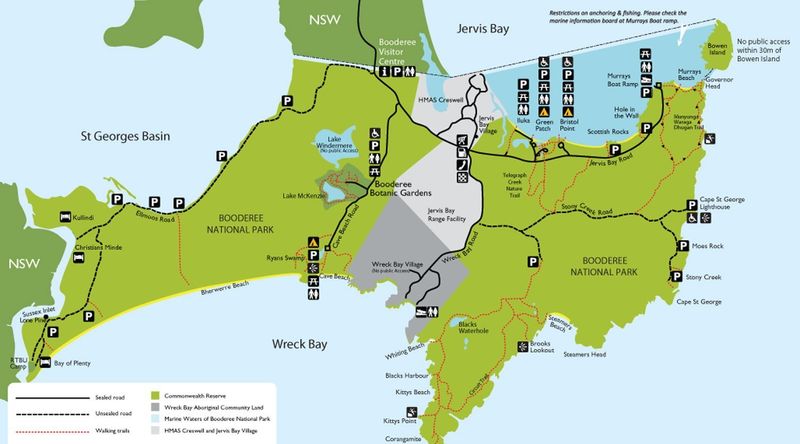
| The Wreck Bay Aboriginal Community Council operates under the Aboriginal Land Grant (Jervis Bay Territory) Act 1986. The Council has a number of functions which fall into the main categories of land holding and management, provision of community services for its members and business enterprises. The Council, subject to and in accordance with the Act, is to hold title to Aboriginal Land and exercise, for the benefit of the members of the Community, the Council's powers as owner of Aboriginal Land and of any other land owned by the Council. The Council can also make representations to the Minister in relation to land that the Council considers should become Aboriginal Land. Community service type functions include and, in consultation with the Minister, to consider and, where practicable, take action for the benefit of the Community in relation to the housing, social welfare, education, training or health needs of the members of the Community; to provide community services to members of the Community. Other functions are to protect and conserve natural and cultural sites on Aboriginal land, to engage in land use planning in relation to Aboriginal land and to manage and maintain Aboriginal land as well as to conduct business enterprises for the economic or social benefit of the Community and any such functions that are conferred on it by a provision of the Act, and any functions relating to the Community conferred on the Council by the regulations. |
 |
Overview |
| The Tasmanian Freight Equalisation Scheme (TFES) provides financial assistance for cost incurred by shippers of eligible non-bulk goods moved by sea across the Bass Strait. The amount of assistance is based on the difference between the freight costs of moving the goods by sea and the notional freight costs of moving them by road over an equivalent distance. The objective of TFES is to provide Tasmanian industries with equal opportunities to compete in other markets, recognising that, unlike their mainland counterparts, Tasmanian shippers do not have the option of transporting goods interstate by road or rail. Assistance is also available for eligible non-bulk goods shipped between the main island of Tasmania and either King Island or the islands of the Furneaux Group and for eligible non-bulk goods shipped across the Bass Strait for the purposes of transhipment through an Australian mainland port. |
Overview |
| The Bass Strait Passenger Vehicle Equalisation Scheme (BSPVES) aims to reduce the cost of seagoing travel between the mainland and Tasmania, by providing a rebate for the transportation of an eligible passenger vehicle across Bass Strait. Each year, the Australian Government provides assistance to over 180,000 eligible passenger vehicles. All claims for payment of the rebates under the scheme are assessed in accordance with the Ministerial Directions, and processed by Services Australia on behalf of the Department of Regional Australia, Regional Development and Local Government. |
Rebates |
| Type of Vehicle: | One Way Trip: | Round Trip: |
|---|---|---|
| Motor Car | Up to $275 | Up to $550 |
| Bus | Up to $275 | Up to $550 |
| Motorhome | Up to $552 | Up to $1104 |
| Eligible passenger vehicle towing a caravan | Up to $552 | Up to $1104 |
| Motorcycle | Up to $141 | Up to $282 |
| Bicycle | Up to $42 | Up to $84 |
Last edited:

