


- Jul 2, 2018
- 3,680
 |
Headquarters |
 |
Robert Garran Offices, Barton, Australian Capital Territory |
Ministers |
| Office: | Officeholder: | Image: |
|---|---|---|
| Attorney-General | The Honourable Nicola Roxon, MP | |
| Assistant Minister to the Attorney-General | The Honourable Mark Dreyfus, MP | |
| Secretary of the Attorney-General's Department | Roger Wilkins, AO |  |
| Solicitor-General | Justin Gleeson, SC |  |
 |
Overview |
| The Federal Court of Australia is an Australian superior court which has jurisdiction to deal with most civil disputes governed by federal law (with the exception of family law matters), along with some summary (less serious) and indictable (more serious) criminal matters. Cases are heard at first instance mostly by single judges. In cases of importance, a full court comprising three judges can be convened upon determination by the Chief Justice. The Court also has appellate jurisdiction, which is mostly exercised by a Full Court comprising three judges (although sometimes by a panel of five judges and sometimes by a single judge), the only avenue of appeal from which lies to the High Court of Australia. The Federal Court has no constitutional jurisdiction, its jurisdiction is provided by statute. |
Role |
| Area: | Description: |
|---|---|
| Original Jurisdiction | The Court's original jurisdiction include matters arising from Commonwealth legislation such as, for example, matters relating to taxation, trade practices, native title, intellectual property, industrial relations, corporations, immigration and bankruptcy. |
| Appellate Jurisdiction | The Federal Court also has appellate jurisdiction from the Federal Circuit Court on all general federal law matters. The Court also exercises general appellate jurisdiction in criminal and civil matters on appeal from the Supreme Court of Norfolk Island; and exercises appellate jurisdiction in appeals from state supreme courts in some federal matters. Other federal courts and tribunals where the Court exercises appellate jurisdiction include the Australian Sports Anti-Doping Authority and the Australian Human Rights and Equal Opportunity Commission. |
| Concurrent Jurisdiction | The Court has concurrent jurisdiction with the Australian Capital Territory Supreme Court and Northern Territory Supreme Court over civil matters arising under those Territories' laws. |
Judgments |
| Short Title: | Full Case Name: | Decided: | Citation: | Transcript: | Prior Actions: | Judge(s) Sitting: | Case Opinions: | Decision by: | Location: | Status: |
|---|---|---|---|---|---|---|---|---|---|---|
 |
Overview |
| The Federal Circuit Court of Australia is an Australian court with jurisdiction over less complex federal law cases. The Federal Circuit Court deals with approximately 95% of migration and bankruptcy applications filed in the federal courts. Approximately 90% of the Court's workload was in the area of family law. The Court also deals with nearly 80% of all family law matters filed in the federal courts. It is also intended to replace (in part) the federal jurisdiction with which state courts have been invested under the Judiciary Act 1903. It has locations all across Australia in capital cities and major regional centres. |
Role |
| Area: | Description: |
|---|---|
| Original Jurisdiction | The Court's original jurisdiction include matters broadly relating to family law and child support, administrative law, admiralty law, bankruptcy, copyright, human rights, industrial law, migration, privacy and trade practices. |
| Appellate Jurisdiction | The Federal Circuit Court also has appellate jurisdiction from certain federal tribunals and other federal bodies, including:
|
Judgments |
| Short Title: | Full Case Name: | Decided: | Citation: | Transcript: | Prior Actions: | Judge(s) Sitting: | Case Opinions: | Decision by: | Location: | Status: |
|---|---|---|---|---|---|---|---|---|---|---|
Overview |
| The Family Court of Australia is a superior Australian federal court of record which deals with family law matters. Together with the Federal Circuit Court of Australia, it covers family law matters in all states and territories of Australia except for Western Australia, which has a separate Family Court. Its core function is to determine cases with the most complex law, facts and parties, to cover specialised areas in family law, and to provide national coverage as the national appellate court for family law matters. |
Role |
| Area: | Description: |
|---|---|
| Original Jurisdiction | The Court's original jurisdiction include family law matters, such as divorce applications, parenting disputes, and the division of property when a couple separate. Its jurisdiction covers applications for declarations of the validity or nullity of marriages, divorces, residence, contact, maintenance, child support and property issues. Commonwealth family law is dealt with by the Family Law Act 1975, the Family Law Regulations 1984 and the Marriage Act 1961. |
| Appellate Jurisdiction | The Family Court also has appellate jurisdiction from the Federal Circuit Court on all family law and child support matters. Whilst not maintaining any original jurisdction over family law matters in Western Australia, an avenue of appeal does exist from the Family Court of Western Australia to the federal Family Court. |
Judgments |
| Short Title: | Full Case Name: | Decided: | Citation: | Transcript: | Prior Actions: | Judge(s) Sitting: | Case Opinions: | Decision by: | Location: | Status: |
|---|---|---|---|---|---|---|---|---|---|---|
 |
Overview |
| The Supreme Court of the Australian Capital Territory is the highest court of the Australian Capital Territory (ACT). It has unlimited jurisdiction within the territory in civil matters and hears the most serious criminal matters. The court has the jurisdictional power to hear matters that relate to the Jervis Bay Territory, the Australian Antarctic Territory and the Heard and McDonald Islands. The court has "all original and appellate jurisdiction that is necessary for the administration of justice in the Territory", including both civil and criminal jurisdiction. It also covers matters relating to corporation law, adoptions and probate. It also hears matters on appeal from the Magistrates Court of the Australian Capital Territory. |
Judgments |
| Short Title: | Full Case Name: | Decided: | Citation: | Transcript: | Prior Actions: | Judge(s) Sitting: | Case Opinions: | Decision by: | Location: | Status: |
|---|---|---|---|---|---|---|---|---|---|---|
 |
Overview |
| The Supreme Court of the Northern Territory is the superior court for the Australian territory of the Northern Territory. It has unlimited jurisdiction within the territory in civil matters, and hears the most serious criminal matters. The Supreme Court is located in Darwin but occasionally sits in other locations in the Northern Territory, including Alice Springs, Katherine, Tennant Creek and Nhulunbuy. The Supreme Court has also on occasion sat at remote aboriginal communities. It also hears matters on appeal from the Local Court of the Northern Territory. |
Judgments |
| Short Title: | Full Case Name: | Decided: | Citation: | Transcript: | Prior Actions: | Judge(s) Sitting: | Case Opinions: | Decision by: | Location: | Status: |
|---|---|---|---|---|---|---|---|---|---|---|
 |
Overview |
| The Supreme Court of Norfolk Island is the superior court for the Australian territory of Norfolk Island. It also has jurisdiction over the Coral Sea Islands Territory. It has unlimited jurisdiction within the territory in civil matters and hears the most serious criminal matters. It also hears matters on appeal from the Norfolk Island Court of Petty Sessions. All matters are heard before a single judge, including appeals from the Court of Petty Sessions. |
Judgments |
| Short Title: | Full Case Name: | Decided: | Citation: | Transcript: | Prior Actions: | Judge(s) Sitting: | Case Opinions: | Decision by: | Location: | Status: |
|---|---|---|---|---|---|---|---|---|---|---|
 |
Overview |
The Administrative Review Tribunal (ART) is an Australian tribunal that conducts independent merits review of administrative decisions made under Commonwealth laws of the Australian Government. The ART reviews decisions made by Australian Government ministers, departments and agencies, and in limited circumstances, decisions made by state government and non-government bodies. They also review decisions made under Norfolk Island laws. The ART has jurisdiction to review a decision if the individual statute empowering the Australian Government agency allows for an application to be referred to a review tribunal, of which the ART estimates there to be more than 400 statutes that do so. It is not a court and not part of the Australian court hierarchy; however, its decisions are subject to review by the Federal Court of Australia and the Federal Circuit Court of Australia. The ART manages their workload in the following divisions:
|
Cases |
| Case Number: | Case Name: | Jurisdictional Area: | Location: | Presiding Member: | Case Status: |
|---|---|---|---|---|---|
 |
Overview |
The National Anti-Corruption Commission (the NACC) is an independent federal Australian agency that was created under the National Anti-Corruption Commission Act. The commission is designed to combat corrupt conduct from public officials employed in the Australian Public Service (APS), including politicians, law enforcement officers and civil servants. It is independent of government, with the power to initiate its own investigations as well as in response to tip-offs from referrals, including whistleblowers and the public. The NACC can investigate conduct of:
|
Officeholders |
| Office: | Officeholder: | Image: |
|---|---|---|
| Commissioner of the National Anti-Corruption Commission | Maj. Gen. (ret.) Paul Brereton, AM, RFD |  |
Published Investigations |
| Operation Name: | Description: | APS Area: | Accused: | Published Date: | Decision to Investigate: | Evidence: | Findings: | Recommendations: |
|---|---|---|---|---|---|---|---|---|
 |
Overview |
A royal commission is an independent public inquiry. In Australia, royal commissions are the highest form of inquiry on matters of public importance. They are only established in rare and exceptional circumstances. A royal commission can:
The Governor-General establishes a Commonwealth royal commission by issuing Letters Patent. This is a formal document that outlines the scope of the enquiry (the terms of reference) and appoints a commissioner (or commissioners) to conduct the inquiry. The Letters Patent also sets out the final reporting date and any other reporting dates. A royal commission determines its own procedures. It can collect information and evidence in several ways. They can:
|
Royal Commissions since 1995 |
| Title: | Terms of Reference: | Date of Letters Patent–Date Final Report Presented: | Commissioners: | Link to Final Report: | Findings: | Recommendations: |
|---|---|---|---|---|---|---|
 |
Overview |
The Office of the Commonwealth Ombudsman safeguards the community in its dealings with the Australian Government. They also have oversight of some private sector organisations. The Ombudsman can investigate complaints from people who believe they have been treated unfairly or unreasonably by an Australian Government department or agency or prescribed private sector organisation, including Australia Post, Centrelink, the Child Support Agency and the Department of Home Affairs. The Ombudsman's service is free and independent. They make sure the actions of agencies are fair and responsible by:
|
Officeholders |
| Office: | Officeholder: | Image: |
|---|---|---|
| Commonwealth Ombudsman | Colin Neave, AM |  |
Overview |
| The Australian Human Rights Commission is the national human rights institution of the Commonwealth of Australia, established in 1986. It is a statutory body funded by, but operating independently of, the Australian Government. It is responsible for investigating alleged infringements of Australia's anti-discrimination legislation in relation to federal agencies. The Australian Human Rights Commission Act 1986 articulates the Australian Human Rights Commission's role and responsibilities. Matters that can be investigated by the Commission under the Australian Human Rights Commission Regulations include discrimination on the grounds of age, medical record, an irrelevant criminal record; disability; marital or relationship status; nationality; sexual orientation; or trade union activity. The Commission investigates alleged infringements under the following federal legislation:
|
Officebearers |
| Office: | Officeholder: | Image: |
|---|---|---|
| President of the Australian Human Rights Commission | The Honourable Catherine Branson, AC, SC |  |
| Aboriginal and Torres Strait Islander Social Justice Commissioner | Mick Dodson, AM, FASSA | 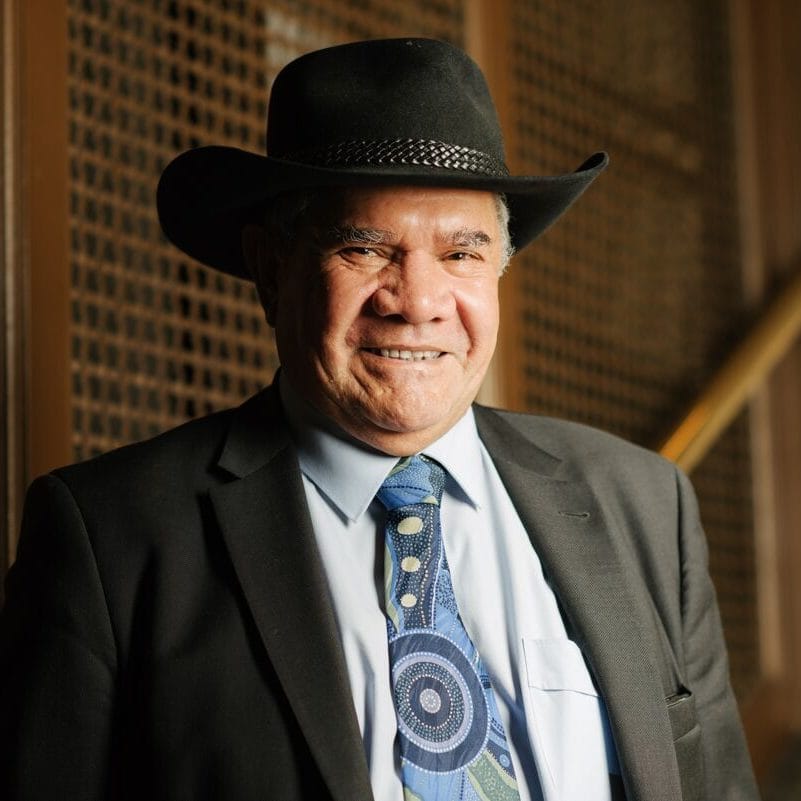 |
| Disability Discrimination Commissioner | Graeme Innes, AM |  |
| Human Rights Commissioner | Emeritus Professor Gillian Triggs, AC |  |
| Race Discrimination Commissioner | Dr. Helen Szoke, AO |  |
| Sex Discrimination Commissioner | Elizabeth Broderick, AO |  |
| Age Discrimination Commissioner | The Honourable Susan Ryan, AO, FAICD |  |
| National Children's Commissioner | Megan Mitchell, AM |  |
Inquiries |
| Case Number: | Plaintiff: | Defendant: | Location: | Case Status: | Background: | Findings: | Recommendations: |
|---|---|---|---|---|---|---|---|
 |
Overview |
| The Independent National Security Legislation Monitor (INSLM) is a statutory independent executive oversight body of the Australian Government responsible for the ongoing review of the operation, effectiveness and implications of Australian counter‑terrorism and national security legislation. The INSLM also considers whether legislation contains appropriate safeguards for protecting the rights of individuals, remains proportionate to any threat of terrorism and or threat to national security, and remains necessary. As such the INSLM is a major part of the oversight regime of the Australian Intelligence Community together with the Inspector-General of Intelligence and Security and the Parliamentary Joint Committee on Intelligence and Security. The INSLM has conducted inquiries on national security legislative issues and issued reports assessing counter-terrorism and national security legislation and making recommendations for reform. Australian security and intelligence agencies provide the INSLM with information (both classified and unclassified), relevant to the above functions. This is under compulsion in some circumstances. The INSLM makes recommendations on these matters in reports, which are then tabled in Parliament. |
Officeholders |
| Office: | Officeholder: | Image: |
|---|---|---|
| Independent National Security Legislation Monitor | Dr. James Renwick, CSC, SC |  |
Reviews |
| Short Title: | Long Title: | Status: | Open Date: | Public Hearings Date: | Closing Date: | Background: | Submissions: | Findings: | Recommendations: |
|---|---|---|---|---|---|---|---|---|---|
Overview |
The Independent Reviewer of Adverse Security Assessments conducts reviews of Australian Security Intelligence Organisation (ASIO) adverse security assessments (ASAs) given to the Department of Home Affairs in relation to people who:
|
Officeholders |
| Office: | Officeholder: | Image: |
|---|---|---|
| Independent Reviewer of Adverse Security Assessments | Philip Moss, AM |
Reviews |
| Complainant: | Case Status: | Background: | Findings: |
|---|---|---|---|
Overview |
| People in certain positions may require a security clearance to access classified Australian Government resources relevant to their position. Under Part IVA of the Australian Security Intelligence Organisation Act 1979, the Australian Security Intelligence Organisation (ASIO) is able to undertake security vetting to assess a person’s suitability to hold, or to continue to hold, a security clearance and make security clearance decisions in respect of a person. ASIO will provide written notification of a security clearance decision to the affected person. This will include information about review pathways available to them. An affected person may apply to the independent reviewer for review of a security clearance decision if:
|
Officeholders |
| Office: | Officeholder: | Image: |
|---|---|---|
| Independent Reviewer of Security Clearance Decisions | The Honourable Margaret Stone, AO, FAAL |  |
Reviews |
| Complainant: | Case Status: | Background: | Findings: |
|---|---|---|---|
 |
Overview |
The AGLS is the overarching, formal professional network that automatically includes all government lawyers, including those working for the Australian Government Solicitor. The focus of this network is to support and develop government lawyers and in-house legal areas, enhancing consistency and efficiency across the Australian Public Service. The AGLS:
|
 |
Overview |
| The Australian Government Solicitor (AGS) is an Australian public servant and a federal government agency of the same name which provides legal advice to the federal government and its agencies. Some Commonwealth legal work, including constitutional law, is 'tied' work that only AGS is able to perform as solicitor on behalf of the Commonwealth. As the Australian Government’s central legal service, AGS is a centre of excellence and expertise in areas of law of importance to the Commonwealth and in managing complex, systemic and precedential issues for the Commonwealth. AGS is often involved in the largest and most sensitive matters affecting the Australian Government. AGS works with agencies to develop innovative solutions to legal issues and to implement commercially and legally robust approaches to some of the largest projects in which the Australian Government is involved. With offices in every capital city and a large legal practice that covers some 40 different areas of law related to government, AGS is one of Australia's largest national legal services providers. AGS brings together lawyers from across the organisation to work on complex matters that require expertise in several areas of law. |
Officeholders |
| Office: | Officeholder: | Image: |
|---|---|---|
| Commonwealth Crown Solicitor | Ian Govey, AM |  |
 |
Overview |
| The Office of the Commonwealth Director of Public Prosecutions (CDPP) is an independent prosecuting service and government agency within the portfolio of the Attorney-General of Australia. It was established by the Director of Public Prosecutions Act 1983 and began its operations in 1984 to prosecute alleged offences against Commonwealth criminal law, primarily the Crimes Act 1914 and Criminal Code Act 1995. The agency has only one outcome: "Contribute to a fair, safe and just society by delivering an effective, independent prosecution service in accordance with the Prosecution Policy of the Commonwealth". It has no investigative power or function, and the decision to investigate matters and refer matters to the CDPP is at the discretion of referring agency. Furthermore, the CDPP depends on referring agencies to investigate alleged offences and prepare briefs of evidence to support prosecution and assets recovery. The Commonwealth Director of Public Prosecutions is based in the head office in Canberra and has offices in Adelaide, Brisbane, Cairns, Darwin, Hobart, Melbourne, Perth, Sydney, and Townsville. Most offices include a Fraud and Specialist Agencies branch, a Serious Financial and Corporate Crime Branch, a Human Exploitation and Border Protection Branch and an Organised Crime and National Security Branch. |
Officeholders |
| Office: | Officeholder: | Image: |
|---|---|---|
| Commonwealth Director of Public Prosecutions | Raelene Sharp, KC |  |
 |
Overview |
The Office of the Australian Information Commissioner (OAIC) is an independent Australian Government agency established under the Australian Information Commissioner Act, acting as the national data protection authority for Australia. The OAIC has three primary functions:
|
Officeholders |
| Office: | Officeholder: | Image: |
|---|---|---|
| Australian Information Commissioner | Angelene Falk | |
| Privacy Commissioner | Carly Kind |  |
| Freedom of Information Commissioner | Toni Pirani |  |
 |
Overview |
The Office of Parliamentary Counsel (OPC) is an Australian Commonwealth government agency established under the Parliamentary Counsel Act 1970 within the Attorney-General's portfolio. OPC drafts all government Bills that are introduced into the federal Parliament, legislative instruments made by the Governor-General, and a range of other delegated legislation. It also manages the Federal Register of Legislation, which is held within the National Archives of Australia, to provide access to authorised, up-to-date versions of Commonwealth laws. The Register also provides legislative instruments, Regulations, Determinations, Notifiable Instruments and Administrative Arrangement Orders from 1901 onwards. Under section 3 of the Parliamentary Counsel Act 1970 the functions of OPC include:
|
 |
Overview |
| The Australian Law Reform Commission (ALRC) is an Australian independent statutory body established to conduct reviews into the law of Australia. The reviews, also called inquiries or references, are referred to the ALRC by the Attorney-General for Australia. Based on its research and consultations throughout an inquiry, the ALRC makes recommendations to government so that government can make informed decisions about law reform. The ALRC is part of the Attorney-General's portfolio; however it is an independent statutory authority constituted under the Australian Law Reform Commission Act 1996. As an independent agency, it is able to undertake research, consultations and legal policy development, and to make recommendations to Parliament independent. The ALRC's objective is to make recommendations for law reform that:
The process for each law reform project may differ according to the scope of inquiry, and the ALRC usually works within a particular framework when it develops recommendations for reform. An Inquiry begins with Terms of Reference delivered by the Attorney-General identifying an area of law that needs to be reviewed for various reasons including:
|
Reviews |
| Short Title: | Long Title: | Status: | Open Date: | Public Hearings Date: | Closing Date: | Terms of Reference: | Submissions: | Findings: | Recommendations: |
|---|---|---|---|---|---|---|---|---|---|
 |
Overview |
| The Australian Institute of Criminology (AIC) is Australia's national research and knowledge centre on crime and criminal justice. The institute seeks to promote justice and reduce crime by undertaking and communicating evidence-based research to inform policy and practice. The functions of the AIC include: conducting criminological research, communicating the results of research, conducting or arranging conferences and seminars and publishing material arising out of the AIC's work. Research activities fall into two main categories: national monitoring programs on homicide, drug use, deaths in custody, and fraud against the Commonwealth; and projects on a range of crime and justice topics. The JV Barry Library is a major criminal justice information resource that provides services to stakeholders and supports the information needs of the institute's research programs. It produces the Australian Criminology database: CINCH, an index of Australian criminal justice information. The JV Barry Library has the most comprehensive library-based collection in the field of criminology and criminal justice in Australia. The collection comprises approximately 90,000 catalogue records for books, serial titles, journal articles, annual reports and other report series. |
Publications |
| Publication Name: | Published Date: | Series: | Authors: | Abstract: |
|---|---|---|---|---|
 |
Overview |
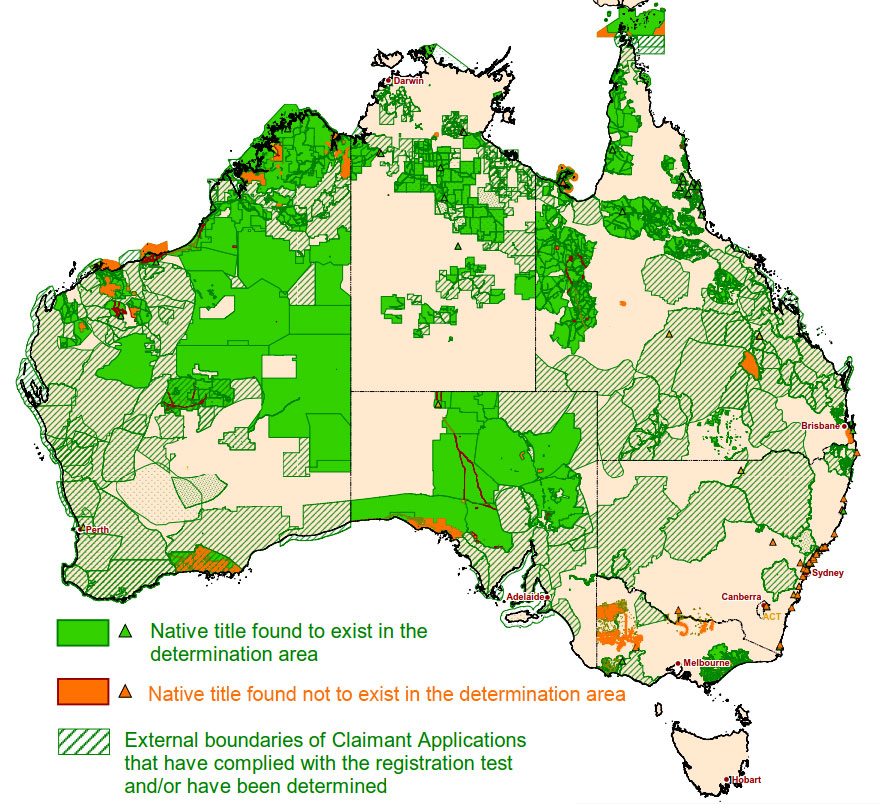
| The National Native Title Tribunal (NNTT) is an independent body established under the Native Title Act 1993 in Australia as a special measure for the advancement and protection of Aboriginal and Torres Strait Islander peoples. The Tribunal has offices in Perth, Cairns, Brisbane, Sydney and Melbourne. It manages applications for and administration of native title in Australia in order to make decisions, conduct inquiries, reviews and mediations, and assist various parties with native title applications in Australia, and Indigenous land use agreements (ILUAs). The Federal Court of Australia makes determinations on whether native title exists, or not. The Tribunal's role is to:
|
National Native Title Register (added in-game only) |
| Tribunal File No.: | Federal Court File No.: | Long Title: | Short Title: | Determination Date: | Determination Outcome: | State/Territory: | Local Government Areas: | Registered Native Title Body Corporate: |
|---|---|---|---|---|---|---|---|---|
Register of Native Title Claims (added in-game only) |
| Tribunal File No.: | Federal Court File No.: | Application Name: | Date Filed: | State/Territory: | Local Government Areas: |
|---|---|---|---|---|---|
Register of Indigenous Land Use Agreements (added in-game only) |
| Tribunal File No.: | ILUA Name: | ILUA Type: | ILUA Parties: | Subject Matter: | Date Registered: | State/Territory: | Representative ATSI Body: |
|---|---|---|---|---|---|---|---|
 |
 |
Overview |
| The Inspector of Transport Security in Australia is a statutory office holder who, when directed by the Minister, investigates major or systemic security incidents within aviation, maritime, and offshore sectors, with the goal of improving the national security framework. While the role of Inspector of Transport Security focuses on independent inquiry and recommendations, Transport Security Inspectors are separate operational roles that perform on-site compliance and testing to ensure industry adherence to security regulations and are operated by the Office of Transport Security within the Department of Home Affairs. |
Inquiries |
| Inquiry Name: | Status: | Published Date: | Background: | Submissions: | Findings: | Recommendations: |
|---|---|---|---|---|---|---|
 |
Overview |
| The Office of the Special Investigator is responsible for addressing potential criminal matters raised by the Inspector-General of the Australian Defence Force. They work with the Australian Federal Police to investigate allegations of criminal offences under Australian law, arising from or related to any breaches of the Laws of Armed Conflict, by members of the Australian Defence Force (ADF). |
Officeholders |
| Office: | Officeholder: | Image: |
|---|---|---|
| Special Investigator | The Honourable Mark Weinberg, AC, FAAL, KC |  |
Published Investigations |
| Operation Name: | Description: | Service Branch: | Unit: | Location of Activity: | Accused: | Published Date: | Decision to Investigate: | Evidence: | Findings: | Recommendations: |
|---|---|---|---|---|---|---|---|---|---|---|
 |
Overview |
The National Anti-Corruption Commission Act establishes the Inspector of the National Anti-Corruption Commission (NACC Inspector), who is independent of the National Anti-Corruption Commission (NACC) and whose role is to oversee the operations and conduct of the NACC to ensure it complies with the law and acts fairly. The Inspector:
|
Officeholders |
| Office: | Officeholder: | Image: |
|---|---|---|
| Inspector of the National Anti-Corruption Commission | Gail Furness, SC |  |
 |
Overview |
The Australian Anti-Slavery Commissioner is appointed under the Modern Slavery Act to work with government, business, civil society, and people with lived experience to address modern slavery in Australia. The Commissioner has discretion in performing his functions. The Commissioner can:
|
Officeholders |
| Office: | Officeholder: | Image: |
|---|---|---|
| Australian Anti-Slavery Commissioner | The Honourable Nick Bolkus |
Last edited:

