Moderators support the Administration Team, assisting with a variety of tasks whilst remaining a liason, a link between Roleplayers and the Staff Team.
Moderators support the Administration Team, assisting with a variety of tasks whilst remaining a liason, a link between Roleplayers and the Staff Team.
(All of these posts are private unless a player is conducting PVP operations or is in a contextual situation to infer it)
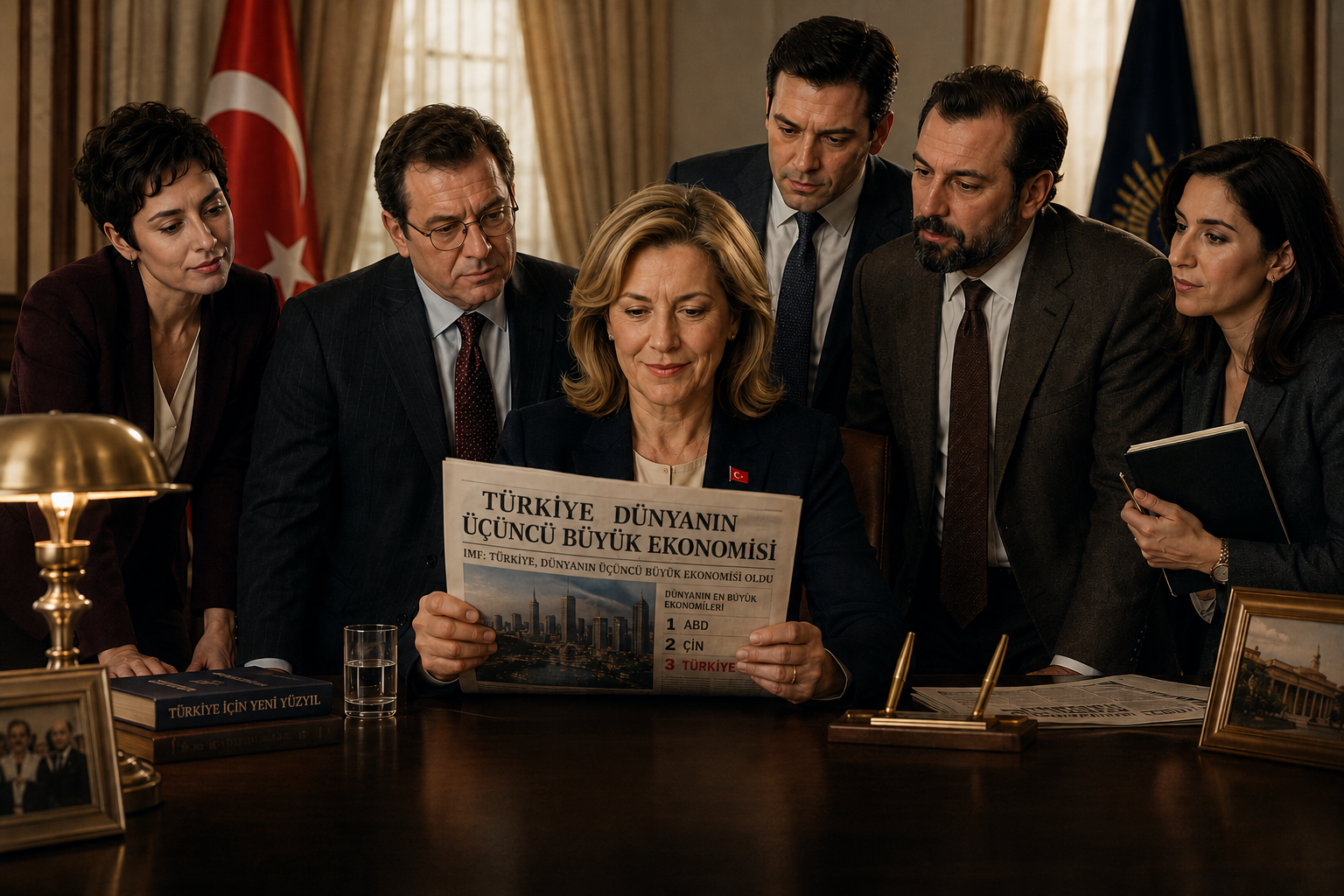
Başbakanlık, which literally translates to The Prime Minister’s Office, follows the life and leadership of Prime Minister Ayşe Çiller, the country's second female head of government and first CHP leader since 1979. This portion covers the third year of Çiller's premiership.
The hallway outside the briefing room was quiet. A guard stood at either end. The aide who had walked them from the outer office had stopped at the security threshold and turned back.
Ayşe Çiller paused outside the door. She pressed two fingers to the bridge of her nose.
Kaan Yaman stopped beside her.
"I'm not sure I'm ready for this," she said. She said it quietly, not to him particularly.
"You handled Cleareye on your first day ma’am," Kaan said looking at Ayşe .
"That was different."
"How."
She looked at him. "Mine clearing is a logistics problem. This is…" She stopped.
"Adnan will explain the options," Kaan said. "I'll be beside you. You ask what you need to ask. There are no wrong questions in there."
"The generals will think…" Ayşe began to say before getting cut off by Kaan.
"They won't think anything. They're here to brief you, not assess you." He paused. "And I was flying F-16s when Hasan was still an instructor. He knows I'll catch anything that needs catching."
She straightened. Put her hand on the door.
"Walk me through the acronyms if I get lost," she said almost pleadingly.
"Yes ma’am."
They pushed the door open and walked into the hallway that led to the situation room. An armed guard opened the door for them.
Inside, six officers rose from the conference table. The room was larger than it looked from the hallway. Maps were pinned to standing boards along the left wall. The projector screen at the far end was already lit. Northern Iraq in satellite grey, red markers scattered across the terrain.
General Küçükakyüz stood at the presentation side. Adnan Özbal sat nearest the door, his admiral's insignia catching the light. Turhan Tayan had his jacket on the back of his chair and a pen already in his hand. Akın Öztürk and Cemal Tural took the chairs nearest the wall, their folders closed.
"Please," Çiller said. "Sit."
They all sat.
She took her seat at the center of the table. Kaan took the chair to her right. He placed a plain notepad in front of her without being asked.
She looked at the screen. Then back at the table.
"Before we go through any of that," she said, "I want to thank you for the planning that went into this operation. I’d like to understand where we are.
General Tural leaned forward slightly. His face gave nothing away, though Ayşe couldn’t get the image of their first meeting all that time ago.
"As you are aware we’ve seen an uptick in violence across the Southeast," he said. He did not check his notes. "A mixture of car bombings, IEDs, ambushes, and lone gunman attacks. The situation is getting out of control."
He waited a moment.
"The ambushes are coordinated. Multiple firing positions, pre-planned egress. They are getting training and they are moving material into the Southeast"
Çiller wrote nothing. She was watching Tural.
"Three weeks ago, the AKGB and MIT conducted detailed operations targeting the PKK’s courier network. We believe a high-level field operative, Huseyin Fehman is running the logistical network for explosives. In addition, we suspect foreign intelligence operatives are active, though we haven’t been successful in getting more information about who."
“Do we have any suspects?” Ayşe asked, taking a note on this.
“No ma’am.” Tural responded. “We have theories that it might be the Russians. The PKK have gotten significant stocks of Russian small arms, and some captured fighters back in ‘95 said that some KGB officers were embedded with their unit for some time.”
Ayşe nodded as she jotted that down before asking. “Why aren’t we considering Thailand’s involvement?”
Tayan stepped in. “At the moment Thailand lacks the sophistication needed for such a large-scale delivery. If a foreign power was behind the material delivery, it would necessitate a large and coordinated team, a strike team or handler to make contact with local agents, a counter-surveillance team to protect activities, and a facilitator to smooth over the process. Importantly Russia has had a weapons embargo on Thailand for years and we don’t believe they could have acquired these weapons through Thailand.”
“I do agree with the Minister’s assessment,” Tural began. “I do caveat that we are exploring those links. Our recent assessment is that we have indications of Thailand’s interests to pursue the use of the PKK as a destabilizing force in West Asia. Though we do not believe they are currently supplying material to the group.”
He sat back. "The PKK has not targeted civilians directly," he said. "But they have not avoided them either. It appears they are getting emboldened and the Kurdish Hawks-wing of the group are preparing to conduct large-scale terror attacks."
Çiller set her pen down. "So they're escalating."
"Yes."
"Why now."
Tural looked at her. "The elections. The situation getting better in Turkiye. Living standards and development in the Kurdish regions…”
Ayşe cut him off. “They’re attacking because we’re making progress for our Kurdish citizens?”
Tural nodded. “You are taking away a critical source of recruitment for them. Disgruntled young men facing economic insecurity and social ostriczation. The situation is getting better and the desire for an independent Kurdistan is going away. So they need to restart that desire through social tension. The group is facing pressure from their own command structure to conduct more attacks. We have assessments, but no single answer. What we can say is the operational tempo has increased. The attacks are becoming more coordinated and more ambitious."
Kaan said, to her, quietly: "This is the pattern before a sustained campaign as we saw in the 90s. They test the response. If the government hesitates, they push harder."
Adnan spoke from the end of the table. "Which is why we're here."
Çiller nodded once. "Show me what you have."
"I’ll hand it over to General Küçükakyüz," Tural said giving the air force chief an opportunity to speak. “Thank you, General Tural. Madame Prime Minister." Hasan began pointing to the map. “Our ISR assets in Northern Iraq under Operation Tigris Sentinel have identified a number of positions that the group is using.”
His pointer moved east to west across the satellite image, tracing the red markers through the terrain.
"One hundred and eighty-five targets were identified across Northern Iraq. Command nodes, supply corridors, training camps, ammunition and fuel storage, transit points." He clicked forward. A second image appeared, closer, the terrain around the Kandil range, the ridgelines visible in the grey-scale photography. "This is not a comprehensive picture of PKK infrastructure in the region. It represents what our ISR collection has collected."
Çiller looked at the density of the markers.
"What are the faded points?" she asked.
"Sixty-three sites were removed before the list went to the NSC. Sites that we can’t really determine who is using, a dangerous proximity to civilian structures, insufficient confirmation, or disproportionate risk of secondary damage." He paused. “Though we’ve kept a few high-reward targets given our intelligence that high-value targets or explosive-making materials are located there."
"Who makes that call in the moment?"
"The strike package commander. General Salih Zeki Çolak is overseeing the operation, and I have confidence in his abilities." Adnan said.
She looked at Kaan, who nodded in agreement.
"The Bayraktars will be watching the target continuously," he said. "If something has changed since the last collection cycle, anything that shouldn't be there, the pilot gets that picture before he puts the weapon on it."
"And if the picture is wrong?"
No one spoke immediately.
Adnan then broke that silence. "Accidents happen, Madame Prime Minister. But the intelligence standard for this list is high. The process was rigorous. Commander Catli's office excluded everything that didn't clear the proportionality threshold. What remains on that list has cleared it."
Turhan added, “The Ministry and the MSB reviewed the legal assessment in full, and we were extremely careful with target selection. This is not a list that was assembled quickly."
Çiller looked back at the screen. "Walk me through what's already in the air."
Hasan clicked forward. An asset diagram replaced the map.
"Four F-16s are currently on combat air patrol over the area of operations. Armed with air to air missiles. Their role is to intercept any aerial threat that might interfere with the strike package or the surveillance assets." He moved the pointer. "A Boeing 737 AEW&C is airborne. It's scanning the full AO and relaying real-time data to Diyarbakır. Five Bayraktar TB2s are on station conducting reconnaissance. The target database reflects collection that has been running for four weeks."
"And the strike aircrafts?" Ayşe asked flipping through the binder in front of her.
"Fourteen F-16s staged at Diyarbakır. Each loaded with six GBU-12 Paveway IIs. They are ready."
She looked at the weapon designation. Kaan caught it.
"Laser-guided bomb," he said. "The pilot designates the target with a pod. The weapon tracks the laser to impact. In this role, precision down to under a meter under normal conditions."
She nodded. "The idea they are more accurate?"
Hasan nodded. “Yes ma’am. The GBU-12 is a guidance kit that turns the Mk. 84 into a guided warhead instead of a dumb one. It is safer for the pilots and the civilian population close to the target areas.”
"How long from my authorization will it take the first strikes to begin?" Ayşe asked.
"Ninety minutes Ma’am.” Adnan said.
She stood and walked to the map board on the left wall. She looked at the terrain, the ridge lines, the valleys, the cluster of markers east of Duhok. The others waited. Kaan didn't move.
She put her finger on a tight grouping of four markers.
"These."
Hasan came to stand beside her. "Three fuel storage sites. One confirmed ammunition cache. The fourth is a transit point, vehicles moving materiel across the ridge line."
"They're close together."
"They share a supply corridor. That corridor feeds PKK elements operating in the border region."
"If we hit those four and nothing else, what does that do?"
Hasan paused. He thought about it without confidence. "It extends their resupply cycle by weeks, possibly longer. The alternative corridor adds two days of travel time, and it crosses terrain that's significantly harder to transit undetected."
She stepped back from the board. "So they slow down."
"Yes."
She returned to her seat. She looked at Adnan.
"What is the goal?" she asked. She said it plainly and let it sit.
Adnan set his folder down. "Degradation. Not destruction. We are not going to eradicate the PKK with this operation," he said. He did not soften it. "That is not what this is designed to do, and it is not what we want to do."
She watched him.
"The PKK is an organization," he continued. "It has ideology, recruitment networks, political wings, international financing. You cannot resolve that from altitude. What you can do is make it expensive to prosecute violence. Remove their ability to move weapons. Disrupt their training. Force them to spend the next several months rebuilding instead of planning the next Elazig." He paused. "The goal is to degrade the operational arm, not decapitate the institution."
"And there's a reason we don't go after leadership directly," Kaan said
She turned to him.
"Targeting specific commanders, senior figures, it focuses on a different set of problems," he said. "That would neutralize their ability to conduct attacks, recruit new members, and coordinate efficiently. However, those men are known. Some of them are well-known internationally. Killing them gives the organization a narrative to use. It generates sympathy in places we don't want sympathy. Hitting an ammunition depot in Kandil doesn't create a martyr." He let that sit a moment. "It just removes a hundred tons of ordnance from the battlefield."
"So we're leaving the structure intact," Çiller said. "The leadership, the political machinery."
"We're leaving it intact for now," Adnan said. "We are cutting the operational sinew. Their capacity to move, to supply, to prepare for the next strike."
Tural chimed in. “We also have a lot more intelligence on the group’s senior leadership due to our penetration of the group. Killing their leadership would not be the right move right now unless we wanted to begin pressuring the organization to move underground.”
She nodded.
"If we go after the organization this way," she said, "and it works…what does the PKK look like in six months?"
Hasan answered. "Reconstituted. Partially. They will rebuild what they can and relocate what we haven't destroyed. This is not a one-operation solution."
"Then what does it buy us?"
Kaan spoke before anyone else could. "Time. Space. The pressure on Van and Siirt doesn't disappear after tonight. But it reduces. It slows the pipeline that's feeding the cells in the south. That gives the Gendarmerie a chance to work. It gives intelligence a chance to work." He paused. "You're not winning anything tonight. You're making it harder for them to win anything over the next three months."
Çiller was quiet.
Adnan said, more carefully "There is something else you should hear."
She looked at him.
He nodded to Tural.
The intelligence chief said: "We have partial intercepts. Nothing confirmed. But the collection pattern is consistent with preparation for a complex attack against an urban target. Istanbul or Ankara. Most likely Istanbul."
The room was very quiet.
"The attacks in the south," Tural continued, "are consistent with a diversion pattern. Draw security resources south. Create noise. Then hit something further north, somewhere the coverage has thinned."
"What do we know," Çiller asked.
"Not much," Tural said. “We’ve identified a cell working outside Ankara that is collecting explosive materials. We don’t know the target or where they will strike, and so we’re letting this develop.”
“Why not get them now?” Çiller asked.
“Because we know who they are, which is our advantage. We don’t know how big the network is, who the target is, or where they will attack. Given the rate of their progress, the best estimate is they will launch an attack in weeks. So we have a window to collect more intelligence.”
She looked at the table for a moment. Then at Kaan. He gave her nothing. This was her read to make.
She turned to Adnan. Then Turhan.
"What am I not asking?" she said.
Adnan looked at the Prime Minister "Do you want to ask about Baghdad?"
“To be honest I almost completely forget them.” Çiller admitted.
Tural smiled as Adnan spoke.
"The Foreign Ministry will want to tell them we intend to operate. The scope would not specified. Baghdad has no operational capacity to contest what we do in that region. And their relationship with the PKK is adversarial. They are not inclined to interfere."
"Inclined," she repeated.
"As certain as diplomatic language gets," Turhan said.
“We have reason to believe a pro-Kurdish faction took power in Baghdad,” Tural began. “But has since lost any effective control of the country, leaving it as a free-for-all.”
She walked once more around the board. She stood in front of it for a long moment, looking at the markers. Then she turned back to the generals.
She looked at Kaan. He looked back at her.
"Go," she said. “You are a go General.” She said nodding to Hasan.
Hasan straightened. "Yes, Prime Minister."
He moved toward the door and dialed the secured phone on the wall. “Commander you are a go. Execute. Execute.” He then hung up. Admiral Ozbal stood up. Tural followed. Akın pushed back his chair.
"Kaan, stay," she said. "The rest of you are dismissed."
The rest of the generals left the room as the door closed behind them. In the corridor outside, Akın fell into step beside Cemal. They walked in the same direction without discussing it.
"The UAV question," Akın said. His voice was low.
Cemal didn't ask which question. "Our intelligence doesn't show it. No airframes, no ground control infrastructure, no deliveries at the Basra port."
"They have money. And Thailand has the ability to source it for them through Iran."
"They do," Cemal said. "But building that capability takes time and a supply chain. We've been watching the supply chain."
Akın walked another few paces. "The CAP package is loaded with Sidewinders."
"I know."
"If something comes back at us…"
"Then the pilots deal with it." Cemal said it without inflection. "I don't think something comes back at us."
They turned the corner. The guard at the gate nodded as they passed.
"When's your next collection cycle?" Akın said.
"Forty-eight hours."
"Run it at twenty-four. Take a look for hangar-like structures that might usually house trucks or lorries. The group could be hiding them there."
Cemal looked at him. "I'll put in the request."
They walked the rest of the corridor without speaking.
This site uses cookies to help personalise content, tailor your experience and to keep you logged in if you register.
By continuing to use this site, you are consenting to our use of cookies.