Moderators support the Administration Team, assisting with a variety of tasks whilst remaining a liason, a link between Roleplayers and the Staff Team.
Moderators support the Administration Team, assisting with a variety of tasks whilst remaining a liason, a link between Roleplayers and the Staff Team.
Turkish authorities deployed additional military units to the country's southeast on Tuesday after a series of attacks attributed to the Kurdistan Workers' Party, or PKK, left multiple police officers and soldiers dead, marking one of the most serious escalations of violence in the region in recent months.
The latest violence began when PKK militants attacked a police patrol in southeastern Türkiye, killing four officers, according to government officials. The assault was followed hours later by an ambush targeting military reinforcements moving into the area as security forces sought to stabilize districts affected by a growing wave of insurgent activity.
The PKK claimed responsibility for the ambush and said its fighters had killed eight Turkish soldiers. Turkish authorities acknowledged that military personnel had been attacked but did not immediately confirm casualty figures released by the group.
The attacks come amid a sharp deterioration in security across parts of southeastern Türkiye, where clashes between government forces and PKK militants have intensified in recent weeks. Officials said the insurgency has already resulted in the deaths of 38 members of the Turkish security forces and 12 civilians since the latest cycle of violence began.
The mountain roads of Tunceli province have long been among the most dangerous in Turkey, winding through steep ravines and dense forest that Kurdish militants have used as cover for decades. On Monday, they claimed four more lives.
A remotely detonated bomb tore through an armored police vehicle as it traveled along one of those roads, killing all four officers inside in an instant the latest in a series of strikes by the Kurdistan Workers' Party, that has turned this rugged corner of southeastern Turkey into the most violent theater of the country's long-running insurgency.
Since August March, at least 38 members of Turkey's security forces have been killed in the South East, along with 12 civilians.
"This is not a spontaneous eruption," said a senior Turkish security official, who spoke on condition of anonymity because he was not authorized to discuss ongoing operations. "This is a planned offensive. They chose the timing, they chose the terrain, and they are executing it with discipline. It is no surprise there is an uptick in violence ever since foreign powers have begun giving credence to terrorists.
The current wave of violence marks one of the sharpest escalations since the mid-1990s, when the conflict between the Turkish state and the PKK reached its bloodiest peak, displacing hundreds of thousands and leaving entire villages razed.
Opposition Leader Recep Tayyip Erdoğan, speaking in Istanbul, offered little room for ambiguity about the situation. "Our security forces will not take a single step back," he said, pledging to support Ayşe Çiller Prime Minister and calling for her to chase the militants "from every cave, every mountain."
Accounts of Monday's ambush, pieced together from Turkish military officials and local sources, suggest the militants had monitored troop movements and positioned fighters along a forested ridge overlooking the road used by the reinforcing column.
The PKK's media wing published a statement from the HPG, the People's Defence Force, the PKK's military wing, claiming that fighters had struck the convoy with small arms fire and rocket-propelled grenades, killing eight soldiers and wounding several others.
Turkish military officials declined to confirm specific figures, saying only that there had been "contact with terrorist elements" and that operations to clear the area were ongoing. In previous episodes of heavy fighting, days have sometimes passed before Ankara acknowledged the full scale of its losses.
Lawmakers from the pro-Kurdish Social Democratic Party, or SODEP, called on Ankara to pursue dialogue rather than escalation, warning that a large-scale military operation risked civilian casualties and would further alienate the Kurdish population.
"Every bomb and every military operation drives more young men toward the mountains," said a SODEP lawmaker from the region, who asked not to be identified by name given the sensitivity of the situation. "Ankara still has not understood this."
The government dismissed such calls. Officials pointed to the scale of the recent attacks as evidence that the PKK had no interest in negotiation, and accused the SODEP, a spiritual predecessor of the TIP which legalized the PKK during its time in government, of providing political cover for a terrorist organization a charge the party vigorously denies.
Analysts said the current escalation bore the hallmarks of a deliberate PKK strategy to demonstrate relevance and operational capacity at a moment when the Turkish armed forces seem poised to conduct a heavy cross-border operations in northern Iraq to target PKK bases.
"The PKK wants to show that it cannot simply be bombed into irrelevance," said Rahim Rashidi. "These latest attacks are a reminder we are still here, and we can still bleed you."
For the families of the four police officers killed on Monday morning, such strategic calculus offers little comfort. By nightfall, their bodies had been returned to their home provinces for burial, draped in Turkish flags, in ceremonies that have become a grim ritual of this unfinished war.
In a statement following an emergency security meeting in Ankara, government officials vowed a forceful response and announced the deployment of additional troops, armored vehicles and surveillance assets to affected provinces.
"The Turkish Republic will continue its struggle against terrorism with determination," Deputy Prime Minister İsmail Cem told reporters. "Those responsible for these heinous attacks against our citizens and security personnel will be brought to justice."
Military convoys were reported moving toward several southeastern districts throughout the day, while helicopters and unmanned aerial vehicles conducted operations over mountainous terrain where PKK fighters are believed to maintain positions.
Residents in some communities reported heightened security measures, including checkpoints on major roads and increased military patrols. Local authorities also imposed temporary restrictions in several areas as security operations expanded.
Security analysts warned that the latest attacks could signal a broader escalation if violence continues to spread across the region. The deployment of additional forces, they said, reflects growing concern within the government that insurgent networks may be attempting to expand their operational reach.
As military operations intensified Tuesday evening, officials urged residents to avoid areas where clashes could occur. No timetable was provided for the conclusion of the security campaign, though authorities indicated that operations would continue until militant activity in the region had been suppressed.
The attacks are likely to increase pressure on the government to restore stability in the southeast, where concerns over security have risen alongside fears that a prolonged insurgent campaign could further destabilize the region.
The explosion came at half past ten in the morning, in full sunlight, on a road that connects the city of Tunceli and Batman.
A car packed with explosives detonated alongside a Turkish military convoy moving through a district road on Tuesday, killing six soldiers and wounding three civilians, among them an eight-year-old girl whose family had been traveling in a private vehicle behind the convoy when the blast tore through the road. She was airlifted to a hospital in Diyarbakır in serious condition.
The Kurdistan Workers' Party claimed responsibility for the attack by midday. Its statement, distributed through affiliated media channels, characterized the strike as a precision operation against military targets. The dead soldiers' families received phone calls from officers before the official announcement reached the news.
It was the ninth PKK attack on military or security targets in the southeast in six weeks. It was the first conducted in broad daylight, on a well-traveled road, in a district that Turkish security officials had assessed in recent briefings as relatively stable.
The PKK's campaign has evolved in ways that have alarmed military commanders and unnerved the civilian population of the southeast in roughly equal measure. Earlier attacks in this cycle, a roadside device in Hakkari, a mortar barrage on a forward operating base in Mardin province, bore the hallmarks of operations mounted under cover of darkness, against isolated targets, with obvious attention to limiting the visibility of the violence. Tuesday's bombing abandoned that caution entirely.
Security analysts who study the organization say the shift is deliberate, not incidental. The PKK, which has long maintained a political wing that speaks in the language of rights and recognition while its armed units conduct operations in the field, has a history of calibrating the intensity of its attacks to the political moment. Periods of perceived government weakness or internal Turkish division have, in past decades, reliably preceded escalations.
The group's ultimate objective, an independent Kurdish state carved from territory spanning Turkey, Iraq, Syria, and Iran, has remained constant across four decades of conflict, successive ceasefires, and multiple rounds of on-again, off-again dialogue with Ankara.
"They are testing the response threshold," said Aliza Marcus who follows the group "A nighttime attack on a remote outpost is a message. A car bomb at ten in the morning on a civilian road is a louder message. They want to see what happens next."
Interior Minister Engin Altay arrived at the hospital in Tunceli where the wounded civilians were being treated, accompanied by a security detail and a small press contingent. He had come, his office said, to personally convey the government's concern, to meet with the families, and to demonstrate the state's presence in a moment of crisis.
He was met by a crowd that had gathered in the hospital's entrance and the car park beyond it. Some were families of the wounded. Others were residents of the surrounding neighborhoods who had heard the explosion that morning and spent the intervening hours in a state of suspended dread. A number of them, when they recognized the minister, began to shout.
The details of what was said are disputed at the margins, but the essential facts are not. Mr. Altay was booed. He was surrounded. His security team moved him quickly back to his vehicle without his having entered the hospital. Footage circulated on social media within the hour, and by early evening it had been viewed millions of times.
The Interior Ministry issued a brief statement saying the minister had visited the region to assess the situation and had met with local officials. It did not mention the reception at the hospital.
Mr. Altay, a police officer by training who came to the Interior Ministry with a reputation as a pragmatist and a proponent of what his supporters have described as a "comprehensive approach" to the southeast problem, meaning combining security operations with investment in Kurdish civil society, has become, in recent weeks, the sharpest focal point of public frustration with the government's handling of the PKK threat.
His critics, who now include voices well beyond the traditional nationalist opposition, argue that the ministry's outreach efforts, however well-intentioned, have been read by PKK commanders not as confidence but as concession. That the language of dialogue, deployed while the organization continues to place bombs, has the practical effect of legitimizing violence as a negotiating instrument. That the communities the minister has been reaching out to build trust with are, in some cases, the same communities in which PKK operatives circulate freely.
Mr. Altay has rejected those characterizations with some vehemence. In a television interview last month, before Tuesday's attack, he argued that the alternative, pure military suppression without any political horizon for the Kurdish population, had been tried repeatedly across four decades and had consistently failed to extinguish the insurgency. That the people booing him in hospital car parks, he might say, are the same people who would bear the cost of a military campaign that destroyed their towns and alienated their neighbors.
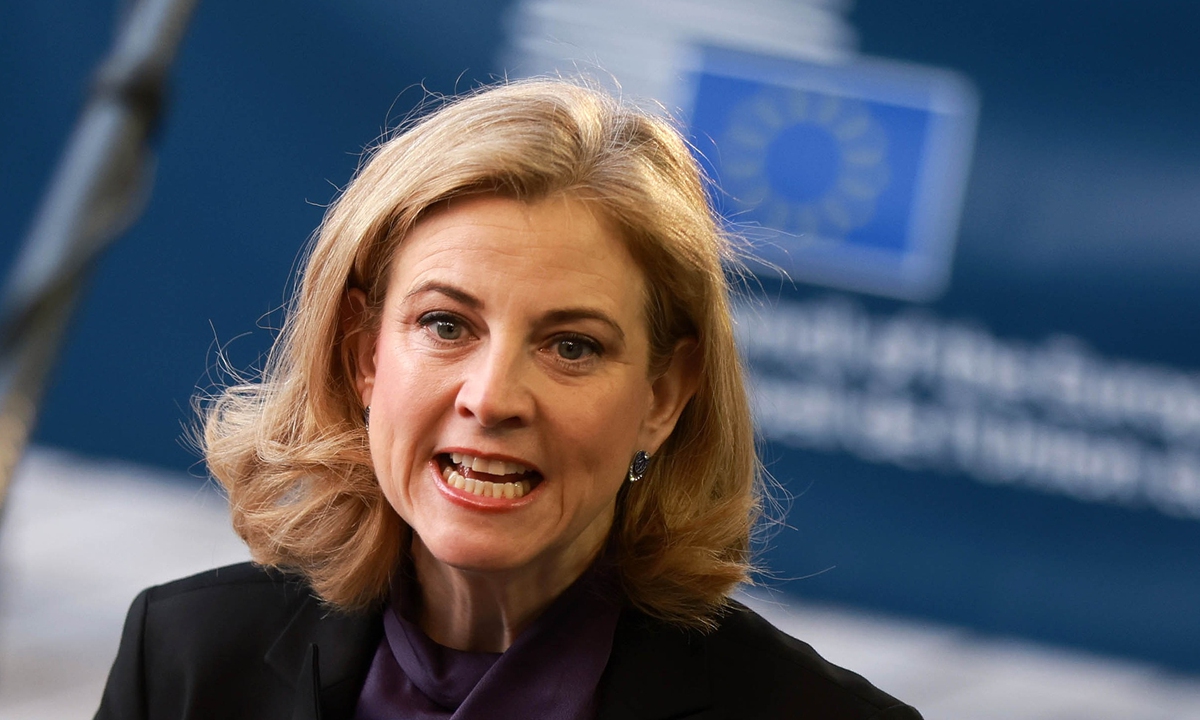
Prime Minister Çiller was briefed on the attack before the casualty figures were confirmed. Her office released a statement of condolence for the fallen soldiers and a pledge to hold those responsible to account. She is expected to address the National Assembly on Thursday. The statement did not mention the Interior Minister.
In Ankara, opposition offices were already drafting their own responses by Wednesday evening. The Victory Party's called for Mr. Altay's resignation and characterized the bombing as the inevitable consequence of what its parliamentary leader described as a policy of appeasement to terror.
In the parking lot of the hospital in Şırnak, the crowd had largely dispersed by nightfall. The eight-year-old girl remained in serious but stable condition. Her name, her family asked, should not be published.
The road where the convoy was struck remained closed as Turkish security forces begin plans for what comes next.
Türkiye launched its first major cross-border military operation against Kurdish militants in northern Iraq since the landmark Operation Steel campaign of 1995, signaling a dramatic shift in Ankara's approach toward the long-running insurgency that has plagued the country's southeast.
In a press briefing on Wednesday, the Ministry of National Defense announced the beginning of Operation Tigris Shield, a large-scale air campaign targeting positions of the Kurdistan Workers' Party, or PKK, in neighboring Iraq.
According to military officials, the Turkish Air Force carried out strikes against 83 suspected PKK targets, including command centers, weapons depots, training facilities, and logistical infrastructure believed to support militant operations inside Türkiye.
"The Turkish Armed Forces have conducted coordinated strikes against terrorist infrastructure threatening our national security," a Defense Ministry spokeswoman told reporters. She added that battle damage assessments were ongoing.
The operation marks the most significant Turkish military action beyond its borders since Operation Steel, which took place between March and May 1995 and involved tens of thousands of Turkish troops operating in northern Iraq against PKK strongholds.
For Prime Minister Ayşe Çiller, the offensive represents a notable departure from the policy of engagement that has characterized much of her government's approach toward Kurdish question.
Government officials said a recent wave of violence had altered Ankara's calculations. A series of car bombings and armed attacks targeting security personnel and civilians across southeastern Türkiye intensified public pressure on the government to respond forcefully to the insurgency.
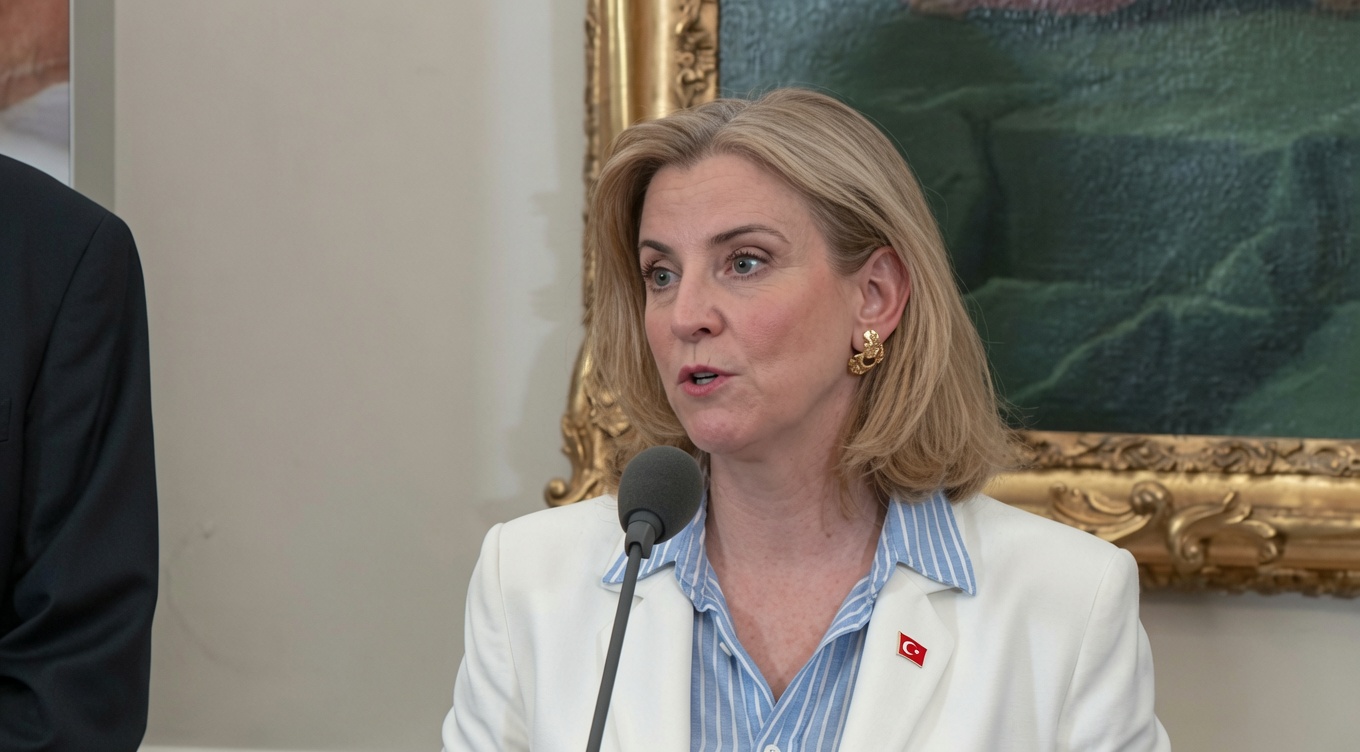
Addressing Parliament, Ms. Çiller defended the decision to authorize military action.
"I have directed our armed forces to take the necessary kinetic measures to eliminate the terrorist threat posed by the PKK," the prime minister said. "Our goals are clear. To deter acts of terror by the PKK. To bring justice to the victims of the PKK's crimes. To neutralize all threats the PKK posses this Republic. "
Turkish officials also renewed calls for the Iraqi government to prevent the PKK from using Iraqi territory as a sanctuary from which to organize and launch attacks. Ankara has long accused Iraqi authorities of failing to curb militant activity in the rugged mountainous regions near the Turkish border, where the PKK has maintained bases for years.
Defense officials suggested that Wednesday's air campaign may be only the opening phase of a broader operation.
"This is the beginning," one senior defense official said on condition of anonymity because he was not authorized to speak publicly. "The PKK should expect continued pressure in the days and weeks ahead."
Questions remain about whether Turkish ground forces have already crossed into northern Iraq. The Defense Ministry declined to confirm or deny reports of troop movements, with the ministry spokeswoman refusing to comment on operational details.
The lack of clarity has fueled speculation among military analysts that Ankara may be preparing for a wider campaign combining air power with special forces or conventional ground operations.
PKK did not immediately comment on the strikes, but the group has vowed to continue its campaign of 'liberation' against the fascist Turkish state.
The offensive comes amid renewed concerns over stability in the region and is likely to draw close scrutiny from both Iraq and Türkiye's international partners, who have urged cooperation against militant groups while seeking to avoid a broader escalation along the border.
As Turkish aircraft continued operations throughout the day, government officials indicated that Operation Tigris Shield would continue until military commanders determine that the threat posed by PKK infrastructure in northern Iraq has been substantially degraded.
A bomb detonated near a crowded market hub in the Turkish capital, killing three civilians and wounding more than a dozen others, as Türkiye launched retaliatory airstrikes against targets in northern Iraq, including the city of Sulaymaniyah, in what officials described as the most intensive phase yet of its campaign against Kurdish militant infrastructure.
The Kurdish Hawks, a militant organization that Turkish authorities have designated a terrorist group and characterize as a operational wing of the separatist Kurdistan Workers' Party, known by its Kurdish acronym PKK, claimed responsibility for the Ankara attack in a statement posted to encrypted channels, saying the bombing was carried out in direct response to Turkish airstrikes that the group said had killed Kurdish civilians in Iraq.
The Turkish Defense Ministry denied that its operations had caused civilian casualties, saying all strikes had been conducted against confirmed militant positions. The PKK separately denied any involvement in the Ankara bombing, a distinction that Turkish officials dismissed.
"The Kurdish Hawks do not exist as an independent entity," said a statement from the office of Prime Minister Çiller. "They are the PKK operating under a different name, and Türkiye holds the PKK fully responsible for this cowardly act of terrorism against our civilians."
The Kurdish Hawks emerged publicly in 2005, presenting themselves as a distinct movement from the PKK., though analysts who study Kurdish militant groups say the relationship between the two organizations remains deliberately opaque and likely serves both parties. The group emerged in response to the PKK joining the Turkish Government during the Communist regime's rule.
Where the PKK which has fought a decades-long insurgency against the Turkish state and is designated a terrorist organization by Türkiye, the United States, Australia, China, an India has in recent years increasingly emphasized political messaging around Kurdish cultural and linguistic rights, the Hawks have cultivated a more explicitly military identity. Their public statements consistently invoke armed resistance as the only legitimate response to what they describe as Turkish state violence against Kurdish populations in Turkey, Syria, and Iraq.
"The Hawks give the broader Kurdish militant ecosystem a degree of deniability," said Major Kara during a press briefing. "When there is an attack the PKK. does not wish to be publicly associated with, particularly one involving civilian casualties, the Hawks provide a mechanism for the action to be claimed without directly implicating the PKK leadership."
The group is believed to operate primarily from the Kandil Mountains and, according to Turkish intelligence assessments, from cells within urban centers in southeastern Turkey and, increasingly, in European cities with significant Kurdish diaspora populations. Its leadership structure is not publicly known. The group has no political wing and has not articulated a formal political platform beyond the broad language of Kurdish self-determination and resistance to Turkish military operations.
The Ankara bombing, if confirmed as the group's work, would represent its most ambitious attack on Turkish soil. Previous operations attributed to the Hawks have targeted military and police infrastructure in the southeast and, on two occasions, provincial government buildings. An attack in central Ankara of this scale places the group in a different category, analysts said.
"This is a significant escalation," said Marcus Leigh, a senior fellow at the International Crisis Studies Group in Brussels. "Ankara is a message. It is saying we can reach you anywhere and we aren't playing by the old rules."
Türkiye has conducted 103 airstrikes against targets in northern Iraq since operations intensified earlier this month, according to figures released by the Turkish Air Force. The campaign was initiated, officials said, in response to a series of PKK attacks in Turkey's predominantly Kurdish southeast that killed several soldiers and wounded others.
Major Kara, spokeswoman for the Turkish Air Force, told reporters at a briefing in Ankara on Thursday that the strikes had destroyed 24 supply depots, 18 ammunition storage facilities, and 6 fuel depots, and had eliminated what she described as hundreds of fighters and dismantled 15 facilities used in the manufacture of improvised explosive devices.
Wednesday's strikes on Sulaymaniyah marked a geographic expansion of the campaign that drew an immediate response from the Kurdistan Regional Government of Iraq, which administers the area and has repeatedly called on Ankara to halt operations it says are conducted without Iraqi government consent and have endangered civilians.
"Sulaymaniyah is not a PKK stronghold," said a statement from the K.R.G.'s security council. "It is a city of over a million people. These strikes threaten the sovereignty of the Iraqi state and the safety of our population."
Turkish officials have said their operations target only confirmed militant infrastructure and are conducted under the right of self-defense enshrined in international law.
The terror bombing have been the furthest-reaching Kurdish militant attack in Ankara since 1995, when a series of P.K.K.-linked bombings struck the capital during the height of the insurgency in the southeast, which claimed more than 40,000 lives over three decades.
The PKK. has promised to respond to the ongoing airstrikes, a threat Turkish authorities have said they are taking seriously.
The three civilians killed in Wednesday's explosion have been identified by Turkish authorities as a retired schoolteacher and two street vendor. Officials said the device was detonated by a PKK fighter. Turkish authorities reduced the death count after confirming the fourth fatality was indeed the PKK suicide bomber. Dozens of people remained hospitalized on Thursday, with at least seven in serious condition, according to Ankara's city health authority.
Opposition parties in Turkey's parliament offered condolences to the victims' families while also calling for a review of the government's approach. Some lawmakers from the opposition Social Democratic Party and pro-Kurdish Peoples’ Democratic Party argued that the intensity of the air campaign risked provoking exactly the domestic attacks the government said it was designed to prevent.
Government ministers rejected the criticism. "Türkiye will not negotiate with terrorism," said the Interior Minister at a press conference Thursday. "We will pursue those responsible wherever they are."
Residents near the site of the blast returned to the area on Thursday morning. Workers swept broken glass from the pavement. Flowers had been left at the barriers erected by police overnight.
"It was just a normal morning," said one shopkeeper who had opened his business across the street from where the bomb went off, and who declined to give his name. "And then it wasn't. It is really scary."
Türkiye's security crisis deepened on Tuesday after the Kurdish Freedom Hawks, known by the Turkish acronym TAK, claimed responsibility for coordinated bombings targeting two commuter buses in central Ankara that killed at least 82 people and wounded scores more. The attacks came less than a week after the same group said it carried out a bombing at the Izmir intercity bus terminal that left 34 people dead, including 12 children.
The latest attacks represent the deadliest terrorist strike in Türkiye in years and have intensified pressure on Prime Minister Ayşe Ciller, whose government is confronting growing public anxiety over a deteriorating security situation.
Government officials condemned the bombings as acts of terrorism and blamed the broader insurgency led by the Kurdistan Workers' Party, or PKK, for fueling the violence. Turkish authorities maintain that TAK operates as part of, or in close coordination with, the PKK, a claim both groups have historically disputed.
Speaking before Parliament hours after the attacks, Mrs. Ciller vowed that Türkiye would not alter its policies under pressure.
"We will not surrender to terrorism," she said. "Our first priority is to get help to those who have been injured, and to take every precaution to protect our citizens at home and around the world from further attacks. The full force of this government will bear down on these monsters."
Her remarks did little to quiet criticism from opposition lawmakers, who argue that the government has failed to prevent a renewed wave of militant attacks despite months of military operations against insurgent positions in northern Iraq.
Public confidence in the government has also weakened. Recent polling shows Mrs. Ciller's approval rating falling to 44 percent from 62 percent only weeks earlier, reflecting mounting concern over public safety in Turkey's largest cities.
The political fallout spread quickly through the government. Interior Minister Mehmet Altay resigned Tuesday evening, accepting responsibility for what he described as failures within the country's internal security apparatus.
"In light of today's tragic events," Mr. Altay said in a brief statement, "I believe the nation requires new leadership and a fresh perspective within the Interior Ministry. I accept responsibility for my shortcomings and submit my resignation."
His departure marked the first cabinet resignation since the recent escalation in violence. Opposition parties immediately seized upon the attacks to renew calls for political change.
During an often-heated parliamentary session, the leader of the nationalist Zafer Party, Ümit Özdağ, accused Mrs. Ciller of allowing militant networks to rebuild and questioned her ability to lead the country through its gravest security challenge in years.
Özdağ characterized the Prime Minister as inexperienced and unfit for office, adding that Turkey "needs a man capable of leading the nation through this crisis." His remarks drew protests from government deputies, briefly interrupting proceedings.
Security analysts said the recent bombings appear consistent with a campaign intended to retaliate against the Turkish Armed Forces' expanding air offensive against suspected militant infrastructure in northern Iraq. Turkish military officials have repeatedly asserted that the operations have significantly degraded insurgent capabilities, although the attacks in Izmir and Ankara have raised questions about the militants' ability to strike deep inside Türkiye despite those claims.
Investigators continued to examine both bombing sites Tuesday night. Authorities have not disclosed the type of explosives used or whether additional suspects have been identified. Flags flew at half-staff across the capital as emergency crews cleared debris from streets blackened by the explosions. Officials warned that the death toll could rise as several victims remained in critical condition.
With army convoys massing along the southeastern frontier and a death toll from bombings climbing past 200 since January, Prime Minister Ayşe Ciller is facing the most consequential national security decision of her tenure: whether to send Turkish ground forces into northern Iraq after PKK militants.
Prime Minister Ayşe Ciller departed the Presidential Palace on Monday evening without addressing reporters, capping a day of closed-door consultations that officials say have brought the government closer than at any point this year to authorizing a cross-border ground offensive against Kurdish militant strongholds in northern Iraq.
The meetings, which included an unusual sit-down with leaders of the opposition Refah Party, come as public anger hardens over a wave of bombings attributed to the Kurdistan Workers' Party, or PKK, that Turkish authorities say has killed more than 200 civilians since the start of the year.
"The calculus has shifted," said one senior Turkish defense official, speaking on condition of anonymity because he was not authorized to discuss military planning. "The air campaign was once championed as a new containment strategy, but it is growing on the civilian leadership now that ground forces are the only way to stop the current wave of violence."
Turkish officials describe the PKK's foothold in the mountainous terrain of northern Iraq in increasingly stark terms, calling the region a lawless staging ground where fighters train, rearm and plan attacks before slipping back across the border. Ankara has periodically struck the area with air power in recent days, but officials say a sustained ground campaign would mark a far more significant escalation.
Signs of military preparation have become difficult to conceal. Residents in towns near the southeastern border have in recent days posted videos showing armored vehicles and transport trucks moving toward staging areas, footage that has circulated widely on Turkish social media and fueled speculation that an operation is imminent. The Turkish military has not commented on the movements.
Ms. Ciller has not publicly signaled her intentions, and her office declined to comment on the substance of Monday's meetings.
"If she moves, she wants cover," said Nada Bashir. "A ground operation of this scale is not something any prime minister wants to own alone. Especially with her razor-thin majority."
Public opinion, meanwhile, appears to be moving in favor of action. Turkish newspapers have run near-daily front pages on the bombing victims, and demonstrations in several cities in recent weeks have called on the government to respond forcefully.
The international response so far has been muted. Neither Washington nor European capitals have issued substantive statements on the troop movements, and diplomats in Ankara say there is little appetite abroad to publicly weigh in before the Turkish Government makes its intentions clear. That silence, some Turkish commentators argue, has itself become a factor in the domestic debate, removing a source of external restraint that has shaped Ankara's calculus in past standoffs.
Türkiye moved a step closer to a military intervention in northern Iraq on Thursday after Parliament voted 533 to 67 to authorize Prime Minister Çiller's government to use military force against bases belonging to the Kurdistan Workers' Party, or PKK, clearing the final political hurdle before what Turkish officials increasingly describe as an imminent cross-border operation.
The overwhelming vote reflected an unusually broad political consensus in Ankara that military action has become unavoidable after months of escalating attacks attributed to the PKK. Opposition parties joined the governing coalition in supporting the measure, arguing that Iraq had failed to prevent militants from using its northern territory as a sanctuary.
Military officials stressed that the authorization does not require an immediate offensive, but senior commanders acknowledged that operational planning is largely complete. Turkish units, including mechanized brigades, artillery formations and special forces, have spent weeks reinforcing positions along the Iraqi frontier while the Air Force has intensified reconnaissance flights over suspected PKK positions.
Defense Minister Turhan Tayan described the parliamentary vote as "a necessary response to persistent terrorist attacks against the Turkish people," insisting that any operation would be directed exclusively against militant infrastructure. "No responsible government can tolerate the continued use of neighboring territory as a staging ground for terrorism."
The operation, however, faces mounting international scrutiny. Canada became the first member of the international community to publicly oppose the anticipated intervention.
Canadian Foreign Minister Rosseau unequivocally condemned recent PKK attacks and announced that the Canadian government would formally designate the organization and its affiliated groups as terrorist entities under Canadian law, making support for or participation in the organizations a criminal offence.
Yet Rosseau drew a sharp distinction between counterterrorism and military intervention. "Canada continues to support the current territorial borders of Iraq and neighboring states within the Middle East," he said. "Any violation of Iraqi territory is unacceptable and violates international law and good order."
The minister also expressed alarm over reports alleging civilian casualties from recent Turkish retaliatory strikes, citing media estimates that as many as 200 civilians had been killed, though those figures have not been independently verified. He urged both Ankara and Kurdish forces to pursue an immediate ceasefire and offered Canada's services as a neutral mediator.
Turkish officials appeared unlikely to find that balance persuasive. Officials at the Ministry of National Defense privately dismissed Canada's criticism as overlooking what Ankara considers years of Iraqi inaction against PKK sanctuaries. Turkish military leaders have long argued that repeated diplomatic appeals to Baghdad and the Kurdistan Regional Government have failed to halt cross-border attacks, leaving military intervention as the only remaining option.
Military planners also rejected suggestions that the operation would target Kurdish civilians, insisting that planned strikes would focus on command centers, logistics depots, supply routes, and mountain camps used by PKK fighters. Defense officials maintained that extensive surveillance and intelligence gathering had been conducted to reduce civilian casualties, though humanitarian organizations warned that combat in the mountainous border region inevitably risks drawing nearby villages into the conflict.
Leaders of Iraq's Kurdish Regional Government rejected accusations that they knowingly harbor PKK militants but acknowledged that the rugged terrain along the frontier has made policing the area difficult.
The parliamentary vote also comes amid heightened nationalist sentiment inside Türkiye, where public anger over recent PKK attacks has fueled growing support for military action. Demonstrations in several cities have called on the government to respond forcefully, while opposition parties largely united behind the authorization despite differing views on domestic policy.
Despite Parliament's authorization, officials insist that Prime Minister Çiller retains the authority to determine the timing of any operation. For Ankara, the debate has increasingly shifted from whether military action is justified to whether further delay would embolden the PKK.
As troops remain massed along the frontier and diplomatic efforts continue to lose momentum, few officials in either capital appear to believe the crisis can be resolved without a decisive test of force, or a last-minute diplomatic breakthrough
The prospect of a Turkish incursion has prompted growing concern among humanitarian organizations and foreign governments, who fear fighting could displace thousands of civilians in one of Iraq's most fragile regions.
Aid agencies warned that many villages near the border remain home to Kurdish farming communities with limited access to humanitarian assistance. Any prolonged military campaign, they said, risks forcing additional waves of displacement in a region already struggling with years of instability.
"Military operations in populated mountainous areas inevitably carry humanitarian consequences," one international relief official based in Baghdad said. "Protecting civilians must remain a central consideration."
Even so, questions remain about whether a military offensive can achieve lasting results. Previous Turkish incursions into northern Iraq disrupted PKK operations temporarily but failed to eliminate the group's ability to regroup in the region's rugged mountains. It is yet to be seen whether Çiller can lead Türkiye through this growing security crisis that is testing her leadership.
Prime Minister Ayşe Çiller of Türkiye on Monday condemned Australia’s decision to move its embassy to Jerusalem, calling the move a “flagrant violation of international law” and warning that the future of the city could not be determined unilaterally.
The status of Jerusalem, Ms. Çiller said, must be resolved through negotiations involving both Israelis and Palestinians. The decision by Australia, she argued, risked undermining efforts to reach a broader settlement to the Jerusalem question at a moment when the region was already facing considerable instability.
The remarks came as Ms. Çiller sought to balance Türkiye’s longstanding support for Palestinian rights with its efforts to preserve relations with Israel, a relationship that has become increasingly important to Ankara’s diplomatic and strategic calculations.
Pressed about the future of Turkish-Israeli ties, Ms. Çiller said she hoped the two countries could maintain “fruitful” relations, but made clear that Türkiye was closely monitoring developments in the Palestinian territories. The future of the relationship, she suggested, would depend in considerable measure on Israel’s willingness to exercise restraint.
That message offered little reassurance to some analysts, who have grown increasingly concerned about Türkiye’s own role in the region. Ankara is preparing for a possible military operation against Kurdish militants in northern Iraq, a move that has already drawn scrutiny and has led some Israeli commentators to accuse the Turkish government of applying a double standard.
Their criticism is that Türkiye insists that Israel should show restraint in dealing with Palestinian militant groups while preparing to use military force against Kurdish groups it considers terrorist organizations.
The comparison has placed Ms. Çiller in an increasingly difficult diplomatic position. Türkiye has sought to present itself as a stable democratic power capable of acting as a bridge between the Middle East and the West. But its position is being tested by the competing demands of security, regional diplomacy and its relationship with its neighbors.
Ms. Çiller has also left open the possibility of a visit to Israel, though she has made no promise to travel there. Instead, she has emphasized the potential for a broader partnership, describing Türkiye and Israel as countries that could serve as “partners for peace in our region” as strong and stable democracies.
Yet her comments have underscored the limits of that partnership. Ms. Çiller has argued that lasting peace will require equal rights for Palestinians and has warned that Israeli interference in the creation of a Palestinian state would not produce the secure neighborhood that Israel itself seeks.
For now, the Turkish government appears determined to keep its relationship with Israel intact while maintaining its criticism of Israeli policies toward the Palestinians. Whether that balance can survive the competing pressures of Türkiye’s own security concerns, its ambitions in the region and the continuing question lingering over Jerusalem remains uncertain.
This site uses cookies to help personalise content, tailor your experience and to keep you logged in if you register.
By continuing to use this site, you are consenting to our use of cookies.