



- Jul 1, 2018
- 2,466
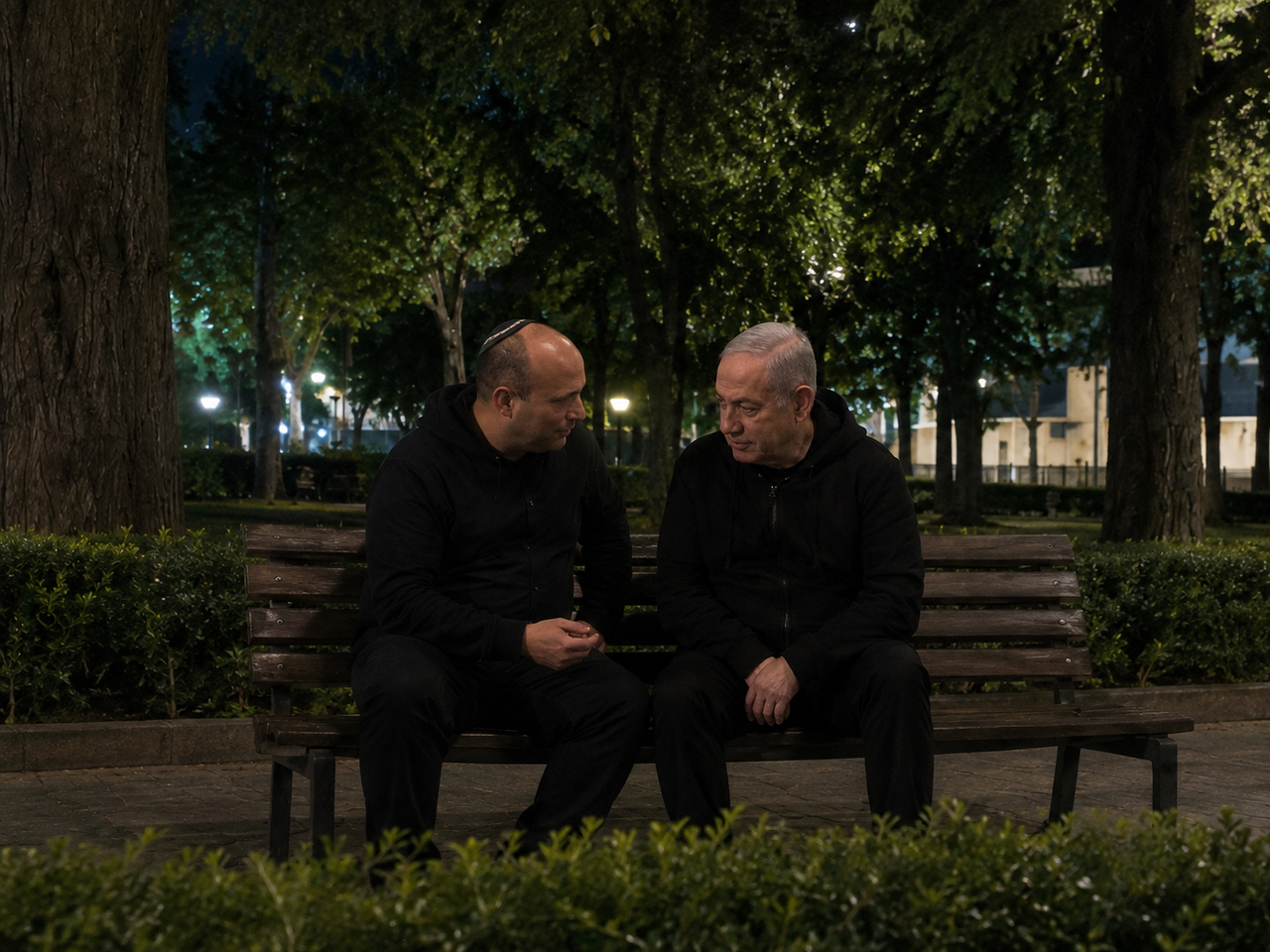
At 2:17 a.m, Naftali Bennett stepped out of an unmarked car onto a deserted road in a park south of Jerusalem. The city was only a distant glow beyond the hills, while the park itself was almost completely swallowed by darkness. There was no convoy waiting behind him, no security officers positioned along the road, and no discreet figure watching from a nearby vehicle. For the first time in years, Bennett was completely on his own.
He had deliberately left his Prime Minister security detail behind.
It was a decision that would have made his former security advisers uncomfortable. But Bennett's instincts had been shaped long before he entered politics. His years in Israel's special forces had taught him that security was rarely about feeling safe; it was about recognizing when something didn't feel right. Even now, years removed from military operations, he automatically studied the tree line, the road and the parked cars. He noticed the places where someone could stand unseen. He listened to the silence.
Old habits, he thought.
They never really disappeared.
A pair of headlights eventually appeared in the distance. The vehicle slowed before turning into the small parking area. Benjamin Netanyahu stepped out, wearing a dark coat and looking around before approaching.
"You came alone," Netanyahu said.
"You asked me to."
"I wasn't sure you would."
"I wasn't sure you would either."
Netanyahu gave a faint smile.
"Then we're both taking a risk."
They began walking along the empty path. Their footsteps were the only sound for several moments. Bennett kept looking toward the trees without consciously meaning to. Netanyahu noticed.
"Still thinking like a soldier?"
Bennett glanced at him.
"Some instincts don't disappear."
"Useful instincts."
"Sometimes."
They continued walking.
Netanyahu eventually stopped beneath one of the park's dim lamps.
"Suppose I were leading Likud."
Bennett immediately answered.
"You're not."
"I know. I'm asking you to imagine it."
Bennett folded his arms.
"Fine. Suppose you were."
"And suppose you were willing to work with me."
Bennett studied his face.
"Then what?"
"I think our agendas could work together better than people would expect."
The answer was deliberately vague, but Bennett understood what was underneath it. Netanyahu was talking about security, economic policy, technology, regional diplomacy and the broader direction of the Israeli right. There were substantial disagreements between them, but there was also considerable overlap.
"What would you actually want from me?" Bennett asked.
"Cooperation where our interests overlap. Stability. A government that can make decisions without collapsing every few months."
"And what would you offer?"
"Influence."
Bennett gave a quiet laugh.
"That's a very political word."
"Because it is politics."
Bennett looked toward Jerusalem.
"If we ever worked together, I wouldn't become part of Likud."
"I wouldn't ask you to."
"I wouldn't defend every decision you make."
"I wouldn't expect that either."
"And if I believed you were taking the country in the wrong direction?"
"Then oppose me."
The answer made Bennett pause.
He had expected bargaining. Instead, Netanyahu was offering something more complicated: an understanding that cooperation didn't require surrender.
Bennett thought about his own career. He had spent years moving between worlds that were never supposed to fit together, special forces, business, politics and eventually the prime minister's office. At every stage, people had tried to define him by what he had been before. But Bennett had always been most comfortable when the path ahead wasn't obvious.
Perhaps that was why he had agreed to this meeting.
Not because he trusted Netanyahu.
He didn't.
But because he understood that political alliances were sometimes built not on trust, but on overlapping interests and the willingness to take calculated risks.
"If we do this," Bennett said quietly, "it has to be because we believe it benefits the country."
Netanyahu looked at him.
"That's exactly what I'm proposing."
For a moment, the two men simply stood there.
Then a faint metallic click came from somewhere beyond the trees.
Bennett's expression changed immediately.
His military instincts returned before his political mind could catch up.
"Someone's there."
Netanyahu turned toward the darkness.
Nothing moved.
Then came the unmistakable sound of a camera shutter.
Bennett took a step toward the trees.
Netanyahu caught his arm.
"Don't."
Bennett looked at him.
"Someone photographed us."
"Exactly."
"So?"
"So whoever it is wanted us to know."
Bennett stopped.
His old training was already running through possibilities. If someone had been close enough to photograph them, they had probably been close enough to hear at least part of the conversation. The question was no longer whether the meeting had been discovered.
It was why the observer had allowed it to continue.
Bennett's phone vibrated.
He pulled it from his pocket.
There was a single message from an unknown number:
I KNOW WHY YOU'RE HERE TONIGHT.
He showed Netanyahu.
Neither man spoke.
Bennett stared toward the tree line, his expression becoming colder.
The former soldier in him began working through the problem: who knew about the meeting, who could have followed them, and who had enough information to understand its political significance?
Netanyahu finally spoke.
"This changes things."
Bennett put the phone away.
"No."
Netanyahu looked at him.
"It tells us something."
"What?"
Bennett looked once more into the darkness.
"Someone is already afraid of what might happen if we work together."
They turned back toward the road.
Neither man mentioned the alliance again.
They didn't need to.
The possibility was already dangerous enough.
And somewhere in the darkness behind them, the person who had been watching quietly followed their departure through the viewfinder of a camera.


