- Oct 3, 2018
- 3,920
On 3 November 1996, near the town of Susurluk in Balıkesir province, a speeding Mercedes collided with a truck, killing a constellation of figures who should never have been in the same vehicle. Among the dead were Abdullah Çatlı, a Grey Wolves leader and fugitive wanted by Interpol; a senior police official; and a parliamentarian from Çiller’s own True Path Party (DYP). The presence of these men together and their intimate ties to Interior Minister Mehmet Ağar exposed the architecture of a “deep state”, in which government ministries, security services, nationalist paramilitaries, and the mafia converged to wage covert war against the Kurdistan Workers’ Party (PKK).
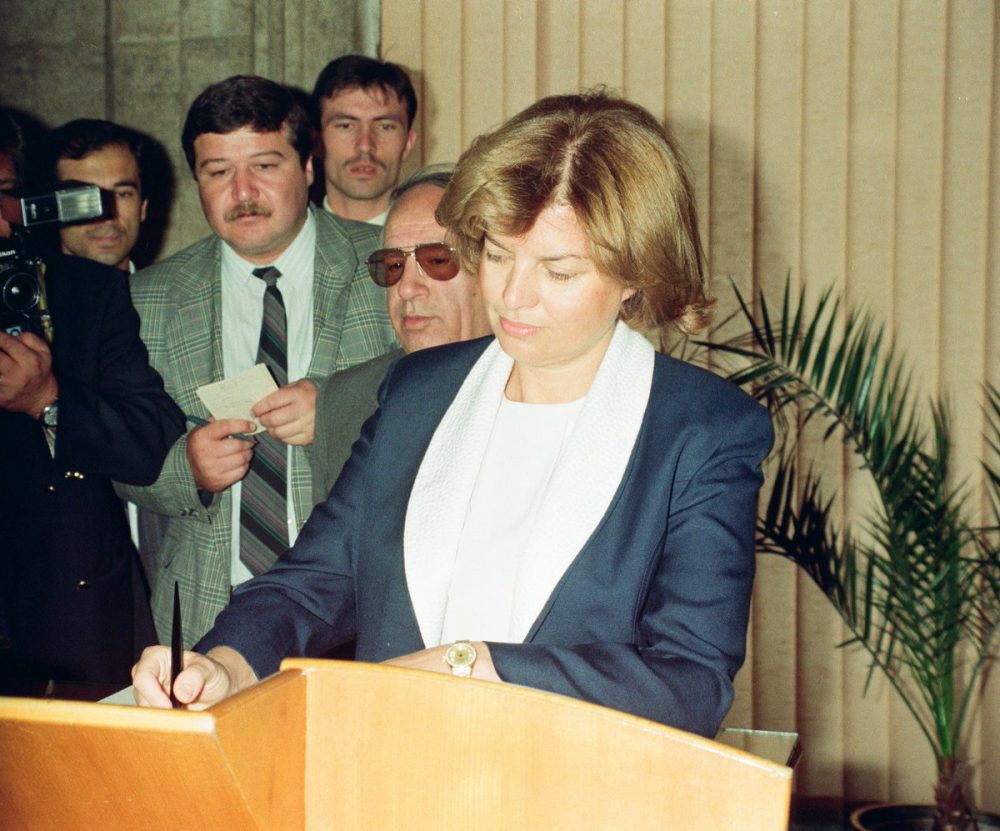
Prime Minister Tansu Çiller had for years defended shadowy counter-terrorist operations as essential to national security. Indeed, she herself had authorized a policy of “special measures” against the PKK, empowering Ağar’s police units and their network of enforcers to cripple insurgents and eliminate separatist leadership. When the crash revealed that her government was entangled with contract killers, drug traffickers, and ultra-nationalist militants, the scandal ignited a public firestorm.
In Ankara, the revelations split the security establishment into rival factions: Mehmet Ağar’s police-led camp, leaning toward Europe, and Mehmet Eymür’s MIT camp, which cultivated American ties. Newspapers labeled the confrontation “the battle of the two Mehmets.”Citizens, meanwhile, flooded the streets in nightly “Sürekli Aydınlık için Bir Dakika Karanlık” (“One Minute of Darkness for Constant Light”) protests, symbolically turning off their lights to denounce corruption and demand accountability.
As Çiller’s government collapsed, Türkiye was plunged into both political and social crisis. Public outrage at “the deep state” coincided with intensifying violence in the Kurdish conflict, which, far from weakening nationalist politics, instead bolstered them.
By early 1997, nationalist rhetoric was dominating public discourse. For many Turks, the war against the PKK symbolized the survival of the Republic itself. Calls for decisive leadership grew louder, while the fragmented parliament struggled to assemble a durable coalition. In this atmosphere, the military, still the self-proclaimed guardian of the Republic, signaled impatience. Though it refrained from a direct intervention, senior generals warned the political class that the instability could not continue. The message was clear: form a functional government or risk the military’s return to overt political arbitration.
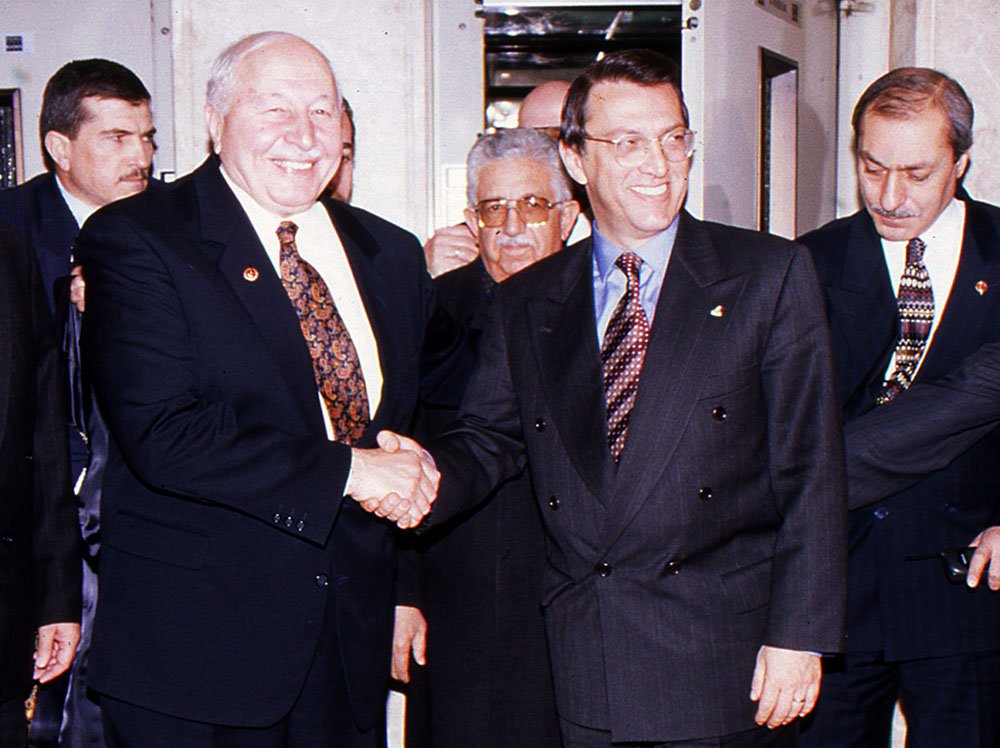
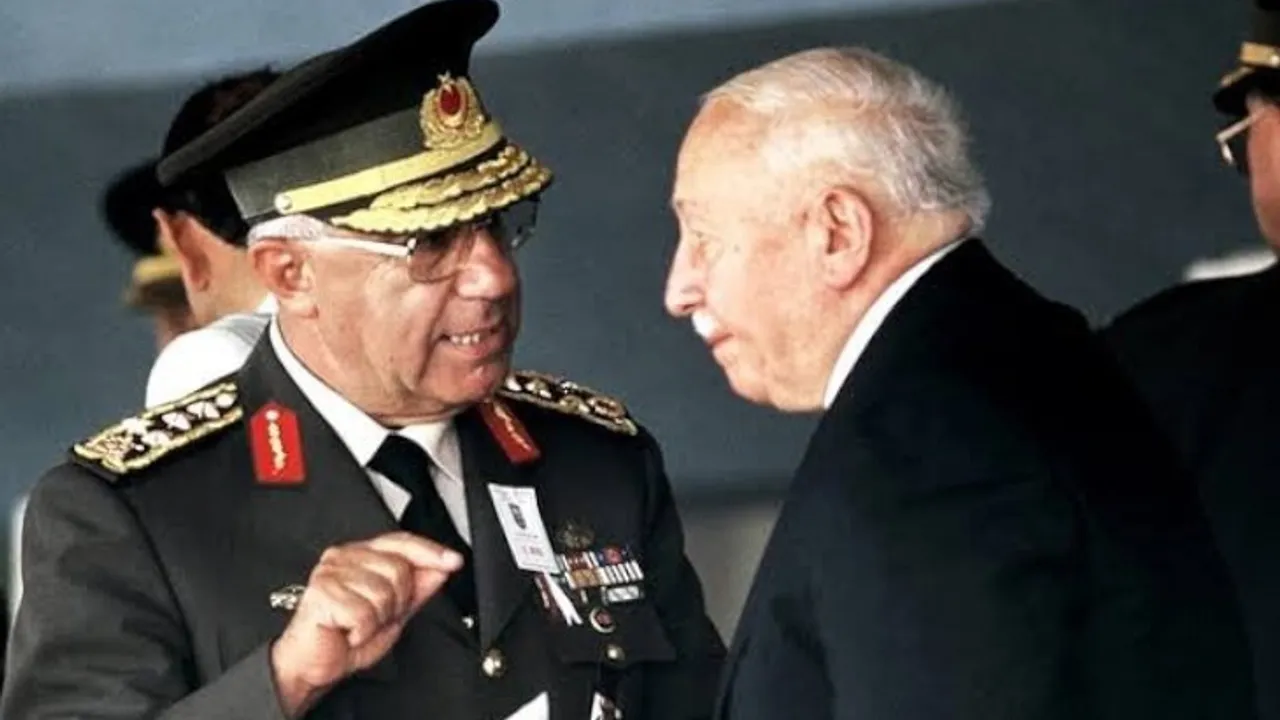
Yılmaz accepting becoming Prime Minister after a year-long political crisis, after Tansu Çiller’s government collapsed.
It was in this growing political crucible that Mesut Yılmaz, leader of the right-wing Motherland Party (ANAP), emerged as the most acceptable compromise figure. Though his party lacked the numbers for a strong majority, Yılmaz’s reputation as a modernizer and his relative distance from the Susurluk scandal made him a candidate palatable to both the military and segments of the public. With a weak mandate but strong establishment support, Yılmaz assumed the premiership in mid-1997.
Yet Yılmaz understood the precariousness of relying on military pressure as the guarantor of civilian government. If his authority depended solely on the generals, he would remain little more than a caretaker. Seeking to build a parliamentary base independent of military tutelage, Yılmaz turned to Devlet Bahçeli’s Nationalist Movement Party (MHP).
Though ideologically uneasy, the partnership offered mutual benefits. The MHP, buoyed by the nationalist wave unleashed by the Kurdish conflict, was eager to enter government and shape policy. Yılmaz, in turn, believed that by bringing Bahçeli into coalition he could channel rising nationalist energy into parliamentary politics rather than leave it festering on the streets or within paramilitary networks. Thus, by late 1997, the ANAP–MHP coalition was formed, presenting itself as the defender of national unity against both corruption and separatism.
Though Mesut Yılmaz assumed the premiership in 1997, the coalition with the Nationalist Movement Party (MHP) quickly proved to be less a partnership of equals and more an opportunity for Devlet Bahçeli to entrench himself at the heart of the state. Bahçeli of this timeline possessed a ruthless political instinct, a deep suspicion of the civilian political class, and a talent for manipulating fear.
As Deputy Prime Minister, Bahçeli positioned himself as the uncompromising guardian of the nation. He regularly derided parliament as corrupt, accused opponents of treachery, and spread conspiratorial claims about foreign plots to divide Türkiye. The Kurdish conflict, foreign maneuvering, and the Europe’s hesitant engagement all became tools in his narrative: that only a strong hand, unencumbered by squabbling politicians or foreign meddlers, could protect the Republic.
Türkiye’s long-serving President, Süleyman Demirel, represented the last vestige of the old guard a veteran politician, aged and increasingly frail, whose authority was waning. Bahçeli recognized both the symbolic and practical value of neutralizing him. Working through allies within the Presidential Office, Bahçeli engineered a subtle palace coup. Officially, Demirel remained President, but his public appearances dwindled. Statements in his name were filtered, edited, and often crafted by Bahçeli’s circle.
By 1998, Demirel was all but invisible to the Turkish public. His role had been hollowed out, leaving Yılmaz as the face of civilian governance while Bahçeli operated in the shadows, gradually monopolizing influence over the Presidency. The military, cautious not to inflame instability, tolerated the arrangement so long as the coalition maintained national unity and prosecuted the war against the PKK
For two years, the Yılmaz–Bahçeli coalition projected a fragile stability. On the surface, the government appeared to function: laws were passed, the bureaucracy operated, and Ankara avoided open breakdown. Yet beneath the surface, the cost of coalition governance was immense. A 1998 defense pact, driven largely by Bahçeli’s insistence on escalating the war against the PKK, led to a sharp increase in military spending. Budgets for social services shrank, corruption expanded, and foreign investment declined.
Still, Bahçeli exploited the situation to his advantage. The Kurdish conflict was framed as a near-existential war, justifying extraordinary measures. MHP-aligned networks gained influence in the Interior Ministry, the security services, and even segments of the judiciary. The discourse of the state hardened: dissenters were branded traitors, and whispers of dictatorship became less taboo.
By 1999, the coalition’s contradictions became unsustainable. The military spending spree of 1998–1999 drove the economy into recession, triggering inflation and rising unemployment. Social unrest simmered, particularly in urban centers where economic decline hit hardest.
Then, disaster struck. The Düzce earthquake of March 1999, which killed tens of thousands, exposed the incompetence and corruption of the political class. Rescue efforts were slow, aid was mismanaged, and public fury boiled over. To many, the earthquake symbolized the rot of the system itself.

Aerial view of the devastation from the 1999 disaster. The estimated death toll ranges between 5,000 and 10,000.
For Mesut Yılmaz, the crisis was catastrophic: his government appeared paralyzed, his reformist promises hollow. Yet for Devlet Bahçeli, it was an opportunity. With the President sidelined, the Prime Minister discredited, and the public enraged, Bahçeli sensed that his moment had arrived.
Amidst the mounting chaos of the 1999 economic collapse and the devastation of the Düzce earthquake, Devlet Bahçeli moved with calculation. Learning through his growing network inside the ministries that elements of the bureaucracy remained quietly opposed to his nationalist agenda, Bahçeli played upon Prime Minister Mesut Yılmaz’s anxieties. Warning him of “plots” within the state and imminent civil unrest, Bahçeli persuaded Yılmaz that only an immediate show of strength could preserve order.
At Bahçeli’s urging, Yılmaz reluctantly announced a state of emergency that night, authorizing the armed forces to assist the National Police against any “dissident threats.” The order, framed as a temporary measure, in fact stripped the government of its remaining independence. With the stroke of Yılmaz’s pen, the security apparatus effectively shifted under Bahçeli’s control. From that moment forward, the line between civilian authority and nationalist command blurred, leaving Yılmaz isolated, compromised, and unaware that he had just handed his deputy the legal instruments of authoritarian power.

Poland hosted high-stakes peace talks in Warsaw, bringing together Egypt, Israel, Türkiye, Saudi Arabia, and the United States. The summit, dubbed the Warsaw Peace Talks, aimed to defuse rising tensions in the Eastern Mediterranean and prevent a regional war. Polish King Stanislaus Grabowski positioned Warsaw as a neutral ground, hoping to broker a framework for de-escalation and peace.
What was meant to be a final attempt at de-escalation between Türkiye and Israel abruptly collapsed when Polish air defense systems locked onto the Turkish escort squadron. The sudden aggression, unexpected and, according to the Turkish Security Council, likely provoked by Israeli interference, triggered an immediate withdrawal. All three aircraft turned back, exiting Polish airspace under strict protocol. Back in Ankara, Prime Minister Mesut Yılmaz was still on a secure call with the Israeli Prime Minister when he was quietly informed: the Warsaw talks were officially terminated.
The Turkish Security Council, now run by Bahçeli loyalists, and their decision to end negotiations ran counter to the Prime Minister’s wishes and fractured the already fragile unity within the Grand National Assembly. With ANAP holding only half the seats and nationalist factions gaining momentum, the rejection of diplomacy was seen by many as a turning point. The far-right narrative that only force could compel Israel to the table began to dominate public discourse.
This moment would later be remembered as the final nail in the coffin of Türkiye’s unified civilian government. The Warsaw debacle not only ended peace efforts but also accelerated the country’s descent into militarized nationalism and irreversible confrontation.
By September, Türkiye was now at a dangerous crossroads. Bahçeli’s warpath had put the country on the brink as Bahçeli championed the Palestinian cause to justify his long-term plan to supplant Arab nationalism. Prime Minister Mesut Yılmaz was abroad in Hobart, engaged in delicate talks with Israel, negotiations Devlet Bahçeli himself had quietly encouraged but deliberately prolonged, knowing that the optics of a Turkish leader dealing with Jerusalem would inflame nationalist sentiment at home.
For Yılmaz, the Hobart was a chance to turn the tables on the nationalists and regain control. He recognized their key strength to stay in power was to create a crisis and saw Bahçeli desperately try to create the conditions for war. However, Australia proved a poor host. Foul language and lack of diplomatic tact by Premier Jim Bacon and Governor William Cox, acting well above their capabilities, scuttled the prospects of peace.
Into this vacuum, Deputy Prime Minister Devlet Bahçeli moved decisively. The following year, on July 4th 1999, Bahçeli addressed the nation simultaneously over radio and television. Backed by party loyalists within the state media and reinforced by sympathetic figures in the Interior Ministry, his speech was effectively a coup against Prime Minister Yılmaz

In his address, Bahçeli denounced the very foundation of the multi-party system:
“The Opposition DSP, ANAP, and CHP continue to hinder our economic growth and have caused gridlock across the Grand National Assembly. Therefore, I believe it’s time the Turkish people call on the opposition to step down in order for key economic revitalization and debt relief bills to be passed. We promised when coming to power that we will make Türkiye the strongest Middle Eastern economy ever and we will deliver. But first, we must end the sabotage of those who would leave Turks too poor to buy bread in the market or a home for their families. We must allow the MHP to take complete control of the government, ending gridlock and uniting the nation.”
Bahçeli then turned his fire toward the presidency and the Prime Minister himself:
“I am beginning to doubt, as does the Nationalist Movement, the loyalty of our President, who, despite adopting our flag, has sold his allegiance to Western powers. He caters to them only to grow his own power while weakening the Turkish people. And where is our Prime Minister now? Speaking to the enemy of the people, Israel, pursuing a false peace while our nation bleeds. This betrayal must end.”
Finally, he delivered the thunderclap:
“I hereby call for a special national election to eradicate weakness in our leadership. With complete control of the Grand National Assembly, we shall propel Türkiye to heights not seen since the Ottoman Empire and beyond. We will take immediate action against the Zionist state of Israel, against the terrorist Kurdish Democratic Party, and against the Western powers who meddle in our affairs. A united Turkish nation will no longer bow to foreign masters. The time of division is over. The era of nationalist strength begins.”
Within hours, state broadcasters repeated Bahçeli’s address on a loop, interspersed with nationalist imagery and footage of earthquake devastation, framing the MHP as the only force capable of rebuilding. ANAP and CHP figures were shouted down as “traitors” on television. Devlet wasted no time and had his paramilitary forces carry out systematic purges targeting opposition politicians, civil servants, and the armed forces’ top leadership.
Thus, without the military on the streets or a formal coup, Bahçeli had seized control of the Turkish state through narrative, intimidation, and the machinery of propaganda. The coming election, though called under the guise of legality, would be no more than a frauded referendum that would give birth to his one-party nationalist state.
With the state of emergency already in place, Devlet Bahçelimoved swiftly to consolidate power. His first executive act as Head of Government was the dissolution of three opposition parties, the Democratic Left Party (DSP), the True Path Party (DYP), and the Virtue Party (FP,) on charges of corruption and conspiracy against the Presidency. The decision was presented as a legal necessity to ensure “effective governance” in a time of national crisis. Vacant seats in the Grand National Assembly were immediately filled by presidential appointment, cementing the dominance of the Nationalist Movement Party (MHP).
The capital soon witnessed scenes reminiscent of the 1980 military coup. Armored vehicles of the Gendarmerie and Army surrounded the Grand National Assembly, escorting opposition deputies from the chamber under guard. Within hours, a warrant for the arrest of Mesut Yılmaz was announced, accusing him of treason and of conspiring with foreign powers, Israel foremost among them, to weaken Türkiye in its time of crisis.
In the weeks that followed, the regime orchestrated what it termed a “Special Election”, held under strict censorship and an information blackout. The outcome, declared by state media, was the total victory of the MHP–ANAP Nationalist Alliance, granting Bahçeli complete parliamentary control. In a striking act of political theater, the Assembly “voted” to appoint Mesut Yılmaz as President, allowing him to rule with executive authority.
Devlet Bahçeli had consolidated full authority over the Turkish Republic. His cult of personality grew rapidly: portraits of Bahçeli adorned public squares, schools, and offices; radio and television referred to him as the “Father of the Nation”; and his speeches were broadcast daily as national directives. Bahçeli fused ultranationalism with state terror, demanding absolute loyalty and portraying himself as the only bulwark against foreign enemies and internal traitors.
The army, once an independent force, was brought under party control, its officer corps purged of suspected dissenters. Civil institutions were hollowed out, replaced by MHP loyalists. Dissent was crushed by the Özel Harekat police and gendarmerie, which targeted journalists, intellectuals, and political activists.
Bahçeli’s foreign policy was defined by hostility and paranoia. Claiming that Türkiye’s economic collapse and earthquake devastation had been “orchestrated” by international conspiracies, he focused on Israel as the primary enemy. Using border incidents in Syria and Lebanon as a pretext, Bahçeli declared that Türkiye would “liberate Palestine” and promised to launch cross-border strikes against Israeli positions.
Australia’s diplomatic exchanges, which Ankara assumed to represent the will of the coalition, demanded that Bahçeli hand himself over to the ICJ, that the Turkish State be permanently disarmed, forced to recognize Israel, and that the complete disbandment of the Turkish armed forces. The exchanges convinced Bahçeli that the only path left for which he had dug himself, was war.
Ankara responded with mass mobilization, but the Turkish army, poorly led, politically purged, and overstretched, faltered. The United States, the United Kingdom, Sweden, Russia, and Australia entered into direct operations against Türkiye, each pursuing its own strategic interests.
The war had become catastrophic. Russian forces occupied the Black Sea coast, Istanbul, and Ankara, systematically destroying Türkiye’s infrastructure. Ports, bridges, and power plants lay in ruins. Turkish divisions collapsed in humiliation, many surrendering without a fight.
Facing military disaster, Bahçeli turned his fury inward. Declaring minorities including Kurds, Armenians, Greeks, and Assyrians, to be traitors in league with Israel and the West, he orchestrated a campaign of forced relocations and mass killings. Hundreds of thousands were expelled from Anatolia into makeshift camps, often without food or shelter.
The campaign drew international condemnation and direct intervention. Human rights organizations described the policy as an attempted genocide, comparable to the Balkan wars of the 1990s but on a greater scale.
As the war progressed, Türkiye lay in ruins. The military was shattered, the economy obliterated, and millions displaced. The Russian occupation of Istanbul and Ankara became symbols of national humiliation, reminiscent of the Ottoman Empire’s worst defeats. The United States and European powers pressed for Bahçeli’s removal, while Russia exploited the chaos to expand its Black Sea dominance.

Russian forces began closing in on Ankara by January after successive, and largely unopposed, landings along the black sea coastline.
Bahçeli, however, clung to power, broadcasting fiery speeches from underground bunkers, insisting that Türkiye was on the brink of final victory. His government persisted only through terror, while much of Anatolia descended into lawlessness, factionalism, and famine.
From exile in Tel Aviv, Mesut Yılmaz watched in horror as Türkiye crumbled. Coalition airstrikes had reduced towns and cities to ash. Istanbul was under Russian control. Ankara was encircled. Millions were displaced. The man once branded a traitor now saw his country teetering on the edge of annihilation.
Yılmaz, aided by remnants of the Turkish diplomatic corps, slipped back into Anatolia under deep cover. He arrived in Kayseri, where opposition cells had begun to organize. The regime’s grip had weakened and people were fearful of dying under persistent Russian and British aerial campaigns.
Yılmaz rallied the fractured opposition. His message was clear: Türkiye must surrender to survive. The alternative was total destruction.
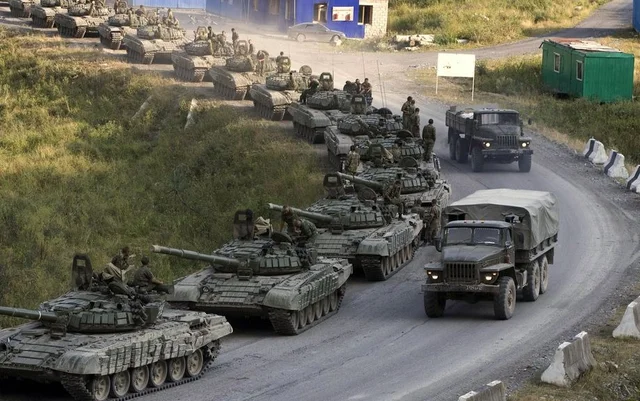
As Russian armor closed in on Ankara, Bahçeli and his inner circle fled westward toward Afyonkarahisar, abandoning the capital. The Grand National Assembly, now half-empty and surrounded by rubble, was retaken by opposition forces.
On January 2000, Mesut Yılmaz boarded a military transport bound for the Mediterranean. There, anchored off the Turkish coast, was the U.S.S. Missouri awaiting. In a solemn ceremony on its deck, eerily reminiscent of Japan’s surrender in 1945, Yılmaz signed the unconditional surrender of the Pan-Turkic Government Forces to coalition forces.
The humiliation was profound. Turkish civilians, already devastated by war, viewed the surrender as both betrayal and relief. The deaths of tens of thousands in coalition bombings, the occupation of Istanbul, and the forced relocations had left deep scars. The surrender did not bring closure. Only silence. Across the country, fatigued and demoralized Turkish soldiers surrendered as coalition forces planned their next steps.
The multinational coalition that had expelled Bahçeli’s regime collapsed almost as quickly as it had formed. With Türkiye’s official surrender signed aboard the U.S.S. Missouri in January, American, British, Swedish, and Russian forces withdrew their combat units within weeks. Only Australia remained beyond token levels, its diplomats and aid workers mobilized at Istanbul and Ankara airports to process a deluge of refugees.
Facing a power vacuum, Türkiye’s interim government moved swiftly to organize free elections that year. Amid a fractured political landscape, the electorate gravitated toward Adem Şahin, a former provincial governor known for technocratic competence and austere reform pledges.
On election night, Şahin’s coalition captured a slim parliamentary majority. He assumed the presidency in November 2000, promising a “Second Republic” built on transparency and social solidarity. Parliament, however, was riven by petty rivalries: ANAP holdouts accused Şahin of being an American puppet, Islamists mistrusted his secular credentials, and nationalist deputies demanded punitive measures against minorities they blamed for the defeat.
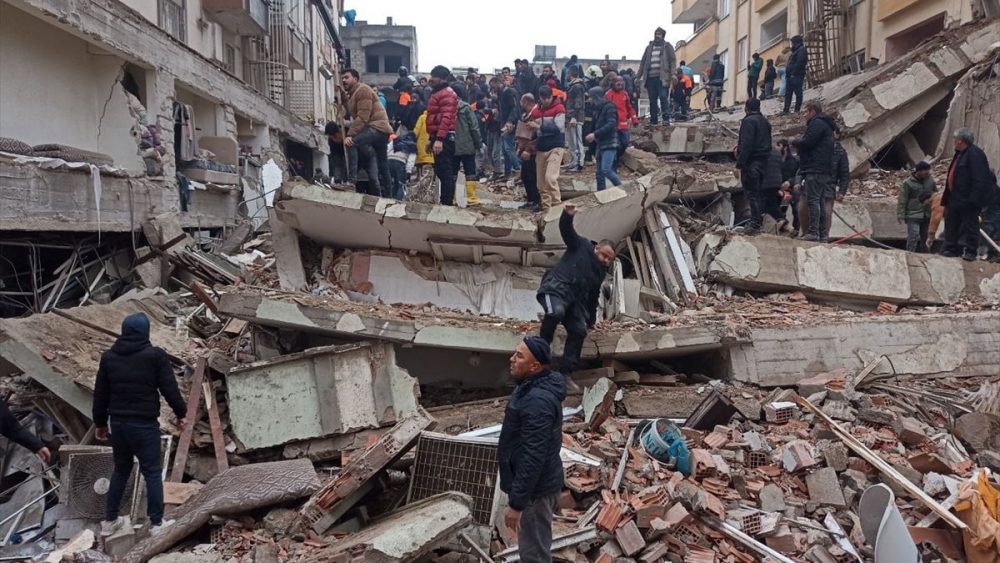
The war had left Türkiye with a staggering public debt and fiscal deficit. Banks teetered on insolvency, foreign investors had fled, and reconstruction costs outstripped any realistic revenue stream. Şahin’s budget proposals, spending caps, modest tax hikes on luxury goods, and debt rescheduling were routinely watered down by parliamentarians seeking to protect local patronage networks. Şahin too quickly became paranoid and spent considerable efforts to break up apparent pro-Bahçeli factions.
Regional governors, lacking central funding, resorted to levying “reconstruction fees” on small businesses and even humanitarian NGOs. Corruption scandals engulfed key ministries, as contractors close to MPs were awarded no-bid rebuilding contracts. By mid-2003, Türkiye’s credit rating was junk status, the currency had lost half its value, and borrowing costs soared beyond 60 percent.
Economic desperation and political impotence fed a growing popular fury. In working-class neighborhoods of Istanbul, graffiti slogans “Abandoned by Allies, Betrayed by Politicians” became commonplace. Former combat veterans, denied pensions and medical care, formed street militias demanding vengeance against “Western traitors.” Nationalists staged torchlight rallies outside the embassies in Ankara.
Intellectuals and dissidents warned of a “lost generation” scarred by war and neglect. Universities saw faculty strikes over unpaid salaries; hospitals reported a 40 percent rise in untreated chronic illnesses.
By early 2003, President Adem Şahin’s promise of recovery had given way to harsher reality. Türkiye’s public debt swelled beyond 140 percent of GDP, and inflation topped 70 percent. Şahin’s government imposed sweeping austerity, including steep consumption taxes, cuts to public services, and suspension of reconstruction funding.
Factories closed as credit froze. Bread lines formed in Ankara and İzmir. Unemployed workers and unpaid civil servants flooded city squares, demanding relief. Each police crackdown on sit-in protests only deepened the anger, pushing discontent across ethnic and regional lines.

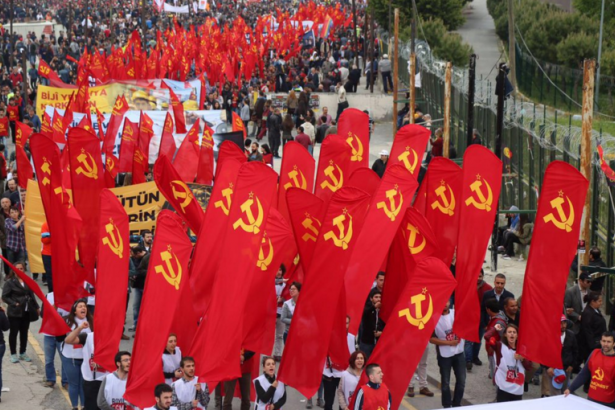
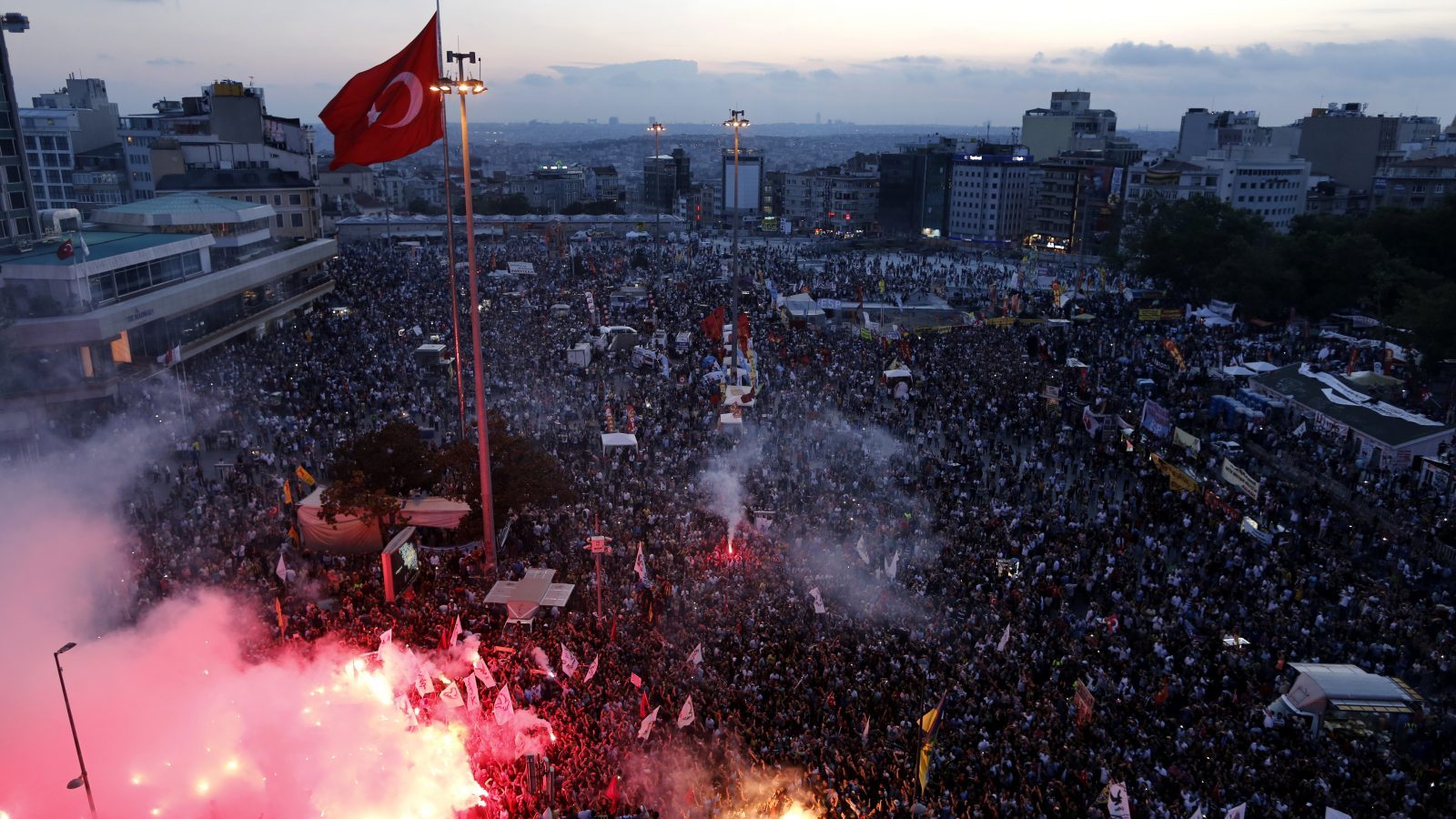
In July, the Confederation of Turkish Trade Unions (CTU) orchestrated a three-day national strike. Over five million workers walked out, halting railways, ports, and energy plants. Across Istanbul’s Taksim Square and Diyarbakır’s Şeyh Mutahhar district, Turks and Kurds marched side by side under CTU banners.
Aysa Aslan, a respected academic, renowned for defying riot police during factory occupations, emerged as the movement’s unifying figure. Her impassioned speeches, broadcast via pirate radio and smuggled leaflets, called for an end to corrupt elites and for true popular sovereignty.
The economy was paralyzed. Food and fuel shortages sparked riots, and even lower-rank soldiers refused orders to suppress crowds. With the streets in open revolt, CTU leaders convened with dissident National Guard officers to plan a peaceful transfer of power.
The breaking point came in late 2003, when the Confederation of Turkish Trade Unions, supported by a broad coalition of civil groups, called for a nationwide strike. This movement quickly spread, becoming a general uprising that crossed traditional social and ethnic boundaries. Turks and Kurds marched side by side, joined by students, bureaucrats, and even lower-ranking soldiers. Women played a particularly prominent role in the protests, symbolized by the leadership of Aysa Aslan, a Kurdish-Turkish trade unionist who emerged as the face of the revolution.
Şahin’s government had lost its ability to govern and formally surrendered. A provisional council of union leaders, civil organizations, and sympathetic intellectuals declared the establishment of the People’s Republic of Türkiye.
Under the guidance of Aysa Aslan and a committee of legal scholars, a new constitution was drafted. It established a presidential system modeled on the United States, eliminated the prime ministership, and enshrined autonomy for Kurdish-majority regions. The first national elections of the People’s Republic were held later that year.
The results reflected the revolutionary coalition. The Turkish Workers’ Party secured approximately a supermajority in the new Grand National Assembly. A small bloc of centrists and right-wing parties made up a feeble opposition.In the presidential race, Aysa Aslan prevailed decisively, becoming the first head of state of the People’s Republic.
In her inaugural address to the Assembly, broadcast globally, President Aslan, herself of mixed Turkish and Kurdish heritage, declared the dawn of a new Türkiye, one that would overcome the legacies of dictatorship and ethnic conflict. Yet beneath the triumphal rhetoric, the new republic faced enormous challenges: economic recovery, reconciliation after years of violence, and the restoration of Türkiye’s international standing.
With wartime debts continuing to be an issue, Aslan set about a major economic push to energize the economy. She nationalized key utilities, electricity, water, and rail, and converted them into publicly run cooperatives. Massive public works programs rebuilt earthquake-damaged housing and restored power grids. Simultaneously, Parliament passed the Equal Rights Law, enforcing secular governance and banning religious parties from fielding candidates. Despite reconstruction gains, Türkiye’s public debt hovered around 130 percent of GDP, and foreign reserves dwindled. However, people felt hope and a level of ownership that had alluded them for over a decade since the Pan-Turkic Government of Bahçeli.
Last edited: