Moderators support the Administration Team, assisting with a variety of tasks whilst remaining a liason, a link between Roleplayers and the Staff Team.
Moderators support the Administration Team, assisting with a variety of tasks whilst remaining a liason, a link between Roleplayers and the Staff Team.
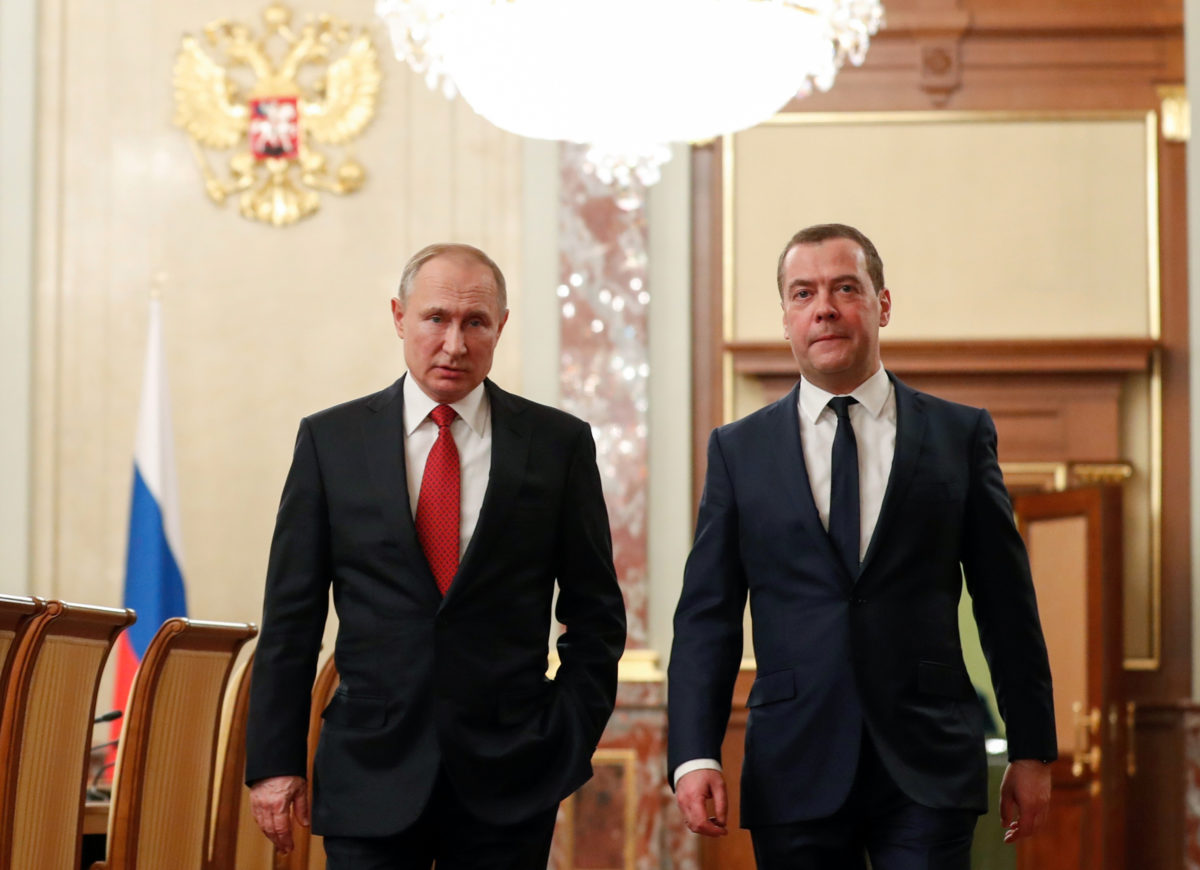
Dmitry Medvedev Returns as Prime Minister in Security-Focused Kremlin Reshuffle
President Vladimir Putin has approved a sweeping reconfiguration of Russia’s senior leadership, reappointing Dmitry Medvedev as Prime Minister and introducing a series of high-level changes framed by the Kremlin as essential to strengthening national security and state resilience.
Medvedev’s return to the premiership follows the appointment of Dmitry Patrushev as Governor of Tula Oblast, a strategically important industrial region south of Moscow. Officials described Patrushev’s move from federal service to regional leadership as part of a broader effort to reinforce federal–regional coordination, particularly in areas tied to defense production, infrastructure protection, and internal stability.
At the federal level, economic governance saw a major shift with the appointment of Elvira Nabiullina as Minister of Finance, replacing long-serving Anton Siluanov. The Kremlin highlighted Nabiullina’s technocratic credentials and crisis-management experience, stressing that fiscal policy is increasingly viewed as a core pillar of national security amid sustained external pressure and sanctions-related constraints.
Social ministries were also reshaped under the same security-oriented logic. Viktoria Abramchenko was named Minister of Health, with officials emphasizing the importance of public health readiness and crisis response capacity as integral components of state security. Marina Orgeyeva was appointed Minister of Culture, tasked with overseeing cultural policy and heritage preservation at a time when cultural cohesion and national identity are being explicitly linked to internal stability.
The most notable security-related change came with the promotion of Aleksandr Kurenkov, currently Minister of Emergency Situations, to the added portfolio of Deputy Chairman of the Security Council of Russia. In his additional role, Kurenkov will work alongside Mikhail Mishustin, who now serves as Chairman of the Security Council. According to Kremlin sources, the move is intended to more tightly integrate emergency preparedness, civil defense, and infrastructure protection into national security planning.
Senior officials underscored that the reshuffle represents a set of high-priority security adjustments, rather than routine personnel rotation. The leadership aims to streamline decision-making, clarify chains of command, and ensure closer coordination between economic, social, and security institutions in the event of crises.
Medvedev’s reappointment was presented as a stabilizing measure, providing experienced leadership at the head of government while these security-driven reforms are implemented. Analysts note that the blend of veteran figures and strategic regional appointments reflects the Kremlin’s emphasis on continuity, centralized coordination, and preparedness in what it describes as an increasingly complex risk environment.
The reconfigured government is expected to be formally confirmed by the State Duma in the coming days, after which the new appointees will assume their posts.
This site uses cookies to help personalise content, tailor your experience and to keep you logged in if you register.
By continuing to use this site, you are consenting to our use of cookies.