Moderators support the Administration Team, assisting with a variety of tasks whilst remaining a liason, a link between Roleplayers and the Staff Team.
Moderators support the Administration Team, assisting with a variety of tasks whilst remaining a liason, a link between Roleplayers and the Staff Team.
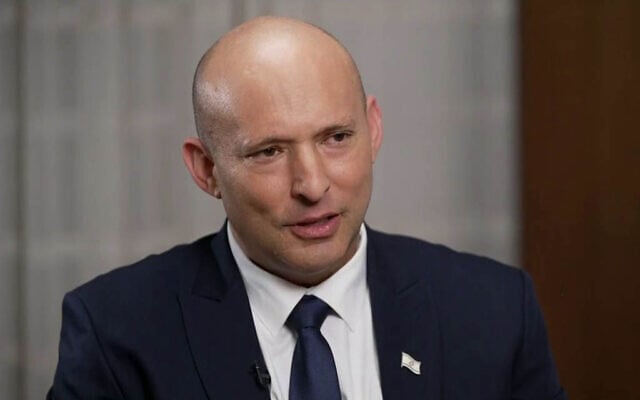
Naftali Bennett Becomes Prime Minister as Broad Coalition Takes Office
Naftali Bennett has been sworn in as Prime Minister of Israel, heading a broad coalition government formed after no single party secured a majority in the Knesset. Yair Lapid, leader of Yesh Atid, and Benny Gantz, leader of Blue and White, have been appointed Deputy Prime Ministers under the coalition agreement between their respective parties.
The coalition was assembled following an inconclusive election that left every major political party short of the 61-seat majority required to govern independently. After weeks of negotiations, parties from across the political spectrum agreed to form a coalition government to provide a working parliamentary majority and avoid another election.
Bennett, leader of the right-wing Yamina party, has built his political career around a hardline approach to national security and the Israeli–Palestinian conflict. He has consistently opposed the establishment of a Palestinian state, arguing that such a move would pose a long-term threat to Israel's security.
Among his most well-known remarks on the issue, Bennett said in 2007, "There is not going to be a Palestinian state within the tiny land of Israel. It's just not going to happen. A Palestinian state would be a disaster for the next 200 years." The statement has remained one of the defining expressions of his opposition to a two-state solution.
Bennett has also attracted attention for his comments regarding counterterrorism operations. During his political career, he argued that "terrorists should be killed if they pose an immediate life threat to our soldiers when in action," reflecting his support for robust military rules of engagement in active combat situations.
Despite his opposition to a two-state framework, the new Prime Minister has reaffirmed Israel's longstanding commitment to maintaining a strong security posture throughout the region. The government is expected to continue prioritizing national defense, intelligence cooperation, and deterrence against threats from militant organizations and hostile states while maintaining strategic partnerships with regional and international allies.
Deputy Prime Minister Yair Lapid is expected to take a leading role on domestic policy and international diplomacy, while Deputy Prime Minister Benny Gantz will remain one of the government's principal figures on defense and national security matters. Their appointments are intended to balance the coalition's diverse political makeup and reinforce cooperation between its largest parties.
The coalition's immediate priorities include passing a long-delayed state budget, addressing the rising cost of living, expanding housing development, investing in infrastructure, and strengthening healthcare and education. With the government composed of parties holding differing ideological views, its success is expected to depend on compromise and maintaining parliamentary unity.
Opposition parties have questioned whether the ideologically broad coalition can remain stable over time. Supporters, however, argue that the government reflects the fragmented electoral outcome and provides a workable majority at a time when no single party was able to command sufficient support to govern alone.
The new administration now assumes office amid continued regional security challenges and domestic political divisions, beginning what observers expect will be a closely watched test of coalition governance in Israel.
The Door Opens But Israel Holds the Key: Naftali Bennett Reacts to Iran’s Recognition and Türkiye’s Peace Appeal
Israeli political leaders have responded cautiously to a potential diplomatic breakthrough in the Middle East following remarks by Türkiye’s Ambassador to Israel, Alona Tal, who described Iran’s reported recognition of Israel and Palestine as a possible opening for a new era of regional cooperation.
The following is Naftali Bennett’s televised address:
"Over the past few hours, we have heard significant remarks from Türkiye’s Ambassador to Israel, Alona Tal, who described the recent Iranian declaration as a potential turning point for our region and called for a new era of cooperation between Türkiye, Israel, Iran, and the wider Middle East. Ambassador Tal spoke of the possibility that nations with a long history of disagreement could begin a different chapter, one based on recognition, economic cooperation, stability, and mutual interests.
Israel listens carefully to these developments. We welcome any movement that takes the region away from hostility and toward responsibility. We welcome any country that chooses recognition over rejection, dialogue over threats, and cooperation over confrontation.
The reported declaration from the Iranian government recognising Israel represents a significant departure from decades of hostility. If this reflects a genuine change in direction, then it could become the beginning of a new reality in the Middle East. However, Israel has learned through experience that words alone are not enough. Peace is not built through statements. Peace is built through actions, trust, and a sustained commitment to a different future.
The Iranian government will be judged by what it does, not only by what it says. A genuine change will require an end to support for terrorism, respect for the sovereignty of neighbouring states, and a clear commitment to regional stability. But every major transformation begins with a first step, and Israel welcomes this declaration as a possible starting point that must now be followed by meaningful action.
At the same time, I want to make one thing absolutely clear: the security of the State of Israel remains our highest responsibility.
Israel has survived decades of conflict because we built a strong nation, a capable military, and a society that understands the importance of defending itself. We will continue investing heavily in our security. We will continue strengthening the Israel Defense Forces, protecting our borders, advancing our intelligence capabilities, and ensuring that no enemy can threaten the lives of Israeli citizens.
Our commitment to security is not an obstacle to peace. It is the foundation that allows Israel to consider opportunities for peace from a position of strength.
Regarding the Palestinian issue, Israel understands that the future of the region cannot be built on endless conflict. We want a reality where Israelis and Palestinians can live with dignity, prosperity, and security. But statehood is not achieved through declarations alone. It requires responsible leadership, stable institutions, and a government that can guarantee security and prevent terrorism.
At this moment, the conditions required for Palestinian statehood do not exist. The creation of a Palestinian state remains unlikely while there is no active, stable, and responsible government capable of ensuring peaceful coexistence and preventing future threats against Israel.
However, Israel should not rule out the possibility of change forever. If, in the future, a stable Palestinian government emerges, one that accepts Israel’s right to exist, rejects terrorism, maintains security commitments, and genuinely seeks peaceful relations, then Israel can examine future arrangements from a position of confidence and strength.
Ambassador Alona Tal’s remarks reflect a belief that the region may be approaching a moment where old rivalries can be reconsidered. A Middle East built on trade, innovation, energy cooperation, and security partnerships could create opportunities for millions of people.
But cooperation cannot come at the expense of Israel’s security.
Israel will extend a hand to those who genuinely seek peace, but we will do so with open eyes. We will not exchange security for promises. We will not forget the lessons of our history. And we will never compromise on our responsibility to protect the people of Israel.
If Iran’s declaration represents a true change, then history may be offering the region a rare opportunity. An Iran that chooses diplomacy over hostility, a Türkiye that seeks deeper regional cooperation, and a future where responsible Palestinian leadership can emerge would create possibilities that were once unimaginable.
But those possibilities must be built through courage, responsibility, and action.
Israel welcomes the chance for a safer and more stable Middle East.
We will continue to protect our borders. We will continue to strengthen our security. And from that position of strength, we will carefully examine every opportunity that can bring peace and prosperity to our region."
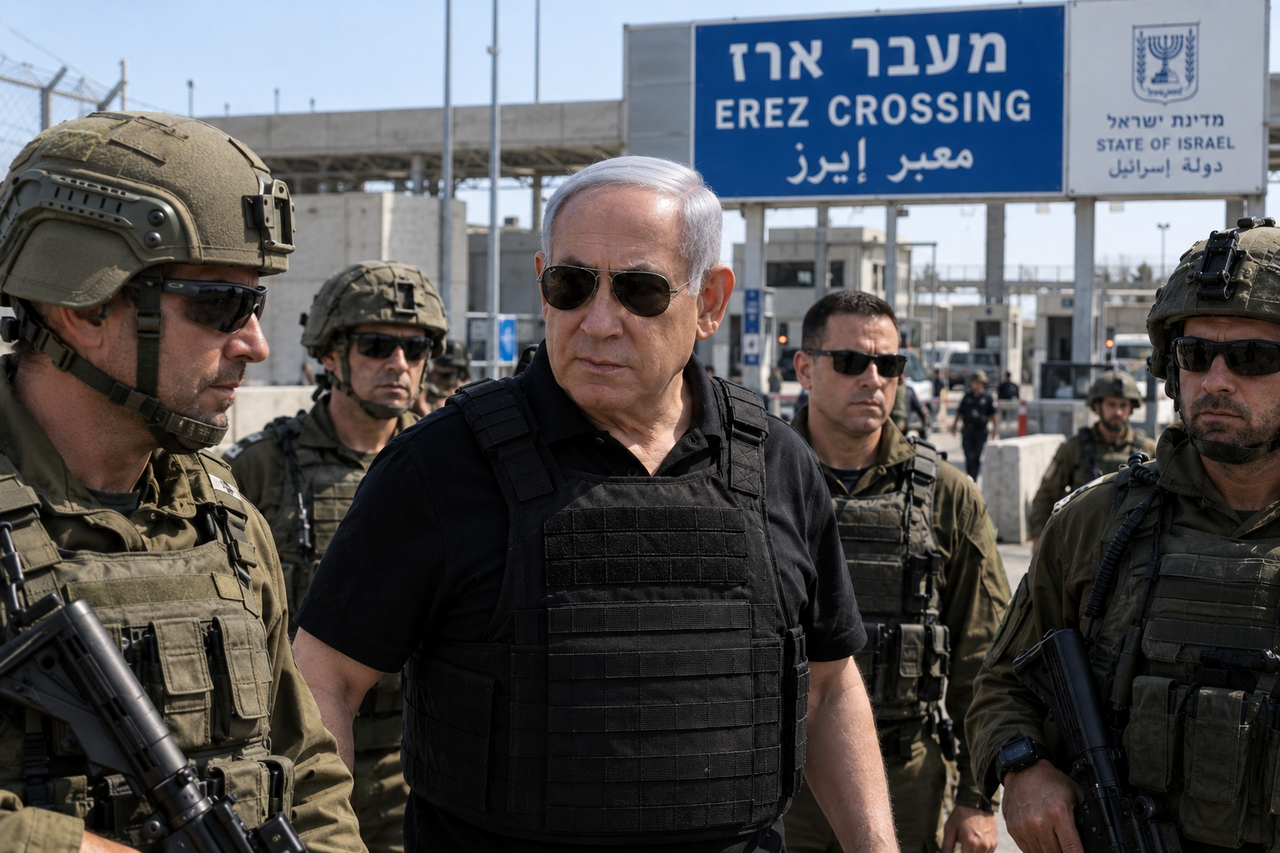
Israel Reopens Erez and Kerem Shalom Crossings as Netanyahu Visits Border
Israel has reopened the Erez and Kerem Shalom crossing points between Israel and Gaza, in a move officials described as an effort to facilitate the movement of people and humanitarian supplies while maintaining heightened security along the border.
The reopening comes amid continued tensions following days of demonstrations across the Palestinian territories. Israeli officials said the crossings would operate under strict security procedures, while emphasizing that civilian and humanitarian needs should not be allowed to become casualties of the wider political confrontation.
Prime Minister Benjamin Netanyahu visited the Erez crossing during the reopening, where he met with army personnel stationed at the border and received a briefing on security arrangements and operations at the crossing and spoke to the media before his departure back to Jerusalem.
"Israel is facing a moment of tension and uncertainty. The events of recent days, the demonstrations across the West Bank and Jerusalem, and the growing anger surrounding the Temple Mount have reminded us once again how quickly fear, mistrust, and provocation can push our region toward violence.
We must be clear about one thing, Israel has no interest in seeing innocent Palestinians or Israelis caught in another cycle of bloodshed. We have a responsibility to protect our citizens, to protect the holy places, and to preserve order. At the same time, we must recognize that the overwhelming majority of people on both sides want to live their lives without violence.
But there is an equally important principle.
Any Palestinian militant faction that chooses to turn this moment into an opportunity for terrorism, armed attacks, or violence against Israeli civilians should understand that such actions will not go unanswered. Israel will defend itself. We will act against those who seek to murder or terrorize our people, while making every effort to distinguish between armed militants and the wider civilian population. Security does not require us to abandon our humanity.
That is why Israel has also taken steps that demonstrate the difference between confronting violence and punishing an entire population. The continued opening and operation of the Erez and Kerem Shalom crossings is the right thing to do. Humanitarian assistance, essential goods, medical needs, and the basic needs of civilians must not become casualties of political confrontation.
We can be firm against terrorism while remaining committed to humanitarian responsibility. To the Palestinian public, I say this: your future should not be determined by armed factions seeking confrontation. Your aspirations for dignity, security, and a political future should be pursued through political means, not through attacks against civilians.
And to the Israeli public, I say this: we will not be intimidated. We will not allow terrorism to dictate the lives of our citizens. But neither will we allow fear to dictate every decision we make. The path ahead will not be easy. There will be those who seek to inflame this crisis further. There will be provocations. There will be attempts to draw Israel into a wider confrontation.
We must not give them that victory.
Israel will remain vigilant. Our security forces will protect our people. Our humanitarian responsibilities will continue. And where there is an opportunity to reduce tensions and prevent further bloodshed, we will take it. Strength is the ability to defend ourselves. Leadership is knowing when restraint serves our interests. And peace, if it is ever to come, will require both sides to understand that the future cannot be built upon another generation of violence."
This site uses cookies to help personalise content, tailor your experience and to keep you logged in if you register.
By continuing to use this site, you are consenting to our use of cookies.