


- Oct 3, 2018
- 3,660
TURKISH AIR FORCE |

| 
General Akın Öztürk Commander of Turkish Air Defense Command | 
|
The following information is encrypted & protected
In today's rapidly evolving geopolitical landscape, the need for a robust air defense capability is paramount. With emerging threats ranging from conventional military aggression to asymmetric warfare tactics such as drone attacks, ensuring the security of our airspace has never been more crucial. Additionally, the proliferation of advanced aerial technologies underscores the necessity of investing in state-of-the-art early warning systems to detect and neutralize potential threats before they can pose a danger to our nation and its citizens.
Threats from neighboring countries and geopolitical tensions have raised serious concern for the Turkish Air Defense Command. The rapid advancements in defensive and offensive capabilities, along with substantial investment in aerial technologies by other nations, have heightened insecurities. Simulations conducted in 2003 confirmed serious gaps in the air defense capabilities, especially in the cyberspace domain. Inter-service operability and data services have been severely diminished.
Türkiye's national defense assessment has revealed critical deficiencies in both air and land-based detection systems, which threaten our ability to effectively respond to emerging and evolving threats. The proliferation of ballistic missile technologies and the rapid enhancement of air capabilities by neighboring states pose significant risks to our national security. In light of these challenges, the integration of the PAVEPAW radar system is imperative to bolster our strategic defense posture.
The Turkish Air Defense Network system provides unparalleled detection and tracking capabilities, offering high-resolution, 3D radar data with exceptional precision in identifying airborne threats, including advanced ballistic missiles and hostile aircraft. Its long-range detection, coupled with the ability to differentiate between decoys and actual threats, ensures that Türkiye will be able to track and neutralize incoming targets before they can reach critical assets. Furthermore, the system’s advanced electronic counter-countermeasures (ECCM) will allow for continued operation even in the most contested electromagnetic environments, enhancing our ability to defend against sophisticated enemy electronic warfare tactics.
By deploying several radar systems, Türkiye has achieved a marked improvement in its early warning and missile defense capabilities. This system will provide critical, real-time data to command centers, enabling rapid decision-making and precise engagement with airborne threats. It will form the backbone of Türkiye’s integrated air defense network, allowing for a seamless fusion of radar, interceptors, and missile defense systems, ultimately enhancing our deterrence and response capabilities in an increasingly hostile region.
Under the National Air Defense and Early Warning System (NADEW), the Turkish Republic is committing to significant investments in financing the overhaul of Türkiye's air defense and early warning systems.
The project will establish a comprehensive National Air Defense & Early Warning System to monitor and protect Türkiye's airspace 24/7. This will enhance our ability to detect and respond to a wide range of aerial threats, including but not limited to aircraft, missiles, drones, and other airborne hazards. The system will strengthen Türkiye's national security posture by integrating cutting-edge technology, intelligence capabilities, and strategic partnerships to effectively mitigate airborne risks. It will also provide timely and accurate situational awareness to key decision-makers, enabling them to make informed and effective responses to potential threats. The system will foster collaboration and coordination among relevant government agencies, military branches, and international partners to ensure seamless operation and interoperability of the air defense system.
The NADEW will achieve these goals through developing data link systems, advanced computing technologies, integrated information systems, hardening hardware against malware and cyber attacks, and securing connections for sensitive data streams.
Under this project, the Turkish Government will integrate its radar systems under the NADEW. These systems will be deployed to create a network of advanced radar systems and sensors strategically across the country to provide comprehensive coverage of Turkish airspace. The radar sites will be located at the following coordinates with instructions for civilian-grade systems to block these locations by a 20km grid:
- 36.30378, 36.00402
- 40.50005, 40.38907
- 39.49997, 31.38691
- 38.34958, 37.79332
- 37.90333, 39.99702
These systems will be capable of detecting and tracking airborne targets with precision and accuracy.
In conjunction with the OTH Nostradamus Radar systems, the Air Defense Command will establish a state-of-the-art command and control center, along with several other command centers, all equipped with advanced communication systems, data processing capabilities, and decision-support tools. These centers will serve as the nerve center of the air defense system, enabling real-time monitoring, analysis, and coordination of air defense activities. The command centers will integrate currently deployed interceptor systems, including surface-to-air missiles and anti-aircraft artillery, to neutralize potential threats identified by the early warning system. These systems will be designed to swiftly and effectively engage and destroy hostile targets with precision and minimal collateral damage.
Additionally, with enhancements made to the cyber-space domain, there is a strong focus on maintaining robust cybersecurity measures to safeguard the air defense system against cyber threats and ensure its uninterrupted operation. This includes securing communication networks, data storage facilities, and command and control infrastructure against potential cyberattacks.
Lastly, the funding will be used to invest in comprehensive training programs to equip air defense personnel with the necessary skills, knowledge, and expertise to operate and maintain the system effectively. This will include training in radar operation, threat analysis, interception tactics, and cybersecurity protocols.
Construction will take place at the following locations and will include a Control Center that houses the radar operators and personnel responsible for monitoring and controlling the radar system, including consoles and other advanced interfaces, and communication equipment. A Power Generation and Backup System will ensure a reliable source of power, essential for continuous operation. The stations will have dedicated power generation facilities, such as diesel generators or alternative energy sources, to ensure uninterrupted operation even during power outages. Additionally, the stations will feature robust communication systems to transmit radar data, coordinate with other military units, and communicate with higher command authorities. This will include radio systems, satellite communication links, and secure data networks.
The Turkish Air Force will assign members of their forces to the Security Wing, responsible for enforcing the security measures necessary to protect against unauthorized access, sabotage, and physical threats. This will include manning the perimeter fencing, surveillance cameras, access control systems, and screening visitors and users.
The Turkish Air Force will also assign members to the Systems and Control Battalion to ensure optimal performance and reliability of the radar equipment. This will include incorporating environmental control systems to regulate temperature, humidity, and other environmental factors within the radar facilities. They will also provide regular maintenance and repairs to minimize downtime and address any equipment failures promptly.
The facilities will include all necessary space for storage of spare parts, equipment, and supplies needed for maintenance and operation. Logistics facilities will support ongoing operations, including receiving and distributing supplies and equipment.
Finally, the radar stations will provide living quarters and support facilities to accommodate radar personnel and support staff, including barracks, dining facilities, recreational areas, and medical facilities.
The acquisition of additional radar systems and the establishment of radar facilities in strategic locations will enable Türkiye to improve situational awareness, detect potential threats at an early stage, and respond effectively to emerging security challenges.
Turkish Ground Forces
|
MINISTRY OF NATIONAL DEFENSE OF THE REPUBLIC OF TÜRKİYE
Security Clearance: Secure and Encrypted
Security Clearance: Secure and Encrypted
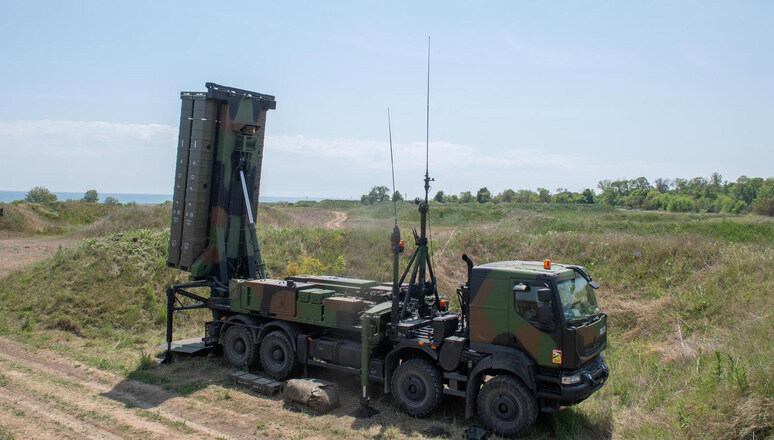
SAMP/T 50/50 | 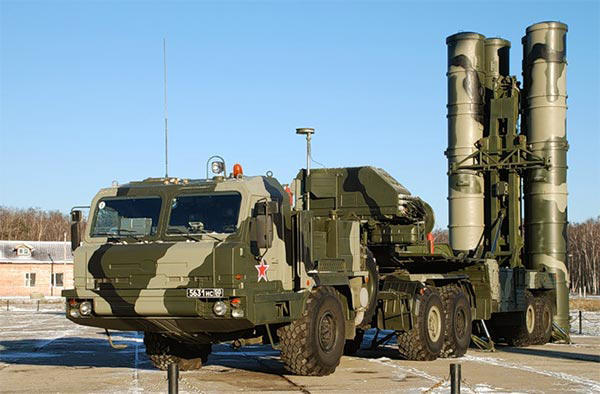
S-400 35/35 | 
MIM-Patriot 240/240 |
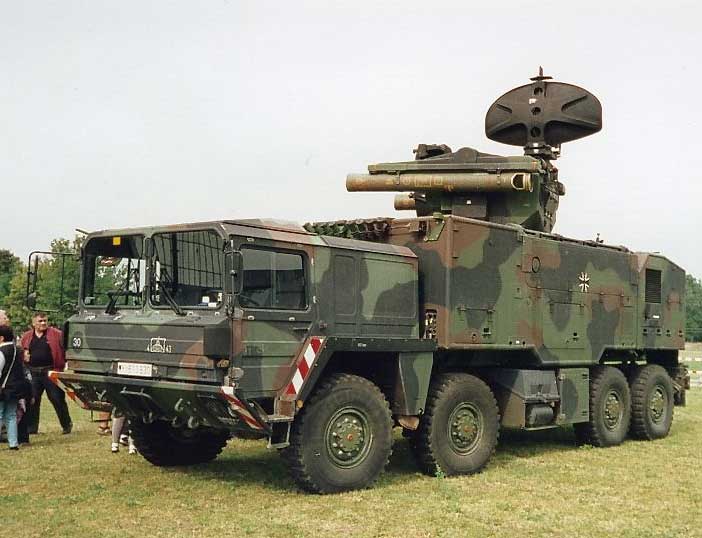
Roland 3 32/32 | 
Pantsir-SM Variant 350/350 | 
SA-19B "Grison" Tunguska-M1 1,200/1,200 |

Duga Radar 3/3 | 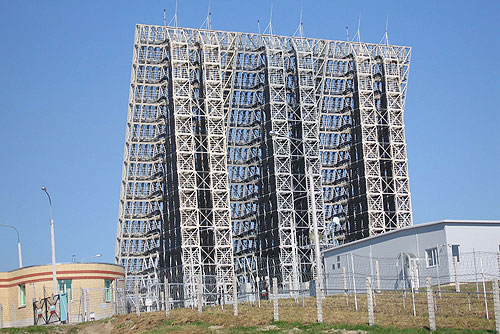
Voronezh Radar 4/4 | 
OTH Nostradamus Radar 8/8 |
Airspace Denial and Early Threat Detection
Prepared by:
General Akın Öztürk
Commander, Turkish Air Defense Command
General Staff of the Turkish Armed Forces
Location: Headquarters, Air Defense Command
Date: 21 July 2007
Security Classification: RESTRICTED - MILITARY EYES ONLY
Security Clearance: Secure and Encrypted
Distribution: General Staff, NADOC, ADOC Regional Commands, Presidency of Defence Industries
“To control the skies is to control the rhythm of modern war.”
— Gen. Akın Öztürk, Foreword Address to the Air Defense Corps
I. STRATEGIC OBJECTIVE
To establish a resilient, multi-layered air defense network that can:- Detect and track hostile aerial assets before they reach Turkish airspace.
- Deny adversaries operational freedom within Türkiye’s airspace.
- Provide independent coverage and early-warning capabilities without reliance on NATO or foreign support.
II. STRUCTURE OVERVIEW
| Layer | Function | Systems Used |
| Early Detection | Strategic and long-range airspace tracking across all approach vectors | Duga, Voronezh, Nostradamus |
| Area Defense (LRAD) | Long-range neutralization of high-altitude threats | S-400, Patriot, SAMP/T |
| Regional & Point Defense (MRAD) | Mid-altitude, regional defense over military bases, cities | Roland 3, Pantsir-SM |
| Close-In Protection (SHORAD) | Tactical, low-altitude defense against UAVs, helicopters, cruise missiles | SA-19 Tunguska-M1 |
III. ZONAL ORGANIZATION
To facilitate effective regional control, Türkiye will be divided into five Air Defense Zones (ADZs):- Western Command (Marmara-Eastern Thrace)
- Central Command (Ankara-Konya-Kayseri Axis)
- Eastern Command (Van-Erzurum-Malatya Belt)
- Southern Command (Adana-Hatay-Şanlıurfa Corridor)
- Northern Command (Black Sea Air & Coastal Defense)
IV. RADAR ARCHITECTURE
1. OTH Long-Range Detection
| System | Location | Coordinates | Coverage |
| Nostradamus Radar (x1) | Near Hasandagi | 38.12848, 34.16633 | Full hemispheric OTH coverage up to 2,500 km |
| Nostradamus Radar (x1) | Near Uckardes | 38.17858, 39.69954 | Full hemispheric OTH coverage up to 2,500 km |
| Purpose: Constant strategic horizon monitoring across Middle East, Russia, Eastern Europe |
2. Sector-Based Strategic Radar
| System | Location | Coordinates | Coverage |
| Duga Radar (x3) | |||
| • Kars (to cover Caucasus) | 40.5985°N, 43.0776°E | ||
| • Şanlıurfa (to monitor Mesopotamian arc) | 37.21011, 38.69963 | ||
| • Tekirdağ (to face Eastern Europe) | 41.69887, 27.7929 | ||
| Voronezh Radar (x4) | |||
| • Trabzon | 40.51439, 40.40746 | ||
| • Eldivan | 40.47358, 33.45831 | ||
| • Akilli | 36.30378, 36.00402 | ||
| • Gurkaynak | 38.34958, 37.79332 | ||
| Purpose: Sector-wide early detection of cruise/hypersonic missiles, bombers, UAVs |
V. SAM SYSTEM DEPLOYMENTS
A. Long-Range Air Defense (S-400 / SAMP/T / Patriot)
Designed to engage ballistic missiles, stealth aircraft, strategic bombers at high altitudes and long range.| Region | S-400 (35) | SAMP/T (50) | Patriot (240) |
| Istanbul & Thrace | 6 | 8 | 30 |
| Ankara Region | 5 | 8 | 30 |
| Aegean Coast | 6 | 6 | 35 |
| Eastern Anatolia | 6 | 10 | 45 |
| Southeast (Iraq/Syria) | 6 | 10 | 50 |
| Black Sea (North) | 6 | 8 | 30 |
- Istanbul S-400 Battery: 41.0832°N, 29.0140°E
- Diyarbakır SAMP/T Battery: 37.9141°N, 40.2306°E
- Hatay Patriot Battery: 36.2627°N, 36.1756°E
B. Medium-Range & Tactical Defense (Pantsir-SM / Roland 3)
| Region | Pantsir-SM (350) | Roland 3 (32) |
| Major air bases, power plants, urban centers | Deployed in 2–4 battery clusters | Strategic locations like Tüpraş refineries, airports, air defense nodes |
- Incirlik AB – Pantsir Cluster: 37.0022°N, 35.4255°E
- Eskişehir Air Base – Roland 3 Node: 39.7780°N, 30.5667°E
- Zonguldak Power Hub – Pantsir Shield: 41.4563°N, 31.7987°E
C. SHORAD (Tunguska-M1 / SA-19B “Grison”)
Deployed in hundreds to protect high-value mobile assets, road-mobile missile systems, radar installations, and ground troop formations.| Deployment Model |
| Brigade-level standard (15–20 Tunguskas per armored division) |
| Fixed site concentric protection (radar/air base coverage) |
- 1st Army (Istanbul-Adapazarı)
- 2nd Army (Malatya-Diyarbakır)
- 3rd Army (Erzurum-Kars)
VI. COMMAND & CONTROL (C4I)
| Center | Location | Function |
| NADOC | Underground facility near Ankara (39.8706°N, 32.7340°E) | National-level command, data fusion, and launch authority |
| Regional Control Centers | Istanbul, Diyarbakır, Erzurum, İzmir, Samsun | Relay stations managing zone-wide air defense assets |
| Mobile Command Vans | 5 per ADZ | Serve as fallback in case of strategic C4I disruption |
VII. STRATEGIC REDUNDANCY & DECEPTION
- Dummy Radar and SAM Sites: 60+ decoy systems along coasts and borders.
- Hardened Shelters: Underground hangars and radar bunkers in Kayseri, Van, and Tunceli.
- Mobility Doctrine: 40% of Pantsir, Roland, and SAMP/T units are mobile by design.
VIII. INFRASTRUCTURE RESILIENCE & PROTECTIVE EMASURES
1. Site Hardening and Construction
Hardened Radar Shelters:
The radar arrays will be placed within reinforced concrete structures, built to withstand missile impacts, aerial bombardment, and cyber-electromagnetic (CEM) attacks. The radar dishes and arrays themselves will be protected by composite materials that reduce their exposure to high-velocity debris and EMP (Electromagnetic Pulse) attacks.
Underground Control Centers:
Each site will include underground command and control bunkers. These bunkers will be equipped with advanced blast doors, EMP shielding, and redundant power systems. The bunkers will also feature filtered air supplies to protect against CBRN (Chemical, Biological, Radiological, and Nuclear) attacks. These centers will host radar operation teams, communications, and network systems.
Hardened Perimeter Walls:
The sites will be surrounded by thick concrete blast walls with internal steel reinforcements to shield against artillery, rocket, and missile strikes. Anti-fragmentation layers will be incorporated to protect against shrapnel in the event of nearby explosions.
2. Multi-Layered Air Defense Systems
To defend these critical radar installations, a multi-layered defense network will be employed, using a combination of short, medium, and long-range missile defense systems:
Layer 1: THAAD (Terminal High Altitude Area Defense)
AIR DEFENSE COMMAND BUNKER COMPLEX
Location: Polatlı District, Ankara ProvinceCoordinates: 39.49145°N, 31.39362°E
Designation: Site ATLAS – National Aerospace Defense Operations Center (NADOC)
Security Level: TOP SECRET – MILITARY EYES ONLY
I. STRATEGIC PURPOSE
Site ATLAS functions as the central C4I (Command, Control, Communications, Computers, and Intelligence) node for Türkiye’s Integrated Air Defense Network (T-IADN). It serves as:- The brain of the national radar and SAM infrastructure.
- A redundant nuclear-hardened node in case Ankara is compromised.
- A strategic continuity facility for the national command authority during aerial assault or CBRN conditions.
II. FACILITY DESIGN AND LAYOUT
The facility is buried 180–240 meters underground, carved into Anatolian bedrock, shielded against EMP, seismic activity, and penetrating munitions.A. Surface-Level Structures
- Guarded Perimeter Fencing (10 km radius): Security checkpoints, vehicle x-ray scanning, anti-drone jammers.
- False Buildings / Camouflage Infrastructure: Agricultural warehouses, low-rise “research centers,” and vehicle sheds mask air vents and elevator shafts.
- VTOL Helipad + Access Pad: For high-priority personnel and drone delivery (with adjacent hardened hangar).
B. Underground Zones
| Level | Function | Description |
| Level -1 | Security Access & Logistics Hub | Freight elevators, personnel scanners, biometric checkpoints, vehicle lifts. |
| Level -2 | Operations Hall – C4I Core | |
| • Master air defense dashboard | ||
| • SAM command linkage nodes (S-400, SAMP/T, etc.) | ||
| • NATO-independent link protocols | ||
| • Real-time radar map fusion (Voronezh + Duga + Nostradamus) | ||
| • CBRN-sealed war room with ballistic shielding | ||
| Level -3 | National Radar Analysis Center (NRAC) | |
| • Threat vector tracking | ||
| • IFF filtering | ||
| • AI-enhanced anomaly detection (linked to ASELSAN and TÜBİTAK-developed software) | ||
| • Crypto-hardened data repository | ||
| Level -4 | Presidential Override & Strategic Continuity Cell | |
| • Emergency residence for PM and President | ||
| • Hardened telecommunication line to General Staff HQ and Parliament Bunker | ||
| • Satellite uplink to military comms satellites (e.g., GÖKTÜRK series) | ||
| • Internal fallback power plant (diesel-turbine and battery backup) | ||
| Level -5 | Black Systems Vault (Compartmentalized Projects) | |
| • Quantum radar research | ||
| • Hypersonic missile tracking programs | ||
| • UAV swarm countermeasure operations | ||
| • Weaponized electromagnetic pulse (WEMP) study vaults |
III. KEY INFRASTRUCTURE SYSTEMS
1. Hardened C4I Nodes
- Triple-redundant fiber optic grid to major bases (Incirlik, Eskişehir, Diyarbakır)
- Secure microwave link backup
- Internal tactical network (TACNET) with hardware isolation for cyber-resilience
2. Power Systems
- 20 MW diesel generator array in reinforced vault
- Solar input through disguised terrain panels
- 30-day autonomy with water, fuel, and food storage
3. EMP & CBRN Shielding
- Faraday cage layered rooms
- Pressurized clean-air filtration and carbon scrubbing
- Lead-plated corridors between levels for radiation containment
4. Command & Display Systems
- Main Ops Hall contains:
- 50-meter-wide wraparound LED command display
- Interactive radar interface linked to mobile units
- Battle Management System (BMS) terminals with tiered access
- Secure video-link to Air Force Command and National Security Council
IV. PERSONNEL
| Category | Description |
| Commanders | 2-star and 3-star generals in rotation |
| Technical Staff | 80–120 engineers and radar officers |
| Operators | 150–200 IADS controllers, radar analysts |
| Security | 400-person security garrison (JGK / Özel Kuvvetler rotation) |
| Support | Medical, mechanical, logistics (150) |
V. REDUNDANCY & DECEPTION
- Secondary Tunnel Access: Two emergency egress routes—one toward Haymana (~20 km), one westward toward Beypazarı.
- Deception Plan "ALACA": Four false "command bunkers" in Central Anatolia broadcasting misleading comms traffic.
- Drone-Intercept Layer: Autonomously activated Pantsir-M systems above vent shafts and service roads.
Last edited:


