STATISTICS

Start Year: 1995
Current Year: 2009

Month: February

2 Weeks is 1 Month
Next Month: 12/07/2026

OUR STAFF

Administration Team

Administrators are in-charge of the forums overall, ensuring it remains updated, fresh and constantly growing.

Administrator: Jamie
Administrator: Hollie

Community Support

Moderators support the Administration Team, assisting with a variety of tasks whilst remaining a liason, a link between Roleplayers and the Staff Team.

Moderator: Connor
Moderator: Odinson
Moderator: ManBear


Have a Question?
Open a Support Ticket

AFFILIATIONS

RPG-D

[Australia]: Department of the Environment Media Centre

Owen

Commonwealth of Australia
GA Member
Jul 2, 2018
3,718
Overview
The Department of the Environment is the Australian Government ministry charged with responsibility for developing and implementing national policy, programs and legislation to protect and conserve Australia's environment and heritage. The stated aims of the department are to achieve the protection and conservation of the environment; to ensure that Australia benefits from meteorological and related sciences and services; and to see that Australia's interests in Antarctica are advanced. The portfolio also includes government agencies such as the Australian Antarctic Division, Parks Australia, the Great Barrier Reef Marine Park Authority, the Bureau of Meteorology, the Murray-Darling Basin Authority and the Climate Change Authority. It also includes various councils, offices and trusts such as the Australian Heritage Council, the National Environment Protection Council, the Commonwealth Environmental Water Holder, the Natural Heritage Trust, the Sydney Harbour Federation Trust and the Inspector-General of Water Compliance. The functions of the department are broadly classified into the following matters as laid out in an Administrative Arrangements Order:
  • The Great Barrier Reef
  • Environment protection and conservation of biodiversity
  • Air quality
  • National fuel quality standards
  • Land contamination
  • Meteorology
  • Administration of the Australian Antarctic Territory, and the Territory of the Heard Island and McDonald Islands
  • Natural, built and cultural heritage
  • Environmental information and research
  • Ionospheric prediction
  • Co-ordination of sustainable communities policy
  • Development and co-ordination of domestic climate change policy
  • Renewable energy target policy, regulation and co-ordination
  • Greenhouse emissions and energy consumption reporting
  • Climate change adaptation strategy and co-ordination
  • Co-ordination of climate change science activities
  • Renewable energy
  • Greenhouse gas abatement programs
  • Community and household climate action
  • Water policy and resources
 
Last edited:

Owen

Commonwealth of Australia
GA Member
Jul 2, 2018
3,718
COMMENCEMENT OF SEVEN NATIONAL ENVIRONMENT PROTECTION MEASURES
30 November 2006
The federal, state and territory Environment Ministers have met under the auspices of the National Environment Protection Council to establish, for the first time, seven National Environment Protection Measures done under the National Environment Protection Council Act 1994. It is hoped that the measures will improve the overall environmental quality and health in Australia if they are implemented effectively by the federal and state & territory governments. The measures are outlined in the table below:
National Environment Protection Measure:Date Commenced:Goal:Desired Environmental Outcomes:
Air Toxics30 November 2006To improve the information base regarding ambient air toxics with the Australian environment in order to facilitate the development of standards.To facilitate management of air toxics in ambient air that will allow for the equivalent protection of human health and well being by:
  1. Providing for the generation of comparable, reliable information on the levels of toxic air pollutants at sites where significant elevated concentration of one or more of these air toxics are likely to occur (Stage 1 sites) and where the potential for significant population exposure to air toxics exists (Stage 2 sites).
  2. Establishing a consistent approach to the identification of such sites for use by jurisdictions.
  3. Establishing a consistent frame of reference (‘monitoring investigation levels’-MILs) for use by jurisdictions in assessing the likely significance of levels of air toxics measured at Stage 2 sites.
  4. Adopting a nationally consistent approach to monitoring air toxics at a range of locations (eg: near major industrial sites, major roads, areas affected by wood smoke).
Ambient Air Quality30 November 2006To achieve National Environment Protection Standards as assessed in accordance with (set) monitoring protocol.Ambient air quality that allows for the adequate protection of human health and well-being.
Assessment of Site Contamination30 November 2006To establish a nationally consistent approach to the assessment of site contamination to ensure sound environmental management practices by the community which includes regulators, site assessors, environmental auditors, landowners, developers and industry.To provide adequate protection of human health and the environment, where site contamination has occurred, through the development of an efficient and effective national approach to the assessment of site contamination.
Diesel Vehicle Emissions30 November 2006To reduce exhaust emissions from diesel vehicles, by facilitating compliance with in-service emissions standards fro diesel vehicles.To reduce pollution from in-service diesel vehicles.
Movement of Controlled Waste between States and Territories30 November 2006To assist in achieving the desired environmental outcomes by providing a basis for ensuring that controlled wastes which are to be moved between States and Territories are properly identified, transported, and otherwise handled in ways which are consistent with environmentally-sound practices for the management of these wastes.To minimise the potential for adverse impacts associated with the movement of controlled waste on the environment and human health.
National Pollutant Inventory30 November 20061. To collect a broad base of information on emissions and transfers of substances on the reporting list, and
2. To disseminate the information collected to all sectors of the community in a useful, accessible and understandable form.
  1. the maintenance and improvement of:
    • ambient air quality; and
    • ambient marine, estuarine and fresh water quality;
  2. the minimisation of environmental impacts associated with hazardous wastes; and
  3. an improvement in the sustainable use of resources.
Used Packaging30 November 2006To reduce environmental degradation arising from the disposal of used packaging and conserve virgin materials through the encouragement of re-use and recycling of used packaging materials by supporting and complementing the voluntary strategies in the Australian Packaging Covenant.To minimise the overall environmental impacts of packaging by pursuing the Covenant performance goals:
  1. Design: optimise packaging to use resources efficiently and reduce environmental impact without compromising product quality and safety.
  2. Recycling: efficiently collect and recycle packaging.
  3. Product Stewardship: demonstrate commitment by all signatories.
 

Owen

Commonwealth of Australia
GA Member
Jul 2, 2018
3,718
ESTABLISHMENT OF THE LIST OF OVERSEAS PLACES OF HISTORIC SIGNIFICANCE TO AUSTRALIA
30 November 2006
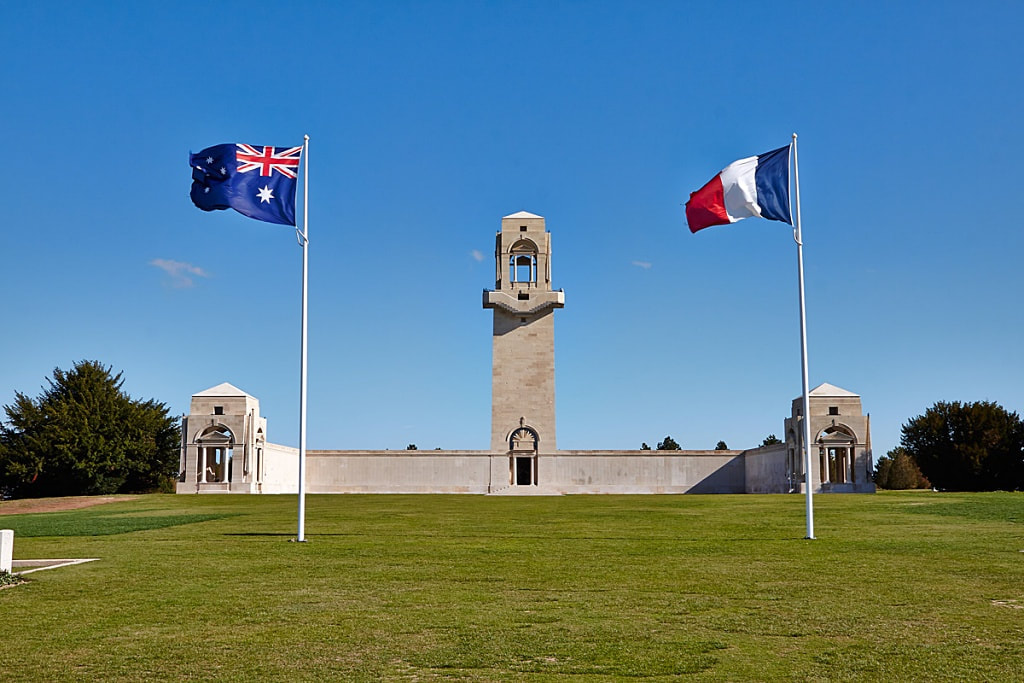
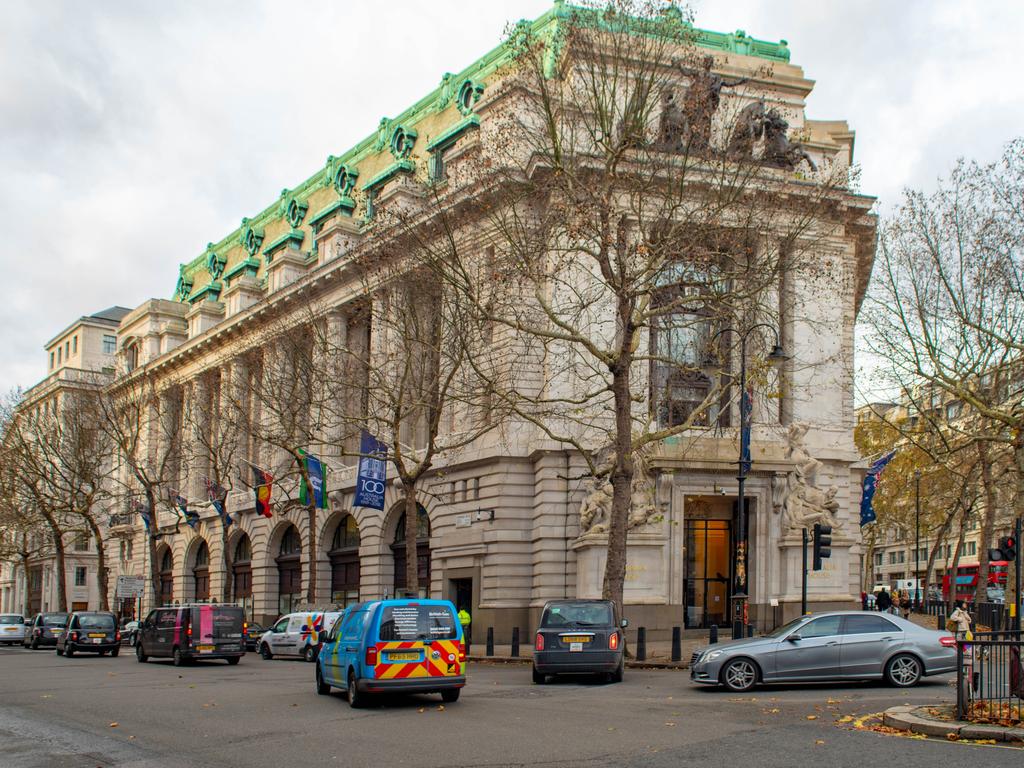
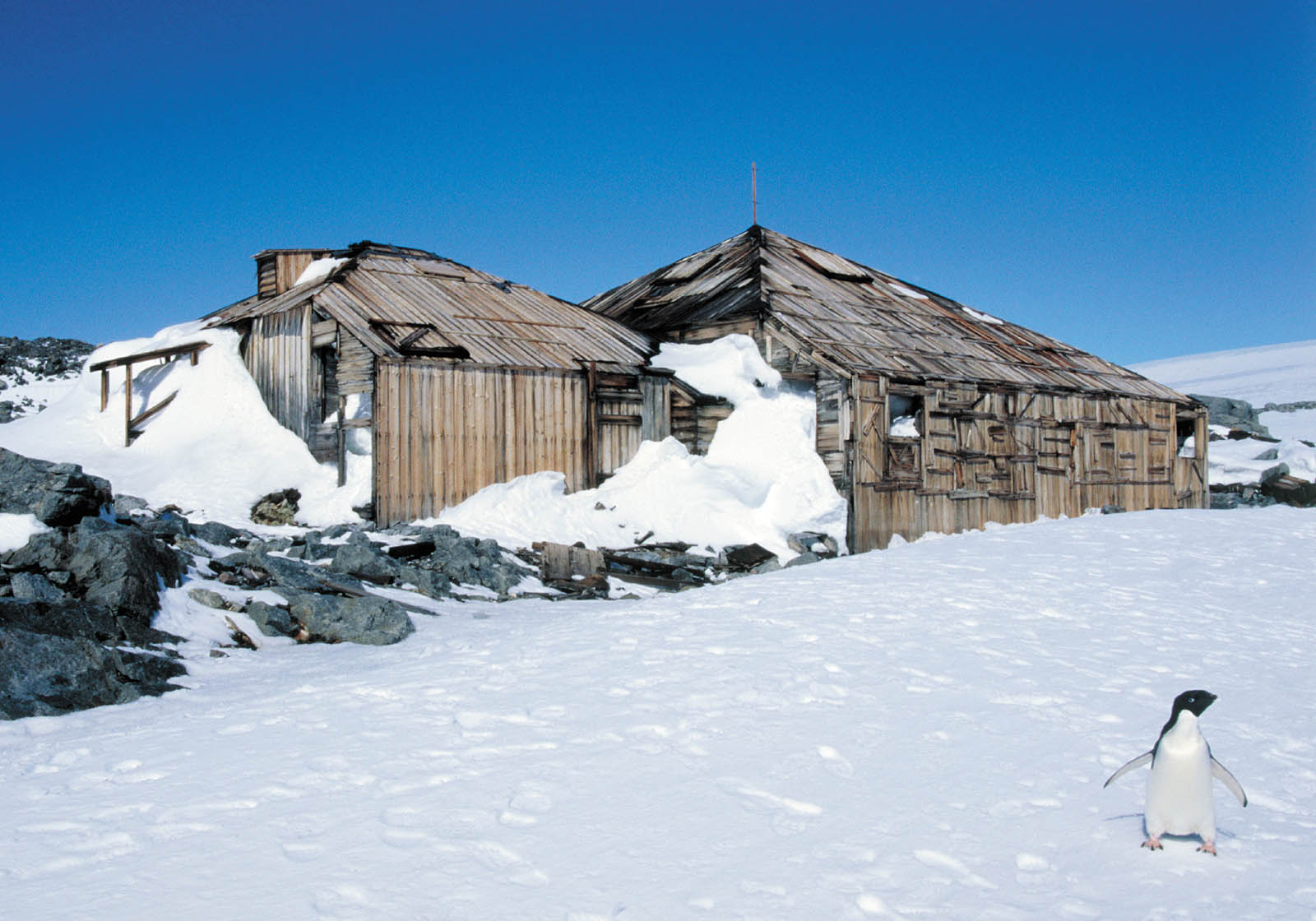
Today the Australian Heritage Council has made the decision to establish a "List of Overseas Places of Historic Significance to Australia" as a list of sites outside Australian jurisdiction deemed to be of outstanding historic significance to Australia. The Minister has approved of this listing to work alongside the already existing heritage lists of the National Heritage List and the Commonwealth Heritage List. The Minister has given approval for six sites to be the inaugural sites added to the list. Two are in the United Kingdom and one each for Turkey, France, Papua New Guinea and Swedish Antarctica. The sites are listed in the table below:
Place:Country:Date Listed:Coordinates:Image:
Anzac Cove, GallipoliTurkey30 November 200640°14′46″N 26°16′40″E
Kokoda TrackPapua New Guinea30 November 20068°52′39.95″S 147°44′14.99″E
Howard Florey's Laboratory, Sir William Dunn School of PathologyUnited Kingdom30 November 200651°45′34″N 1°15′05″W
Australian National Memorial, Villers-BretonneuxFrance30 November 200649°53′12.76″N 02°30′45.97″E
High Commission of Australia, LondonUnited Kingdom30 November 200651°30′46.4″N 0°6′56.6″W
Mawson's HutsAntarctica30 November 200667°00′31.6″S 142°39′39.7″E
 
Last edited:

Owen

Commonwealth of Australia
GA Member
Jul 2, 2018
3,718
OPENING OF THE NATIONAL ARBORETUM CANBERRA
14 April 2007
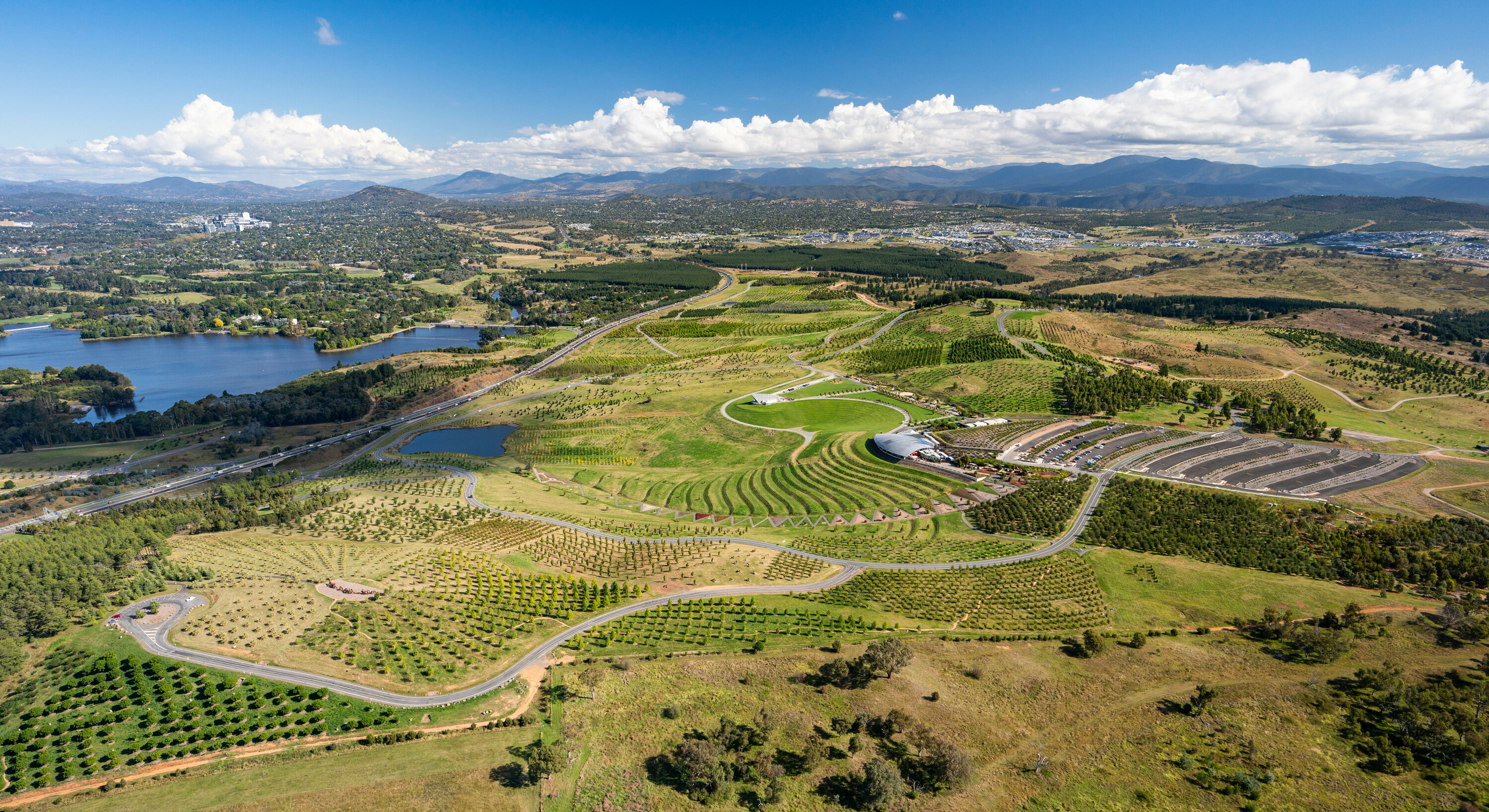
Today the Australian Capital Territory Government has opened the National Arboretum Canberra with the support of the federal Department of the Environment. The National Arboretum has been established in an area to the west of Canberra which was heavily destroyed during the 2001 Canberra bushfires. Spanning over 250 hectares, the Arboretum is now one of the world’s largest living collections of rare, endangered and significant trees. The site is also home to the Margaret Whitlam Pavilion, the Village Centre with its onsite restaurant, café and gift shop, POD playground and the renowned National Bonsai and Penjing Collection which has been moved to the National Arboretum from Commonwealth Park. It also features the Southern Tablelands Ecosystems Park which is a unique part of the Aboretum in that it grows 16 different species (rather than one species) of eucalypt trees, shrubs, herbs and grasses typically found in the Southern Tablelands region of New South Wales and the ACT. Notable tree plantings include:
  • Himalayan cedar (Cedrus deodara)
  • Cork oak (Quercus suber)
  • California fan palm (Washingtonia filifera)
  • Chinese tulip tree (Liriodendron chinense)
  • Western old white gum (Eucalyptus argophloia)
  • Yoshino cherry (Prunus x yedoensis)
  • Dragon tree (Dracaena draco)
  • Maidenhair tree (Ginkgo biloba)
  • Judas tree (Cercis siliquastrum)
  • Giant redwood (Sequoiadendron giganteum)
  • Camden white gum (Eucalyptus benthamii)
  • Chinese rubber tree (Eucommia ulmoides)
  • Horse chestnut (Aesculus hippocastanum)
  • Monkey puzzle tree (Araucaria araucana)
  • Bunya pine (Araucaria bidwillii)
  • Weeping Snow Gum (Eucalyptus lacrimans)
  • Wollemi pine (Wollemia nobilis)
  • Illawarra flame tree (Brachychiton acerifolius)
Foreign governments may arrange to have tree plantations established at the National Arboretum to protect their own biodiversity.
 
Last edited:

Owen

Commonwealth of Australia
GA Member
Jul 2, 2018
3,718
ESTABLISHMENT OF THE NATIONAL ENVIRONMENTAL PROTECTION AGENCY
1 March 2009
Today the National Environmental Protection Agency was launched. The National Environmental Protection Agency (NEPA) is an Australian government agency dedicated to environmental and biodiversity protection. It is an independent body created by the National Environmental Protection Agency Act and began operations on 1 March 2009. NEPA is the only environmental protection agency at a federal level, although several similar agencies exist a state level.

NEPA brings together regulatory functions of Australia’s national environmental laws into one independent agency. This includes the assessment and approvals functions of the updated Environment Protection and Biodiversity Conservation Act. It also upholds and enforces the Environment Protection and Biodiversity Conservation Act, with powers to investigate breaches of the Act and penalise non-compliance. Other laws include:

  • Environment Protection (Sea Dumping) Act
  • Hazardous Waste (Regulation of Exports and Imports) Act
  • Ozone Protection and Synthetic Greenhouse Gas (Import Levy) Act
  • Ozone Protection and Synthetic Greenhouse Gas Management Act
  • Ozone Protection and Synthetic Greenhouse Gas (Manufacture Levy) Act
  • Product Emissions Standards Act
  • Recycling and Waste Reduction Act
  • Underwater Cultural Heritage Act
NEPA delivers transparent, timely, and evidence-based environmental regulation. NEPA works to:
  • Regulate development to protect matters of national environmental significance
  • Strengthen compliance with national environmental laws
  • Provide clear, predictable regulatory pathways that support environmentally responsible economic activity and good environmental outcomes.
NEPA is a non-corporate Commonwealth entity lead by a Chief Executive Officer and is part of the environment portfolio of the Australian Government. NEPA's mission is to protect the environment, benefit communities, and help foster Australia’s economic prosperity through:
  • Making timely and streamlined assessments and project decisions, based on the evidence about their impact on the environment. NEPA are consistent, impartial and guided by legislation.
  • Ensuring that impacts on Australia’s threatened species and their habitats are appropriately managed.
  • Making sure individuals and businesses comply with national environmental laws such as those for hazardous waste disposal, wildlife trade and dumping at sea.
  • Provide clear guidance and engage with businesses and stakeholders to help them understand and comply with the law.
  • Take strong action – such as prosecutions, fines and environmental repair orders - when there’s deliberate breaches or serious environmental harm.
NEPA is also responsible for the regulation of live wildlife exports in and out of Australia and NEPA officers will be stationed at all major international airports. Australia strictly controls the international movement of wildlife specimens (animals or plants, or their parts and derivatives). In many cases, in order to move wildlife specimens to or from Australia, you will need a permit issued by the NEPA. When applying for and using a wildlife permit you must comply with all relevant permit conditions. Conditions vary depending on the circumstances of your trade and the type of permit.

To understand what, if any, permit requirements apply to your situation you will first need to find out if the specimen is listed under the Convention on International Trade in Endangered Species of Wild Fauna and Flora (CITES) or is an Australian native species or confirm if it is neither. Many live animals (including insects and other invertebrates) that are not listed under CITES and are not native to Australia require an import permit from the Department to be imported into Australia.

Australia has other national, state and territory laws to regulate the movement of animals, plants and their specimens. For example, the Department of Agriculture, Fisheries and Forestry regulates the movement of animals, plants and specimens to Australia under the Biosecurity Act. They ensure biosecurity risks are managed. Australia’s state and territory governments also have laws on the keeping and taking of wildlife within their borders. They also regulate the import and export of wildlife across their borders.
 

Forum statistics

Threads
24,376
Messages
118,610
Members
424
Latest member
Typist
Top