STATISTICS

Start Year: 1995
Current Year: 2008

Month: June

2 Weeks is 1 Month
Next Month: 22/03/2026

OUR STAFF

Administration Team

Administrators are in-charge of the forums overall, ensuring it remains updated, fresh and constantly growing.

Administrator: Jamie
Administrator: Hollie

Community Support

Moderators support the Administration Team, assisting with a variety of tasks whilst remaining a liason, a link between Roleplayers and the Staff Team.

Moderator: Connor
Moderator: Odinson
Moderator: ManBear


Have a Question?
Open a Support Ticket

AFFILIATIONS

RPG-D

Meeting on the Black Sea.

Vaka

The Kingdom of Norway
GA Member
Sep 26, 2020
1,192
ea6881b4-ffbd-43b8-901a-a46e3c011e15.jpg

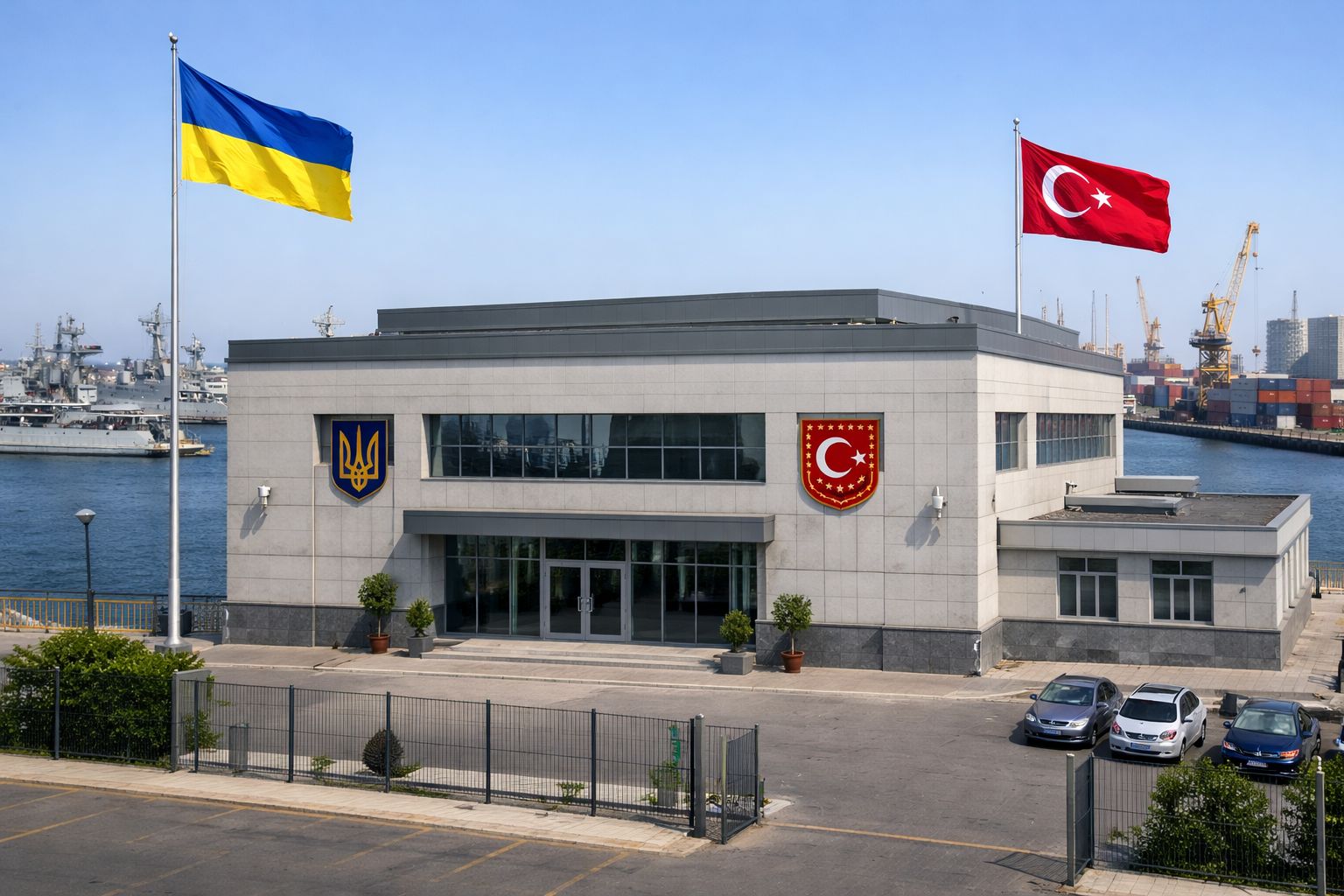
(Joint Naval Operations Center, Odessa)

The morning sun rose over the dark waters of the Black Sea, casting a gold light across the runways of Artsyz Air Base. The air was cool, still carrying the last traces of night, but already the distant sounds of activity signaled that this would not be an ordinary day.

After months of internal planning, emails, and careful diplomatic exchanges, the long anticipated meeting between the Ukrainian and Turkish naval leadership had finally arrived.

Vice Admiral Ihor Tenyukh stood near the edge of the tarmac, hands clasped behind his back, his gaze fixed on the eastern skies. Beside him, Valeriy Heletey, the Minister of Defence, adjusted his gloves nervously, occasionally glancing toward the control tower as if willing the moment to arrive faster.

A short distance from these two men, soldiers from the 104th Air Base Infantry Battalion maintained a disciplined perimeter. The presence of the 104th Air Base Infantry Battalion was firm but not obtrusive with rifles slung, vehicles idling in neat formation, ready to move at a moment’s notice. They would handle everything today: security, transport, contingencies. Nothing was left to chance.

Tenyukh broke the silence first.

“Months of work,” he said quietly, not taking his eyes off the sky. “Let’s hope it was worth it.”

Heletey let out a small yawn. “It will be. It has to be. Türkiye isn’t going to send someone like this just to blow smoke up our ass.”

“It's not the Chief of Naval Operations.”. Tenyukh said bluntly.

“But it's the man that redesigned the whole Turkish navy.” Heletey responded

Tenyukh turned to face the other man, “Yes, but this needs to be a seriously productive meeting.”

Heletey just smiled. “If it isn’t, we’re fucked.”

As if on cue, a distant shape appeared small at first, then steadily growing against the morning sun. The incoming aircraft cut cleanly through the sky. Its engines made a low, steady roar that rolled across the airfield in waves. It was the only aircraft expected this morning.

“That’ll be him,” Heletey said.

The plane descended slowly, wheels touching down with a brief screech before settling into a controlled roll along the main runway. Ground crews moved with purpose as the aircraft taxied toward the designated reception point.

Tenyukh straightened slightly, his posture sharpening as the aircraft came to a stop. A staircase was already being wheeled into place. Around them, the tension was all too obvious.

Heletey leaned slightly toward him. “From here,” he said, “it moves quickly.”

Tenyukh nodded. “Good. It should.”

In less than an hour, they would be seated inside the newly constructed Joint Naval Operations Center overlooking the vast commercial expanse of Port of Odessa. In the conference rooms maps would be spread across tables, doctrines hotly debated, futures of nations negotiated. The restructuring of the Ukrainian Navy would begin to take real shape there, alongside a new partnership in the Black Sea.

And afterward, the formalities would soften with dinner, discussion, and quiet negotiation within the walls of Hotel Bristol Odessa.

But for now, a Vice admiral and a Defense Minister waited on an aircraft door to open.

Jay
 
  • Love
Reactions: Jay

Jay

Dokkaebi
GA Member
Oct 3, 2018
3,708
Turkey_Air_Force_Lockheed_C-130E_Hercules_68-1609.jpg

The cargo bay of the C-130 Hercules hummed with the particular monotony of military transport. The hydraulic systems breathed in steady rhythm, the fuselage groaning occasionally as the aircraft adjusted altitude. Deniz Arslan sat at a fold-out table with the briefing folder open, its pages weighted down by a coffee cup that had long since gone cold. Across from him, Vice Admiral Türker Ertürk reviewed a separate set of papers, his reading glasses perched low on his nose. Captain Ahmet Öztürk occupied a seat along the starboard side of the bay, his uniform still crisp despite the five-hour flight from Gölcük. Lieutenant Commander Emre Demir stood with his hands braced against an overhead strap, studying the manifest for the third time.

Arslan cleared his throat. The others turned.

"The Ukrainian naval budget for the coming fiscal year," he said, distributing photocopied pages, "is significantly constrained. The Minister's office will need to deal with costs across the entire service. That includes personnel, fuel, maintenance, and acquisitions. It is, by any reasonable measure, a fraction of what they require to rebuild."

Ertürk looked up. "What about their personnels?"

"Mixed. They have experienced officers, many of whom spent years in the Soviet Navy. Now they need to develop new doctrines and ideas. There has been some difficulty retaining skilled technicians, which complicates maintenance even of what they possess."

Captain Öztürk leaned forward slightly. "And their procurement priorities? What are they asking for from us?"

Arslan tapped the papers. "They want to rebuild a surface fleet. Their preliminary requests include frigates, guided-missile corvettes, and supporting vessels. They have submitted specifications for what they are calling a 'light frigate' smaller than traditional capital ships, but with anti-ship and air defense capabilities." He paused. "They also have what appears to be a carrier design. Still in the blueprint phase, but I believe they will mention in our preliminary discussions as part of their long-term rebuilding plan."

Ertürk set his papers down. He folded his hands on top of them and looked past Arslan toward the forward bulkhead, where the pilots were invisible beyond a sealed door. "A carrier," he said, without inflection.

"Yes, sir."

"That is ambitious for a navy that cannot properly maintain what it has."

"Yes, sir."

Ertürk rose from his chair with the careful deliberation of a man who had spent decades aboard ships that moved unpredictably. He gestured to Demir. "Brief them on the Defense Staff position."

Demir moved to the table, and Arslan gathered his papers to make room. The aircraft banked slightly, and a light in the ceiling flickered.

"The Defense Staff has requested," Demir said, "that we conduct a port visit to Sevastopol within the next four months. The timing will depend on operational scheduling, but the intention is clear. A Turkish naval presence at Sevastopol sends a signal."

"To whom?" Captain Öztürk asked, though his tone suggested he already knew the answer.

"To Russia. To demonstrate that we maintain an interest in what occurs in the Black Sea and specifically in the status quo of Crimea. The visit would be ostentatiously diplomatic and cultural exchange, refueling, and joint maneuvers with Ukrainian elements if it can be arranged. The political message is the point."

Ertürk nodded once. "That will be all for now," he said. He turned to Öztürk. "Come with me."

They moved together toward the rear of the cargo bay, where several large shipping containers had been lashed down and a few seats were isolated from the main seating arrangement. Ertürk lowered himself into one of the folding seats and gestured for Öztürk to take the one beside him. The noise of the engines was louder here, which suited his purposes.

"The question that matters," Ertürk said without preamble, "is intelligence sharing. ONI does not want us to provide the Ukrainians with our full assessment of the Russian Black Sea Fleet expansion at Sochi. They believe it creates political complications."

Öztürk understood immediately. "But the CNO differs."

"The CNO believes we must develop a genuine partnership with Ukraine. Not a dependency relationship where we dispense advice from on high, but something closer to operational coordination. That requires a certain level of trust."

Öztürk considered this. She had spent enough time in intelligence work to understand the tension between caution and alliance. "We could provide them with the raw intelligence," she said slowly, "without our assessments appended. Let them draw their own conclusions."

"Precisely." Ertürk settled back in his seat, and for a moment he simply listened to the engines. "We give them the satellite imagery. The SIGINT intercepts. The procurement records. We tell them what we have observed. We do not tell them what it means. That part they must discover themselves. It is more credible that way, and it preserves our position if the analysis proves incomplete."

"They may reach conclusions we find alarming."

"They may. But those conclusions will carry more weight if they arrive at them through their own analysis rather than accepting our reading whole. This is how partnership actually functions, Defne. Not as charity. As mutual recognition that both sides have competence and insight."

They sat in silence for a moment. Öztürk watched one of the jump seats across the bay, where a junior officer was reading a paperback novel.

"The matter of their fleet composition," Ertürk said, shifting forward slightly. "Arslan mentioned requests for capital ships. What is your assessment of what they actually need?"

"A light fleet," Öztürk answered without hesitation. "Submarines, primarily. Corvettes with missile capability. Fast attack craft. Denial systems. Their coastline is vulnerable, and their budget is constrained. A heavy surface fleet would be a luxury they cannot afford, and they would be unable to maintain it even if we provided the hulls."

"And they will ask for it regardless."

"They will. Every navy wants capital ships. It is how officers measure success. A frigate seems more impressive than a submarine, even if the submarine is tactically more valuable in their actual operational theater." She paused. "They also have this carrier design."

Ertürk's expression flickered into something that might have been amusement. "The carrier is what?"

"A sailing coffin, as far as I can determine. The specifications are optimistic about what a ship of that displacement can actually carry and operate. It would be vulnerable, difficult to defend, and expensive far beyond what they could support logistically."

"A coffin," Ertürk repeated. He allowed himself a brief laugh, which sounded strange against the engine noise. "Well. We shall see what they propose when we arrive. Perhaps they are less attached to their blueprints than Arslan suggests."

He rose from his seat. "Prepare a preliminary assessment of their likely requests. Nothing formal. Just an outline of what we think they will ask for and what we think we can actually recommend. We will adjust once we hear what they have to say in person."

They moved back toward the main seating area. Demir was reviewing the manifest again. Arslan had returned to his cold coffee. The pilots' voices crackled over the intercom, and then one of them came through the sealed door, moving forward with practiced ease despite the aircraft's slight cant.

"We are beginning descent for Odessa," he said. His English carried a heavy Anatolian accent. "You have thirty minutes to final approach. Please secure any loose items and prepare for landing. The weather is clear. We anticipate a smooth descent."

Ertürk nodded to Demir, who began gathering papers. Arslan stowed the briefing folder in his bag. Öztürk secured the coffee cup in a waste bin and checked his uniform.

The engines seemed to change pitch. The aircraft banked more sharply, and the sunlight through the small porthole shifted. Below them, if they had been able to see clearly through that small window.

Ertürk remained standing, braced against one of the overhead straps, his eyes half-closed as though he were listening to something only he could hear. When he opened them, his expression carried that familiar weight again—the careful calculation of a man who understood that the decisions made in the next hours would ripple outward in ways no one present could fully anticipate.

The C-130 descended slowly, wheels touching down with a brief screech before settling into a controlled roll along the main runway. Inside, the Turks watched as ground crews moved with purpose as the aircraft taxied toward the designated reception point.

As the delegation stepped out, Vice Admiral Türker Ertürk would walk out first, with Captain Refat Çubarov walking behind him. When Ertürk saw Vice Admiral Tenyukh he gave him a brief smile before extending his hand. "Vice Admiral Tenyukh it is a pleasure to meet you." He said in Turkish, allowing Captain Çubarov to translate into Ukrainian. "Admiral Tatlıoğlu reiterates his deepest apologies for being unable to make this trip. He wishes he could be here." Pausing again, allowing Çubarov to translate before the two men could begin their way to the motorcade.

Vice Admiral Ertürk, along with the rest of the Turkish delegation and eleven additional officers from the Turkish Navy, stepped off the plane. The Ukrainians handled their larger luggage, while the officers themselves carried their personal belongings and sensitive documents.

Vaka
 

Latest posts

Forum statistics

Threads
24,281
Messages
117,693
Members
421
Latest member
cartweak
Top