Moderators support the Administration Team, assisting with a variety of tasks whilst remaining a liason, a link between Roleplayers and the Staff Team.
Moderators support the Administration Team, assisting with a variety of tasks whilst remaining a liason, a link between Roleplayers and the Staff Team.
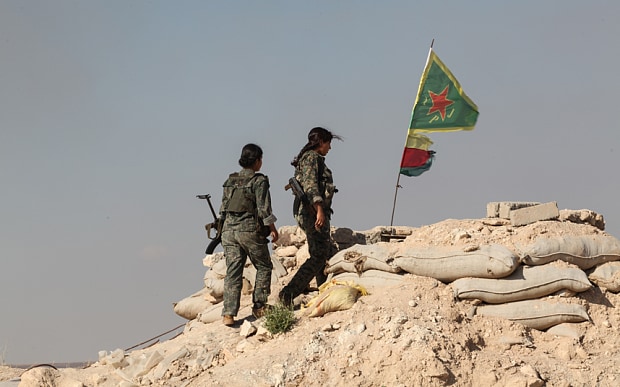
The Kurdistan Workers' Party (PKK) has claimed responsibility for a large-scale attack on a Turkish military border position in the Aktütün area of Hakkari Province, describing the operation as a significant action against Turkish security forces in the region.
According to statements released through media outlets close to the movement, PKK fighters launched a coordinated assault on the Aktütün Gendarmerie Border Station on November 3. The organization stated that the operation targeted a strategic military position near the Iraqi border and was carried out after extensive preparation and reconnaissance.
The battle reportedly continued for several hours, with intense exchanges of fire taking place across the mountainous terrain surrounding the outpost. Video footage later released by the PKK appeared to show fighters moving into position before the attack and engaging Turkish forces during the operation.
In its statement, the PKK described the assault as a successful military action and argued that it demonstrated the organization's continued ability to strike heavily defended positions despite ongoing Turkish military operations. The group claimed the attack was part of its broader campaign against the Turkish state and linked the operation to its long-standing political and military objectives.
The events at Aktütün serve as a reminder that the PKK remains committed to carrying out actions it believes will advance its goals, despite years of military pressure and regional instability. The organization has repeatedly stated that it intends to continue its struggle until what it describes as the Kurdish question is resolved through political and social change.
The attack has also renewed debate in Turkey regarding security policies in the predominantly Kurdish southeast. Questions have emerged over whether Turkish military authorities possessed advance intelligence warning of militant activity in the area before the assault took place. Turkish media reports have alleged that warning signs may have been detected before the attack, though military officials have strongly disputed accusations of negligence.
The Aktütün attack comes amid a period of heightened activity by Kurdish armed groups across the region. This the second major cross-border security incident in recent weeks, following an attack claimed by PKK and PJAK militants against an Iranian border post in West Azerbaijan Province. The succession of operations has fueled discussion about a possible escalation in the conflict.
In a statement released after the attack, a spokesperson for the organization described the operation as part of a broader campaign intended to pressure Ankara to address the group's political demands. The spokesperson claimed that 30 Turkish security personnel were killed during the assault. Video footage posted by the group shows that the attack was successful and hundreds of PKK fighters overwhelmed the guard post.
As Thailand gives its support to the PKK there is a growing sense that the Kurdish people's aspirations for political independence and sovereignty are gaining international momentum. Time will tell whether the PKK can materialize these gains into actionable results.
At least 14 people, most of them police officers and soldiers, were killed and approximately 300 others wounded on Thursday in a series of coordinated bomb attacks across southeastern Turkey, according to government officials, marking one of the deadliest days of violence in the region in recent years.
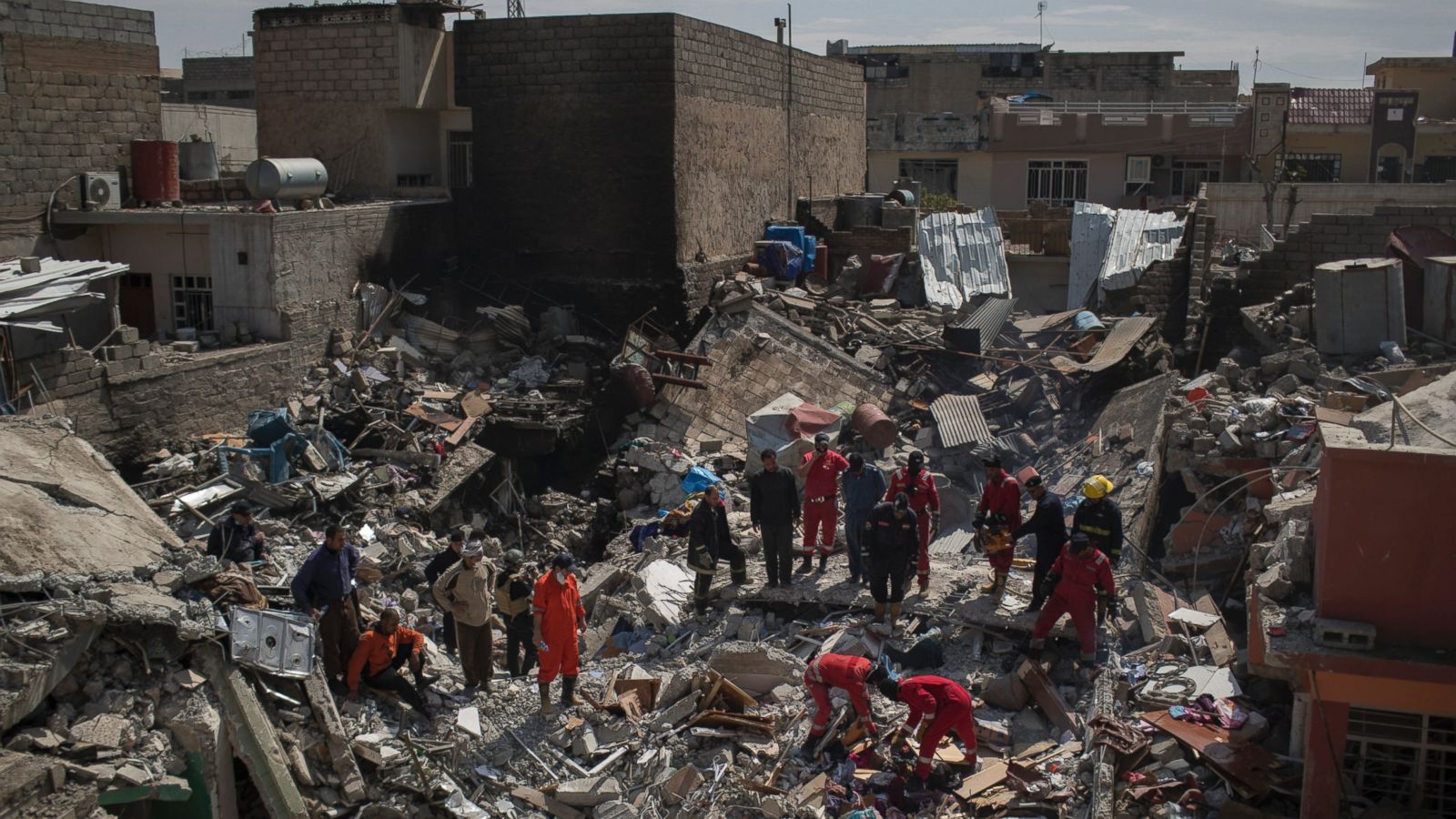
The largest explosion occurred in the city of Elazig, where a car bomb detonated outside a police headquarters as officers arrived for work. The blast shattered windows across several blocks, reduced parts of the building to rubble and sent thick columns of smoke rising above the city.
Two additional explosions struck security targets elsewhere in southeastern Turkey, adding to the mounting casualty toll and raising concerns about a renewed escalation in the country's long-running conflict with Kurdish militants.
Prime Minister Ayse Ciller traveled to Elazig later in the day, visiting wounded police officers and civilians in local hospitals. Speaking to reporters afterward, she said there was "no doubt" that the Kurdistan Workers' Party, or PKK, was responsible for the attacks.
"The evidence points clearly to the PKK," Ms. Ciller said. "These cowardly attacks were designed to undermine public security and intimidate our citizens. They will not succeed."
No immediate claim of responsibility was issued following the bombings. However, in statements circulated through media channels associated with the organization, the PKK characterized the attacks as retaliation for what it described as an extensive campaign of arrests and abuses carried out by Turkish security forces in predominantly Kurdish areas.
According to human rights groups and local officials, Turkish authorities have detained more than 200 individuals in recent weeks as part of counterterrorism operations. The PKK alleged that detainees had been subjected to torture and other mistreatment, accusations that Turkish officials have repeatedly denied.
The attacks come amid growing tensions between Ankara and Kurdish militant groups operating in Turkey's southeast, where decades of conflict have claimed tens of thousands of lives.
Ms. Ciller issued a stark warning and called for a broader strategy aimed at disrupting the logistical networks that sustain the insurgency.
"We must take decisive action against the sources of support and supplies that sustain these terrorists," she said. "Our operations will extend beyond our borders if necessary to protect our nation and ensure lasting peace."
Her remarks appeared to signal a possible expansion of Turkey's military campaign beyond its territory, with particular focus on supply depots and support infrastructure allegedly used by PKK fighters in neighboring countries.
Analysts said the comments reflected growing frustration within the Turkish government over the group's ability to move personnel, weapons and supplies across international borders. At the same time, they warned that any cross-border operations could further complicate relations with neighboring states and intensify regional tensions.
The bombings are likely to deepen political divisions over Turkey's security policies and its handling of the Kurdish question. Government officials have defended recent security operations as necessary measures against terrorism, while Kurdish activists and rights organizations have criticized what they describe as sweeping arrests and restrictions targeting Kurdish communities.
As emergency crews continued to search damaged buildings and clear debris from the blast sites, authorities increased security measures across southeastern Turkey, fearing the possibility of additional attacks.
For many residents of Elazig, however, the immediate concern remained the devastation left by Thursday's explosion. Ambulances moved steadily between hospitals and the damaged police complex throughout the day, while families gathered outside medical centers awaiting news of injured relatives.
By nightfall, officials warned that the death toll could still rise as several victims remained in critical condition.
The Kurdistan Workers' Party issued a sharply worded warning on Tuesday that it would retaliate against the Turkish government following a series of airstrikes in northern Iraq that the group says killed dozens of civilians promising to exact an "eye for an eye".
The PKK's spokeswoman Dijlin Hamad said in a pre-recorded statement distributed through its usual channels that the strikes had hit villages far from any military positions, killing farmers, laborers and, by its account, children sheltering in their homes. Turkish officials have not disputed that strikes took place but maintain they targeted militant infrastructure rather than civilian areas, a claim the PKK rejected outright.
"This is not the first time Ankara has called the killing of our people an accident," the statement read, according to a translation reviewed by this newspaper. "It will not be the last time we respond. We have made our demands clear. Our selective targeting of military personnel will change with new directives to our field offices making political officials targets."
The Turkish Defense Ministry did not respond to requests for comment by the time of publication. A spokesman for the government said in a press briefing that operations in the region were "ongoing and necessary for national security," a formulation officials have used regularly in describing cross-border strikes historically.
Tuesday's statement repeated, almost verbatim, a set of demands PKK has issued on previous occasions, including after a much-publicized declaration timed to coincide with international attention surrounding the recent Olympic Games. Those demands include recognition of the Kurdish population's right to self-determination, the establishment of an independent Kurdish state, a full withdrawal of Turkish forces from Kurdish-majority territory, and the release of political prisoners the group says have been held for years without trial.
The group again warned that any government providing material or diplomatic support to Ankara would be regarded as a party to the conflict, language it has used before to suggest that the confrontation could widen beyond Turkey's borders if outside governments increase support for Turkish operations. The group mentioned Australia and India's most recent decision to label the group as a terrorist organization explicitly. Warning that foreign governments that blindly take the Turkish government's side will pay a price for their complicity in crimes against humanity.
Independent verification of Tuesday's casualty figures was not immediately possible. Local hospital officials in the affected districts told wire services that they had received a number of bodies and wounded patients consistent with an airstrike, though exact figures varied between accounts and could not be independently confirmed. Humanitarian organizations operating in the region called for an independent investigation into the strikes, a request the Turkish government has not yet addressed.
For now, there is little indication that either side is prepared to step back. The Turkish government has shown no sign of altering its approach to cross-border operations, which officials describe as essential to preventing attacks on Turkish soil. The PKK, for its part, has built its public messaging around the argument that diplomatic channels have already been exhausted and that further patience would amount to accepting what it calls indefinite political exclusion.
International reaction to Tuesday's developments was muted. A handful of foreign ministries have issued new warnings for travel to Southeastern Turkey and Iraqi Kurdistan. Whether Tuesday's warning translates into the kind of operation PKK has previously carried out, or remains rhetorical, is likely to become clear in the days ahead. It is likely that the group will now expand its operations out of the Southeast and into the rest of Turkey.
Turkish authorities said Friday that an airstrike in northern Iraq killed three senior leaders of the Kurdistan Workers' Party (PKK), describing the operation as one of the most significant blows against the militant group's leadership since Ankara expanded its cross-border campaign earlier this year.
The Turkish government identified those killed as Gurbuz Zeki Dokumaci, Mustafa, and Kani Yilmaz, all of whom officials described as senior members of the PKK.
Speaking after the operation, Turkish Defense Ministry spokeswoman Colonel Nadide Şebnem said the strike targeted a meeting of PKK leaders near Mosul as part of Operation Tigris Shield, Turkey's ongoing military campaign against the organization in northern Iraq.
"The Turkish Armed Forces successfully conducted a precision strike against senior PKK terrorists responsible for planning attacks against our nation," Colonel Şebnem said. "This operation represents another important step in degrading the organization's command structure."
The Turkish government has not released evidence confirming the identities of those killed, and the PKK has not publicly acknowledged the deaths of the three commanders. The operation has also prompted allegations of civilian casualties.
Local Iraqi officials said the strike killed nine civilians, including three children, when munitions struck an area near the intended target. Community leaders in the region condemned the attack, with Arab tribal representatives and Kurdish elders calling for an investigation into the reported deaths.
Turkish military officials did not directly address the casualty claims but reiterated that civilian protection remains a priority.
"The Turkish Armed Forces take every possible measure to protect civilian life during military operations," Şebnem said in respponse to a question about the allegations, adding that "We deeply regret any harm inflicted upon civilians."
The reported civilian deaths are likely to intensify criticism from Kurdish officials in northern Iraq, who have repeatedly accused Turkey of conducting airstrikes that have killed noncombatants during Operation Tigris Shield. Turkish authorities have consistently rejected those accusations, maintaining that their operations are directed exclusively against PKK targets and are based on extensive intelligence gathering.
Turkey has significantly expanded its campaign against the PKK in recent months, combining intelligence-led targeting with sustained air operations against the group's infrastructure, supply networks, and leadership. Turkish officials say the strategy is intended to weaken the organization's ability to coordinate attacks inside Turkey by eliminating experienced commanders and disrupting its command-and-control network.
The reported deaths of the three leaders, if confirmed, would represent one of the deadliest single strikes against the PKK's senior leadership since the campaign began. Turkish officials have increasingly emphasized targeted operations against high-ranking militants rather than broader strikes against camps and logistical facilities.
The PKK responded by vowing retaliation, accusing Turkey of deliberately targeting civilians and warning that the attack "will not go unpunished." The group did not provide evidence supporting its allegations but said it would respond at a time and place of its choosing.
Security analysts say the strike, if it eliminated the commanders identified by Turkey, could further disrupt the PKK's leadership structure at a time when the organization has already suffered repeated losses in Turkish intelligence and military operations. However, they also warn that high-profile leadership losses have historically increased the likelihood of retaliatory attacks by the group.
The Kurdistan Workers' Party (PKK) vowed on Sunday to resist any Turkish military incursion into northern Iraq, warning that an invasion would ignite a wider conflict and accusing Ankara of using counterterrorism as a justification for what it described as an assault on Kurdish communities.
In a statement released through its political representatives in northern Iraq, the PKK said its fighters would "stand against any occupation attempt" and called on Kurdish communities to prepare for what it described as a campaign aimed not only at militants, but at the broader Kurdish population.
"The Turkish government is making a historic mistake," a senior PKK representative said in an interview broadcast by regional media. "They believe they can silence the Kurdish people through military force. They will discover that the people will defend their lands and their rights."
The group accused Turkey of pursuing a policy of "Kurdish suppression" and characterized the planned operation as an extension of decades of conflict between Ankara and Kurdish movements seeking greater political recognition.
Turkish officials have rejected those accusations, insisting that any military action would be directed solely against PKK fighters and would not target Kurdish civilians. Ankara considers the PKK a terrorist organization responsible for thousands of deaths during its decades-long insurgency inside Turkey.
But in cities across northern Iraq, anxiety has grown as residents prepare for the possibility that fighting could move closer to population centers.
In Erbil and Mosul, residents reported increased military activity, emergency preparations, and growing uncertainty over whether the region could avoid becoming the latest battlefield in a conflict that has already crossed national borders.
Local officials said community leaders and aid organizations have begun reviewing contingency plans should fighting expand. Some residents have begun storing food and medical supplies, while others have sought information about possible evacuation routes.
"We have lived through war before," said Saman Yasin a resident of Erbil. "People here do not want another conflict. We fear that ordinary families will pay the price for decisions made by governments and armed groups."
The possibility of a Turkish intervention has placed northern Iraq's Kurdish administration in an increasingly difficult position. Kurdish authorities have attempted to distance themselves from the PKK while also opposing any military action that could destabilize the region.
Officials in Erbil have repeatedly denied allegations that they provide official support or protection to PKK fighters, arguing that the mountainous border areas are difficult to control and that Ankara's demands exceed what Iraqi authorities can realistically accomplish.
The PKK, however, has made clear that it does not intend to withdraw from its positions.
The group's leadership has argued that Turkish military pressure will only strengthen Kurdish resistance, portraying the potential offensive as an attack on Kurdish identity rather than a limited counterterrorism operation.
"Turkey believes it can solve this issue with tanks and aircraft," the PKK statement said. "The Kurdish people have resisted such policies for generations. We will continue to resist them."
Turkish military officials strongly dispute that characterization, arguing that the conflict is not ethnic but a fight against an armed organization responsible for attacks on Turkish soldiers and civilians.
The dispute has created a widening diplomatic divide. While Canada announced that it would formally designate the PKK as a terrorist organization and criminalize support for the group, Ottawa also warned Turkey against violating Iraqi sovereignty and urged both sides to pursue a ceasefire.
The PKK welcomed international criticism of Turkish military plans, arguing that growing concern among foreign governments demonstrated that Ankara's proposed operation risked creating a humanitarian crisis. The group also condemned a growing list of Western powers criminalizing the right of self-determination for the Kurdish people, including Australia and the U.S.
Turkish officials, meanwhile, have dismissed international warnings as failing to account for the security threat facing Turkey.
For civilians caught between the PKK and the Turkish Government, there is growing anxiety about what this round of fighting will bring. In Mosul, where communities have already endured years of violence, residents expressed fear that renewed fighting could bring new displacement and instability.
"We do not want to become another front line," Elwand Daban, a shopkeeper, said. "People are tired. They want peace and economic prosperity, not another war."
As Turkish forces remain positioned near the border and PKK fighters prepare for a possible confrontation, northern Iraq faces a familiar uncertainty: whether diplomacy can prevent another conflict or whether the region is heading toward another cycle of violence.
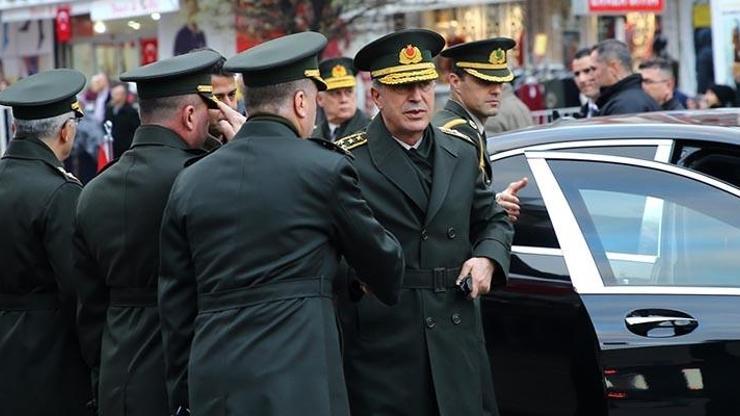
Turkey's chief of the General Staff, Gen. Hulusi Akar, brushed aside a Canadian offer to mediate between Ankara and the Kurdistan Workers' Party on Monday, declaring flatly that "Turkey does not negotiate with terrorists" as tens of thousands of Turkish troops completed their mobilization along the Iraqi border for what officials are calling an imminent counter-terrorism operation.
Speaking to reporters at a hastily arranged briefing in Ankara, Akar dismissed Ottawa's proposal outright and used the moment to needle Canada over its response to the FLQ crisis, telling reporters that Canadians "did not ask anyone for mediation" before striking France in the aftermath of the FLQ attacks. "When Canada faced its own terrorists, it did not go looking for a third party to hold its hand," Akar said.
The remarks came as Turkish forces completed final preparations for a cross-border operation into Northern Iraq that officials say has been weeks in the making. Artillery units and fighter aircraft have been observed for days near the border, and ground troops are now positioned at forward barracks awaiting the order to advance. Residents in Turkish border towns described near-constant overhead flights and the rumble of armor moving toward staging areas.
Dozens of residents have already begun fleeing cities across Iraqi Kurdistan's north in anticipation of the offensive, which Akar described in narrow terms as a "counter-terror operation" but which many in the region expect to become a prolonged occupation. Displaced residents and local officials say they fear reprisals against communities seen as sympathetic to the PKK, a concern Akar did little to dispel, saying only that Turkish forces "will respond in kind to every attack the PKK has carried out against our people."
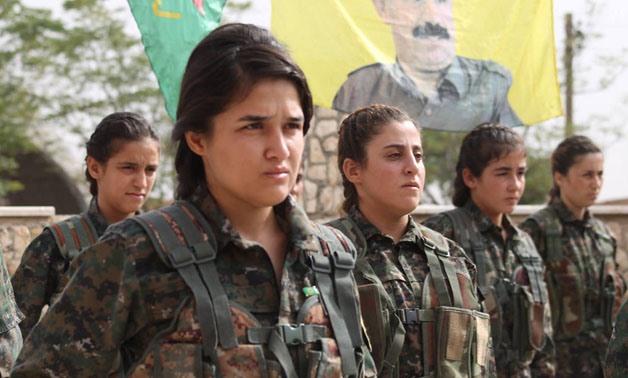
The PKK has vowed to resist the incoming campaign, and in several towns near the border, Kurdish residents have joined makeshift militias organizing to fight alongside PKK fighters. Organizers describe the mobilization as a defense of Kurdistan against what they call an unwanted foreign incursion, rather than formal PKK recruitment, a distinction that has done little to reassure Ankara, which has promised to treat any armed group fighting with the PKK as legitimate targets.
The Kurdistan Regional Government has notably declined to commit the Peshmerga to confront the advancing Turkish army, a decision officials in Erbil have defended privately as an effort to avoid dragging the KRG into a war it did not start. But the KRG's reluctance runs deeper than fear of escalation. Officials close to the government have no appetite for aiding the PKK, which has thrown its support behind a rival political faction in Sulaimaniyah that has clashed for years with Erbil-based parties for control of the region's institutions.
That calculation has not gone over well on the streets of Erbil, where protests have gathered in recent days accusing the KRG of sitting on its hands while Turkish forces mass on Kurdish territory. Demonstrators have called on the regional government to take a harder line against Ankara, or at minimum to publicly condemn the buildup, demands the KRG has so far met with silence.
Pressed on the diplomatic fallout and the prospect of civilian displacement, Akar redirected blame toward Baghdad, arguing that the burden of preventing the operation lay with the Iraqi government rather than Turkey. "More effort should be spent getting Iraq's government to deal with the PKK on its own soil," he said. "We have waited. Now we will finish it ourselves."
Asked whether international pressure, including the Canadian mediation offer, might yet delay the operation, Akar was unequivocal. "The Turkish Armed Forces will not retreat until the mission is secured," he said, ending the briefing without taking further questions. With troops now in position and no sign of a diplomatic off-ramp, residents on both sides of the border say they are bracing for the offensive to begin within days.
For decades, the Kurds have been told to wait. Wait for the right moment. Wait for the right international coalition. Wait for Turkey to change. Wait for Iraq to stabilize. Wait for Iran to weaken. Wait for Washington to decide that Kurdish aspirations for self-determination are no longer inconvenient.
The Kurds have become experts in patience. They have also become experts in discovering that patience, when practiced for long enough, can become another word for abandonment.
Now, as Turkey threatens to expand its military operations against Kurdish forces and populations across the region, the Kurdish leadership faces a question it has spent decades avoiding: Is it time to rethink its alliances?
More specifically, is it time for the Kurdistan Regional Government and its Peshmerga forces to develop a strategic partnership with Israel?
The idea will strike many as provocative, even dangerous. Israel and the Kurds have had contacts for decades, but a formal or openly acknowledged alliance would represent a dramatic shift in the politics of the Middle East. It would also provoke fierce opposition from Turkey, Iran and Iraq, all of which have reasons to fear the emergence of a stronger and more independent Kurdish political entity.
But the question deserves to be asked precisely because the existing strategy has failed to deliver what the Kurds need most security that does not depend entirely on the goodwill of others.
The fundamental problem remains unresolved. The Kurds possess territory but not sovereignty. They have institutions but not a state. They have armed forces but cannot fully control their own security environment.
And they are surrounded by states that, whatever their differences, share one broad interest: preventing Kurdish independence. That is the uncomfortable reality that Kurdish leaders have spent years navigating.
The presence of the PKK in northern Iraq makes the situation even more complicated. The PKK is not the KRG, and the KRG is not the PKK. Yet Ankara has repeatedly used the presence of PKK fighters as justification for military operations in Iraqi Kurdistan. The result is a familiar pattern: Turkey strikes at PKK positions, civilians are displaced, Kurdish territory becomes a battlefield, and the KRG finds itself caught between a powerful neighboring state and a Kurdish militant organization it does not fully control.
The paradox is almost impossible to miss. The PKK's presence, intended in part to advance Kurdish political aspirations, has also given Turkey a justification for projecting military power deep into Iraqi Kurdish territory. The very existence of an armed Kurdish movement outside the control of the KRG has therefore weakened the position of the Kurdish government that actually governs much of northern Iraq.
This should force a difficult conversation within Kurdish politics. If our Kurdish brothers are serious about eventually achieving independence, or even preserving the autonomy it already possesses, it needs a long-term security strategy.
Israel is one of the few regional powers with the military, intelligence and technological capabilities to potentially alter the strategic balance confronting the Kurds. It has an established interest in countering Iranian influence. It has long viewed Turkey's growing regional ambitions with concern. And, unlike most of the states surrounding Kurdistan, Israel does not have a territorial dispute with the Kurds or a domestic Kurdish population whose separatist aspirations it fears.
There is also a deeper strategic logic. Both Israelis and Kurds have built political identities around the experience of being minorities in a hostile neighborhood. Both have experienced the consequences of international promises that proved temporary. Both have confronted the reality that great powers can support a people when it is strategically convenient and abandon them when priorities change.
Israel's central strategic lesson has been that survival cannot depend entirely on the goodwill of outside powers. A state must possess the military capacity, intelligence networks and diplomatic relationships necessary to defend itself when international support disappears.
The Kurds have learned the opposite lesson. Again and again, they have placed their hopes in external patrons. The Kurds should not be surprised by this. It is how great-power politics works.
An Israeli-Kurdish partnership would not necessarily mean a formal military alliance or a public defense treaty. It could begin more quietly with intelligence cooperation, military training, counterterrorism coordination, cybersecurity, agricultural technology, water management and economic investment.
Over time, it could become something more substantial.
Such a relationship would almost certainly infuriate Turkey. It would provoke Iran. It would face opposition from Baghdad. And Washington might be uncomfortable with any arrangement that risks further destabilizing its relations with Ankara. But the Kurdish leadership should ask itself a simple question: What is the alternative?
The status quo has not protected Kurdish territory from Turkish military operations. It has not prevented Iranian influence from expanding across Iraq. And it has not brought the Kurds any closer to independence.
For decades, Kurdish leaders have been advised to be patient. But patience without a strategy is not prudence. Sometimes it is merely postponement.
The Kurds also face a political problem of their own making. The division between the KRG and other Kurdish movements has allowed neighboring states to treat Kurdish politics as a security problem rather than a political question. The PKK's armed struggle has made it easier for Turkey to frame Kurdish aspirations primarily through the lens of terrorism and national security.
That cycle must be broken. If the KRG and the Peshmerga want to be taken seriously as the foundation of a future Kurdish state, they will need to demonstrate that they can provide security, control their territory, and pursue their political objectives through institutions rather than perpetual insurgency.
An alliance with Israel could help, but only if the Kurds first decide what they are trying to build. This is the crucial point.
If Turkey expands its military presence in Kurdish areas, if Iran continues to project power through Iraq, and if Baghdad remains unwilling or unable to provide meaningful guarantees of Kurdish security, then the KRG will face an increasingly stark choice.
That does not mean declaring independence tomorrow. Nor does it mean turning the Kurdish question into another front in Israel's conflicts with Turkey or Iran. It means recognizing that Kurdish autonomy cannot survive indefinitely on the assumption that the existing balance of power will remain favorable.
The Kurdish leadership needs a doctrine of strategic independence before it can ever achieve political independence. Israel may be part of that doctrine.
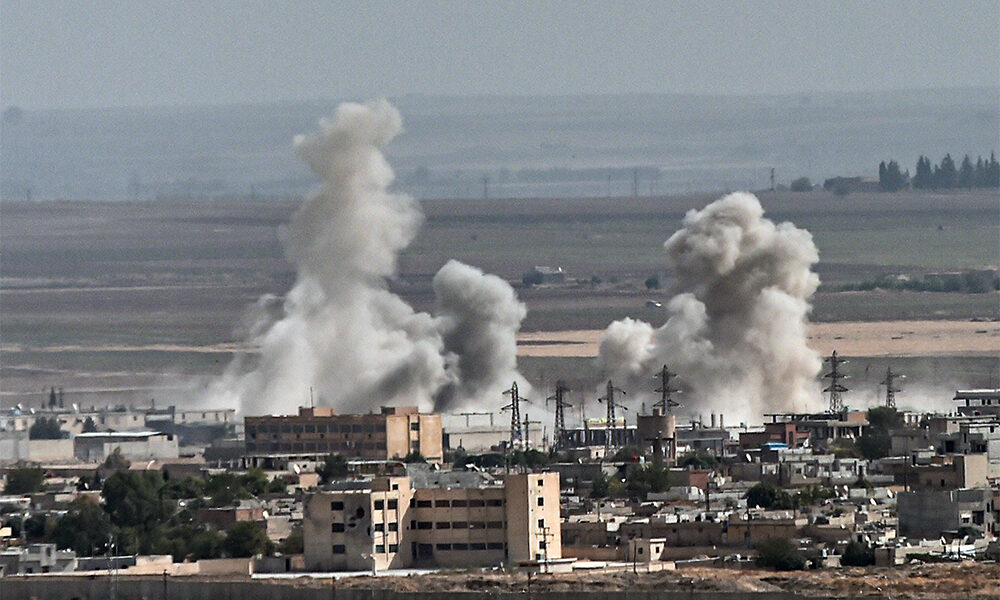
Turkish armored columns rolled across the border into northern Iraq before dawn on Thursday, launching what Ankara has named Operation Tigris Storm, a large-scale ground offensive against militants of the Kurdistan Workers' Party, or PKK, that opened a new and unpredictable chapter in Turkey's decades-old conflict with Kurdish separatists.
The Turkish Ministry of National Defense, known by its initials MSB, confirmed in a brief statement that "active combat operations" were underway across multiple axes in Iraq's Dohuk and Nineveh provinces, describing the campaign as a "decisive" effort to clear PKK strongholds from Iraqi territory. Turkish officials did not specify how many troops had crossed the border, though residents and local officials described columns of tanks, armored personnel carriers and artillery batteries moving south under cover of airstrikes.
By midday, the distant thud of artillery and the drone of fighter jets could be heard even in Erbil, the capital of Iraq's semiautonomous Kurdish region, more than 50 miles from the nearest reported fighting. The sound was enough to send a fresh wave of panic through a city already absorbing displaced families from border towns.
Iraqi Kurdish officials said hundreds of thousands of civilians had begun moving south and east, clogging highways with cars, buses and trucks piled with mattresses and belongings, in scenes reminiscent of earlier displacement crises in the region. Aid organizations warned that the exodus, if it continues at its current pace, could rapidly outstrip the capacity of camps and reception centers already strained by years of intermittent conflict.
Turkey has carried out periodic airstrikes and limited cross-border raids into northern Iraq for years, targeting PKK bases in the mountainous terrain near the Iraqi-Turkish frontier. But the scale of Thursday's operation, a coordinated, multi-axis ground invasion rather than a targeted raid marks a sharp escalation.
The PKK said its fighters had inflicted early losses on the advancing Turkish forces. In a statement, the group claimed its fighters killed a dozen Turkish soldiers and destroyed dozens of armored vehicles in fighting around the town of Mala Arab, one of several PKK-held towns Turkish forces appear to be sweeping through as the campaign expands. The claims could not be independently verified, and Turkey's military did not immediately respond to them.
Cemîl Bayık, a senior political leader of the PKK, delivered a defiant response to the offensive, framing it as an existential campaign against the Kurdish people. "The Kurdish resistance will exact an appropriate toll on the Turkish fascist state," Mr. Bayık said, according to a statement carried by pro-Kurdish media outlets. He accused the United States and other Western governments of what he called "blind support for the Turkish project seeking to exterminate Kurds," and warned that any American or Western material or political backing for the operation would be treated as direct participation in the war.
It was not immediately clear what, if any, direct role American or other Western forces were playing in Operation Tigris Storm. Neither the Pentagon nor the State Department had issued a formal response to the operation by Friday evening, but President LaFleur appeared to endorse the campaign in a statement two days prior where the President condemned the PKK and aid that Washington supports all efforts by Turkey to restore order to the Southeast.
Iraq's federal government in Baghdad, which has previously protested Turkish incursions as violations of its sovereignty, had not issued a statement by early evening. The Kurdistan Regional Government in Erbil, whose relationship with Ankara has fluctuated between cooperation and confrontation, likewise remained silent, even as the operation's effects were plainly audible from its capital.
Turkey has framed its campaigns against the PKK as a matter of national security, pointing to a decades-long insurgency that has killed tens of thousands of people since fighting began in the 1980s. Kurdish leaders and human rights groups have long accused Ankara of using counterterrorism operations as cover for broader efforts to suppress Kurdish political and cultural aspirations in the region.
What distinguishes Tigris Storm from earlier operations, regional analysts say, is both its apparent scale and its timing, launched at a moment when displacement crises across the Middle East have already tested the humanitarian systems meant to absorb them. Whether the offensive remains a contained cross-border campaign or metastasizes into a broader regional confrontation, drawing in Iraqi, American or other international actors, is likely to become clearer in the coming days, as Turkish forces continue their push and Kurdish fighters make good on their vow of resistance.
For now, residents of northern Iraq are left watching the horizon, listening for the sound of jets, and moving south.
This site uses cookies to help personalise content, tailor your experience and to keep you logged in if you register.
By continuing to use this site, you are consenting to our use of cookies.