Moderators support the Administration Team, assisting with a variety of tasks whilst remaining a liason, a link between Roleplayers and the Staff Team.
Moderators support the Administration Team, assisting with a variety of tasks whilst remaining a liason, a link between Roleplayers and the Staff Team.
The Era of the Emergency Stability Council
November 19th 1945-August 15 1947
In the aftermath of the Second World War, with Britain financially exhausted and the Attlee government committed to Indian independence within two years, a number of the largest commercial interests still operating in India grew alarmed at the prospect of a hasty British withdrawal followed by a Congress-led government hostile to a foreign capital. Beginning in late 1945, representatives of these interest began meeting privately in Calcutta and, later on, began to call themselves the Emergency Stability Council, ostensibly a body for "post-war stability."
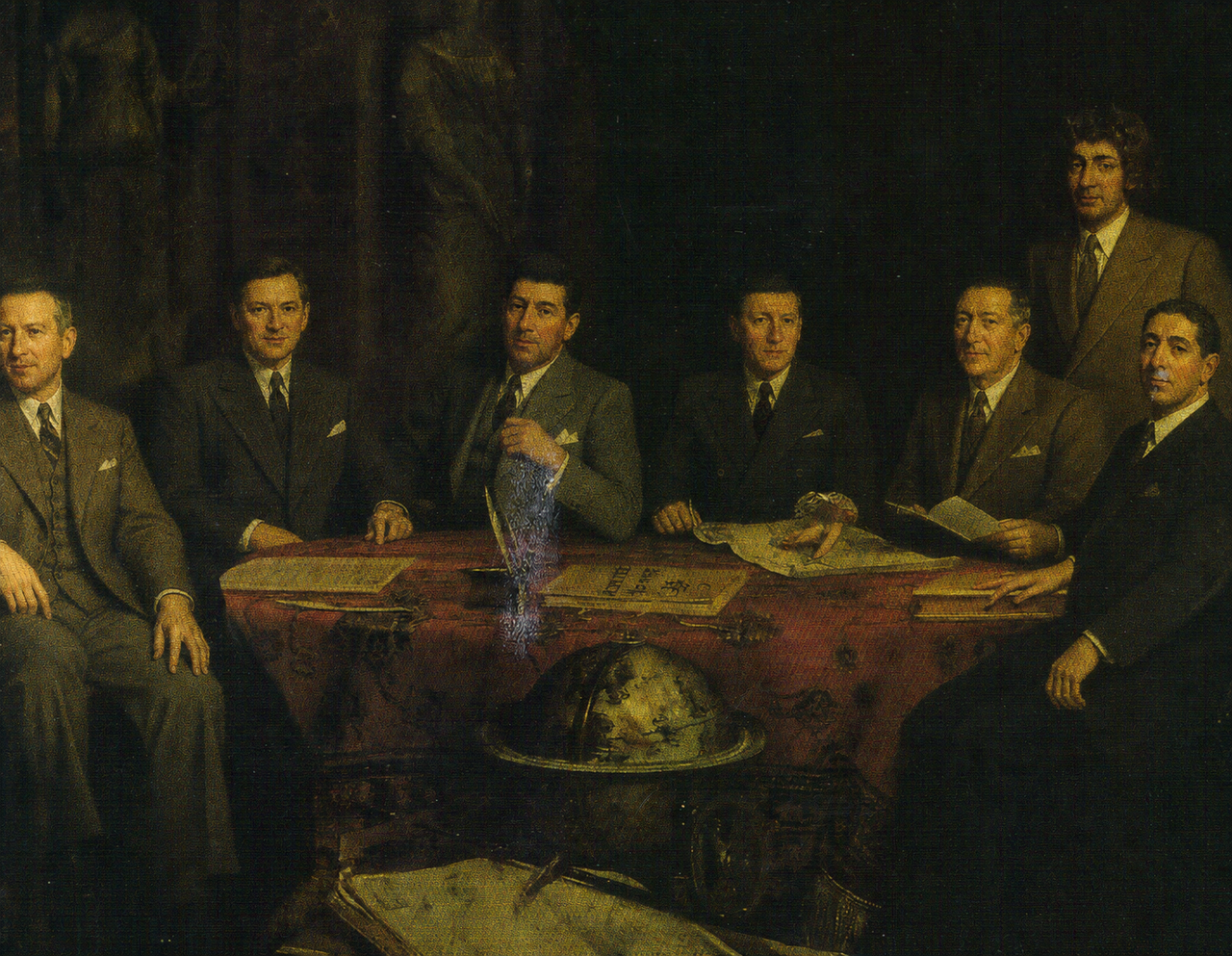
The ESC's founding membership was drawn primarily from European noble and merchant families long resident in India, including the houses of Wentworth, Whitmore, Harcourt, Blythe, Lascelles, Villiers, Peverell, Sinclair, Stroud, Shaw, Douglas, Llewellyn, and Lewin (all of British extraction), the de Montferrand family (French), and de Almeida e Sousa (Portuguese). These families were joined by several established managing agency houses and Indian industrial families who saw in the ESC a vehicle to protect their assets regardless of which government emerged from the independence process.
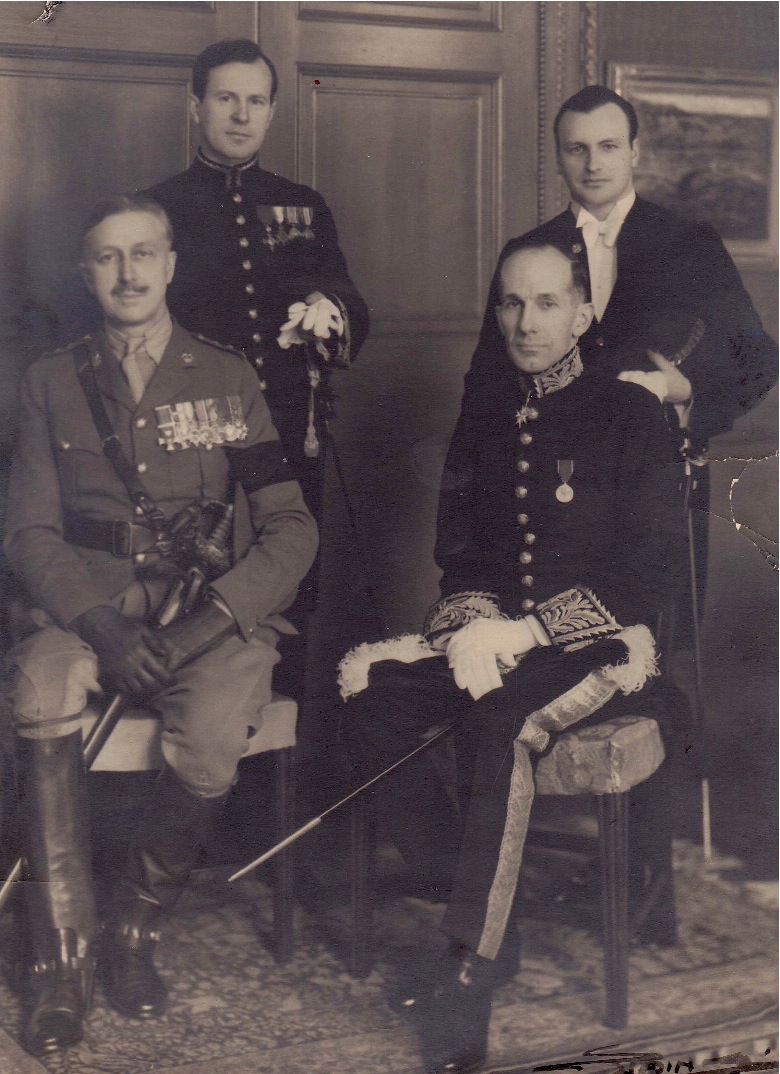
The figure who came to dominate the ESC, and later the Company itself, was Lord Albert Victor Llewellyn, head of the Welsh-descended House Llewellyn, a noble family long settled in the Raj with extensive holdings in railways, shipping, armaments manufacturing, and banking. Llewellyn served during the Second World War as an officer in the Royal India Air Force, flying long-range bombing missions over Burma under sustained anti-aircraft fire. For this service, he was awarded the Distinguished Flying Cross, and held the 1939-1945 Star, the Burma Star, and the India Service Medal for his continued service training pilots in India throughout the war.
Llewellyn's wartime record gave him a degree of standing among both the British community and segments of the Indian public unusual for a member of the ESC's founding families. When the Council convened to elect a chairman in the first month of 1946, Llewellyn, who had first proposed the Council's foundation, was elected by acclamation, the membership reasoning that his combination of war record, business interests, and personal popularity made him the figure best placed to represent the Council's interests publicly while its true purpose remained concealed.
From early 1946, the ESC began funding and organising a private security force, structured along conventional military lines with ranks and regimental organisation modelled on the British Indian Army. Recruitment drew on the large pool of demobilised soldiers following the war's end: discharged Gurkha units, European veterans, and smaller numbers of Indian sepoys from disbanded regiments. By August 1947, this force numbered just under half a million, with foreign-recruited personally comprising roughly two-thirds of its strength.
The force's deployment followed the pattern of communal violence that swept India through 1946 and into 1947. Beginning with Calcutta riots of August 1946, the ESC's auxiliary police were repeatedly invited by overwhelmed local administrations to guard mills, warehouses, rail depots, and docks—and were never withdrawn. By the time of the Partition Plan's announcement in June 1947, the ESC's forces held effective control of security along the major rail boot lines, the ports of Calcutta and Bombay, and numerous power stations and industrial centres across Bengal, Bihar, and the United Provinces.
A significant complicating factor for the ESC's plans was the presence of large numbers of demobilised veterans of the Indian National Army, whose loyalties lay with the broader independence movement rather than with either the Congress establishment or the colonial state, and whose officer corps retained both organisational cohesion and popular sympathy. Through 1946 and 1947, a series of assassinations targeted senior INA veteran leadership figures organising in Bengal and the United Provinces. Responsibility was never claimed; in the press of the period, blame was attributed variously to rising communist infiltration of the INA's ranks and to factional violence among Congress-aligned groups, narratives the ESC's controlled press outlets did little to discourage. By mid-1947, organised INA veteran resistance had been effectively eliminated as a coordinated force.
By July 1947, with the Radcliffe Line drawn and partition violence at its height, the ESC's forces had moved to seize, in a coordinated operation across the final days before independence, the principal airports, ports, banks, rail junctions, power stations, broadcasting stations, and army cantonments across the territory slated to become the Dominion of India. Embassies and foreign consular offices in Delhi and northern India were placed under guard, ostensibly for their protection amid the unrest, and foreign correspondents found their movements restricted. Ammunition depots and arsenals were secured without significant resistance, much of the regular Indian Army's officer corps being preoccupied with the logistics of partition itself.
The Viceroy, Lord Mountbatten, learned of the ESC's intentions only in the final weeks before the transfer of power, and refused to lend his office's legitimacy to the plan or to communicate it to London. With the telegrah network already under ESC control, his communications were quietly severed, and he was confined to Viceroy's House under guard for the remainder of July. He was given the choice of presiding over the formal transfer of power ceremony, which he accepted.
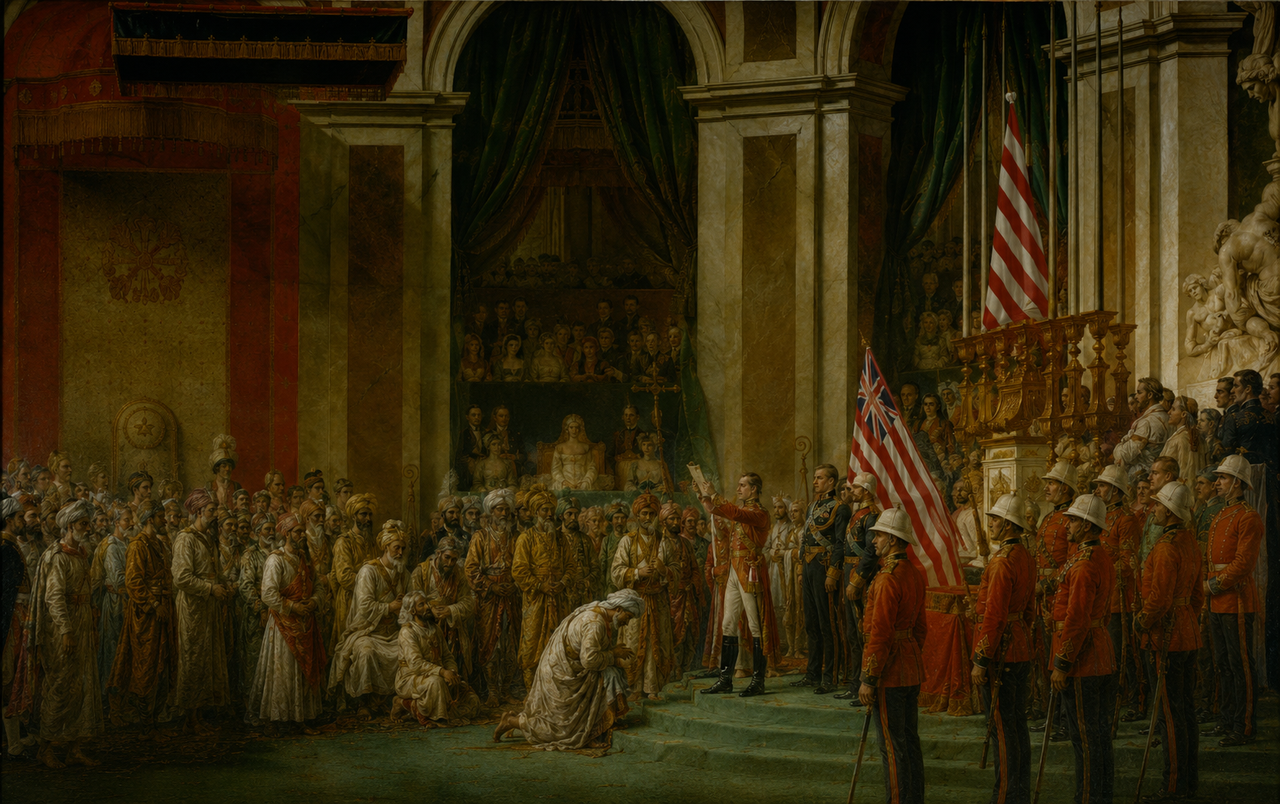
The transfer of power proceeded as scheduled on 15 August 1947. Indepdnence was declared for both the Dominion of Pakistan and the territory of India. Immediately following the formal ceremony in Delhi, the ESC's forces seized power, and Lord Llewellyn issued the Calcutta Declaration, under which the Emergency Stability Council dissolved itself and reconstituted as the Honourable Company of India, declaring itself the sovereign governing authority over the former British Indian Empire's territory, excluding Pakistan and Burma.
Lord Llewellyn was elected by the newly established Board of Directors as its first Governor-Chairman and the Company relocated its seat of government from Calcutta to Delhi in September 1948.
The years following the Calcutta Declaration, known as the Great Troubles, saw widespread but fragmented resistance to Company rule. Various democratic movements, most notably in Agra, rose up and various princely states refused the authority of the Company. These states included Hyderabad, Jammu and Kashmir, Mysore, Travancore, and also the Kingdom of Sikkim. The suppression of this resistance and the absorbtion of the holdout states occupied much of the first decade of Lord Llewellyn's tenure as Governor-Chairman, a process not fully completed until Sikkim's incorporation in 1975.
Governor-Chairmanship of Lord Albert Victor Llewellyn
August 15 1947-August 15 1977
Lord Albert Victor Llewellyn (1910-1998) served as the first Governor-Chairman of the Honourable Company of India from its founding on 15 August 1947 until his retirement in 1977, a tenure of thirty years that encompassed the violent consolidation of Company rule during the Great Troubles, the gradual absorption of the remaining princely states, the establishment of the Company's economic and administrative model, and the introduction of limited electoral government in 1957. He is widely remembered within the Company's territories as the "Father of the Nation" and the "Hero of the Company," a reputation bordering on veneration that has persisted into the present day.
The Great Troubles (1947-1956)
The decade following the Calcutta Declaration was dominated by armed resistance to Company rule from multiple directions: the princely states that refused to recognise the Company's sovereignty, and a sustained insurgency centered on the former United Provinces. Llewellyn governed from Delhi throughout this period, delegating the conduct of military operations to his generals while retaining overall political direction—though he personally took direct command of two campaigns he regarded as of particular strategic and symbolic importance: the annexation of Goa and the subjugation of Sikkim.
Agra War (1947-1966)
The most prolonged and costly resistance to Company rule emerged in the former United Provinces, centred on Agra, where the existing Congress leadership refused to recognise the Declaration and declared a rival provisional government. What became known as the Agra War raged as open conflict from 1947 to 1952, drawing a significant portion of the Company Army and inflicting the heaviest casualties in the Great Troubles. Following the collapse of the provisional government in 1952, remnants of the Congress continued as underground insurgents until they were eliminated in 1966.
First Company-Pakistan War (1947-1949)
On the 22nd of October 1947, an uprising by the Muslim population within the princely state of Jammu and Kashmir, combined with incursions from Pakistani territory, prompted the Company to intervene militarily on behalf on the principality. The resulting First Company-Pakistan War lasted until January 1949, ending with a partition of the contested territory: roughly one-third to Pakistan, with the remainder incorporated into Company-administered territory.
Hyderabad (1948)
The Principality of Hyderabad, which had refused to accede to either the Company or Pakistan, was invaded on the 13th of September 1948. Hyderabad's forces offered minimal resistance, and the principality surrendered on the 18th of the same month, with only nine Company soldiers killed in the operation. Hyderabad was formally abolished as a princely state and annexed directly into the Company.
Mysore (1950)
Unlike Hyderabad and Jammu and Kashmir, the Kingdom of Mysore was brought under Company contral without direct military intervention. Sustained economy pressure, including the Company's control over its rails and trade routes, led Mysore's ruling house to voluntarily accede to Company sovereignty in 1950.
Travancore (1956)
Travancore remained nominally independent longer than most other holdouts princely states, owing to its ruler's personal standing. Following the death of the Maharaja in 1956, the Company moved to take direct administrative control of the kingdom, ending its separate status without significant resistance.
Liberation of Goa (1961)
For more than a decade after the Calcutta Declaration, Goa remained under Portuguese administration, an enclave of a European colonial power persisting on the Company's coastline. Repeated diplomatic notes throughout the 1950s, in which the Company called on Lisbon to relinquish its claim to the territory, were rejected by the Salazar government, which regarded Goa as an integral part of metropolitan Portugal rather than a colony subject to decolonization.
By 1961, with diplomatic avenues exhausted, Llewellyn personally directed the planning of a military operation to seize the territory, drawing on the operational experience of his wartime service in a degree of direct involvement he had not exercised in any other campaign of the Troubles era. In December 1961, the Company Army moved into Goa, along with the smaller Portuguese enclaves of Daman and Diu. The Portuguese garrison, vastly outnumbered and without hope of reinforcement from Lisbon, surrendered within thirty-six hours.
Sikkim (1950-1975)
The Kingdom of Sikkim was forced into protectorate status under the Company in 1950, with Company forces moving into the kingdom but the ruling Chogyal initially retained as a nominal figurehead. This arrangement persisted until 1975, when a major revolt by the kingdom's Hindu population (the last large-scale uprising of the Great Troubles) prompted the Company to impose martial law. The revolt was suppressed, and in its aftermath Sikkim was compelled to merge fully into Company territory. As with the original protectorate arrangement, the Chogyal was permitted to remain in place, now as a constitutional monarch without authority.
Governance and Administration
The Company made no significant changes to India's existing administrative map upon taking power, retaining the boundaries of the former British provinces and (following their absorption) the former princely states largely as inherited. The principal exception to this continuity was the designation of a small number of cities as Special Economic Zones — hyper-industrialized centers oriented toward export production, developed under direct Company investment and administered with greater autonomy from surrounding provincial structures than was typical elsewhere.
Introduction of Elections
From 1947 to 1956, the Company governed without any form of representative government, ruling directly through its Board of Directors with Llewellyn as Governor-Chairman. In 1956, with the Great Troubles largely concluded (Sikkim and Goa's final settlement notwithstanding), the Company moved to establish a head-of-government position below the Governor-Chairman: the Secretary, roughly analogous to a Prime Minister, though operating under close Company oversight.
The first Secretary, installed by the Company in 1956 to oversee the transition to electoral government, was Reginald Ashworth, whose brief tenure is generally regarded as unremarkable, distinguished by little beyond presiding over the administrative arrangements for the Company's first election.
The first election under the newly established Secretariat Board was held on 15 August 1957 — the tenth anniversary of the Calcutta Declaration — and elections were held every five years thereafter. Among the more notable Secretaries to hold office during the remainder of Llewellyn's tenure was Pratap Rao Deshmukh, elected in 1962, credited with overseeing significant expansion of the Company's vocational and technical education programs during the 1960s, and whose tenure is often cited as an early example of the Secretariat exercising genuine policy initiative within the limits the Company permitted.
Social Policy
Early in his tenure, Llewellyn expressed an ambition to dismantle the caste system as part of the Company's broader modernization program. The scale and instability of the Great Troubles, however, made such a project politically unworkable, and the effort was abandoned within the Company's first years of rule. Thereafter, official Company policy was a simple one: ignore.
Economic Policy
The guiding principle of the Company's economic policy under Llewellyn, formalized as the Company's motto, was "Sovereignty Through Prosperity" — the doctrine that the Company's continued sovereignty depended on its capacity to visibly improve the material conditions of the population, thereby justifying the absence of independent self-government.
In practice, this meant a dual-track economy: the Board of Directors and the noble houses that had constituted the original Emergency Stability Council retained extensive monopolies across key sectors — rail, shipping, banking, armaments, and the export trade — from which they derived substantial personal enrichment. Simultaneously, the Company invested heavily in infrastructure, urbanization, agricultural modernization, tourism development, and — most distinctively — specialized technical and professional education, producing generations of engineers, doctors, and skilled tradespeople. This investment was understood by the Company's leadership not as philanthropy but as a long-term strategy: a more prosperous, better-educated population would generate greater returns for the Company's monopolies over time, while also reducing the conditions that had fueled the Great Troubles.
As the territory's sovereign authority, the Company issued its own currency, the Company Rupee, replacing the Indian rupee at independence and remaining the territory's currency since.
Family & Succession
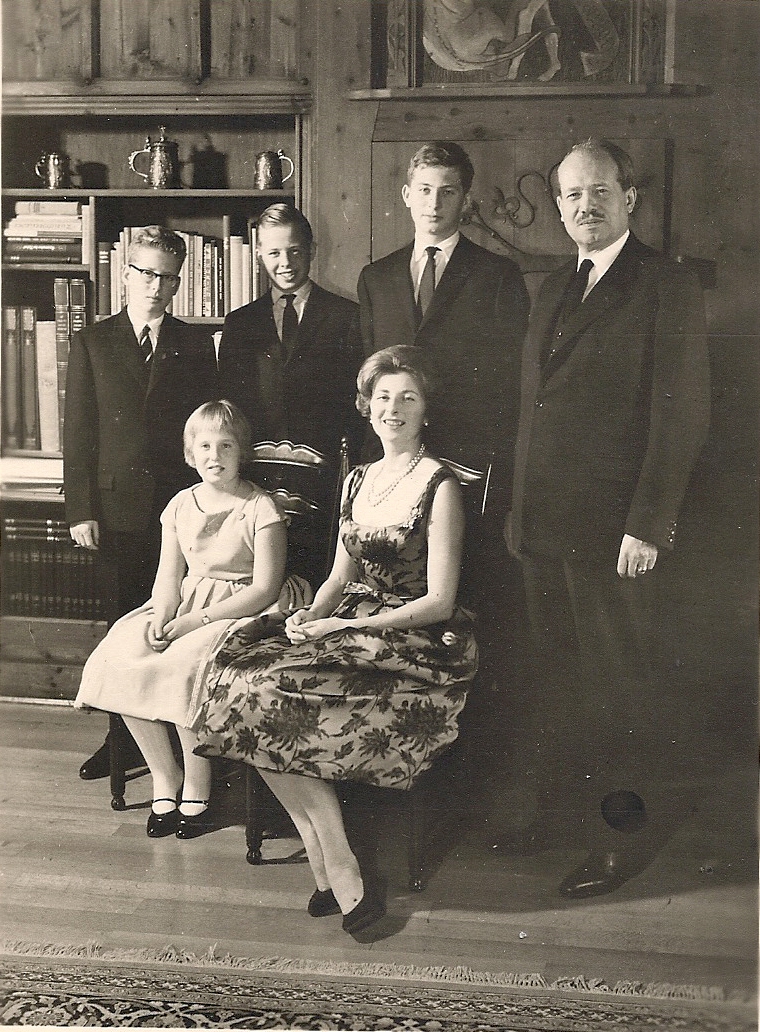
Lord Llewellyn married before the Second World War and had four children: three sons and one daughter. Two of his sons were killed in action during the war. His daughter married a British officer and left India with her husband at the war's end, taking no further part in the Company's affairs. His remaining son married and had children, among them Sebastian Llewellyn, who would go on to serve as the Company's sixth and current Governor-Chairman from 2001.
After thirty years as Governor-Chairman—the longest tenure of any—Lord Llewellyn stepped down in 1977. The Board of Directors then elected Lord Thomas Blythe as his successor.
Legacy
Lord Llewellyn's reputation within the Company's territories is overwhelmingly positive, to the point of approaching secular sainthood in official and popular memory alike. He is credited as the founder of the Company's sovereign order, the architect of its survival through the Great Troubles, and the figure most associated with the "Sovereignty Through Prosperity" doctrine that has shaped the territory's development ever since. Statues, institutions, and the Special Economic Zones developed under his tenure bear his name across the Company's territories, and the anniversary of the Calcutta Declaration continues to be marked, in part, as a commemoration of his founding role.
Governor-Chairmanship of Lord Thomas Blythe
August 15 1977-August 15 1982
Lord Thomas Blythe (1910-1989), a scion of the Blythe family, and a childhood friend of Lord Albert Victor Llewellyn, served as the second Governor-Chairman of the Honourable Company of India from 1977 until his retirement in 1982. His single five-year term was dominated by the Company's confrontation with the Naxalite-Maoist Insurgency, alongside a renewed military conflict with Pakistan and the economic disruption of the global oil shocks.
The Naxalite-Maoist Insurgency
Prior to Blythe's Governor-Chairmanship, Naxalite-Maoist activity had remained a localised issue, confined largely to scattered rural disctricts and treated by the Company as a policing matter rather than a strategic concern. This changed over the course of the late 1970s, as the movement's organisational reach expanded significantly across several provinces, drawing renewed Company attention to a problem Llewellyn's later years ahd largely left to provincial authorities.
Early in Blythe's term, Company police forces arrested the insurgency's principal organising leader. The official story is that the leader escaped custody, only for his body to be discovered several days later, having been gunned down. In the aftermath, the movement fractured into a number of competing factions, lacking the unified leadership that had driven its earlier expansion. By the end of Blythe's term in 1982, the insurgency had been substantially weakened, though scattered factional remnants persisted in several places.
Oil Shocks and Economic Disruption
Lord Blythe's term coincided with the global oil price shocks of the 1970s, which placed considerable strain on the Company's economy. The Company Rupee depreciated significantly against major foreign currencies over the course of his Chairmanship, and the cost of fuel imports placed pressure on the transport and industrial sectors that formed the core of the Company's monopolies. The Board of Directors responded by accelerating investment in domestic energy production, including expanded coal extration in Bihar and Bengal and early exploration of offshore oil reserves, continuing a policy direction that would be expanded upon by Blythe's successor.
Retirement
By 1982, Blythe was seventy-two years old, and his health had been declining for some time. Citing his age and health, he stepped down as Governor-Chairman that year. The Board of Directors elected Lord Rufus Adam Harcourt as the Company's third Governor-Chairman.
Governor-Chairmanship of Lord Rufus Adam Harcourt
August 15 1982-August 15 1992
Lord Rufus Adam Harcourt (1928-2003) served as the third Governor-Chairman of the Honourable Company of India for two terms, from 1982 to 1992. His decade in office was marked by an unusually high number of military and security commitments, both within Compnay territory and abroad, alongside continuing economic reform inherited from the Blythe years.
Conflicts and Security Operations
The Siachen Conflict
In 1984, the Company Army moved to secure the Siachen Glacier region in the disputed northern reaches of Jammu and Kashmir, preempting a feared Pakistani occupation of the same territory. Company forces established control over the glacier's key passes, and although low-level skirmishing with Pakistani forces continued in the high-altitude terrain for years afterward, the Company's position on the glacier itself was never dislodged, and the operation is counted among the Company's victories of the period.
The Punjab Insurgency
Through the early-to-mid 1980s, Punjab saw the rise of a armed Sikh separatist movement, with militant elements establishing a fortified presence within the Golden Temple complex in Amritsar. In June 1984, the Company Army launched Operation Blue Star, an assault on the complex to remove the militants and their leadership. The operation succeeded in its immediate military objective, but at significant cost to the temple complex itself and to civilian life, provoking outrage among Sikhs both within Company territory and abroad.
In retaliation, in October 1984, the sitting Secretary was assassinated by members of his own Sikh bodyguard — Lord Harcourt himself, protected by the Company's most stringent personal security arrangements, was not a feasible target, and the Secretary was struck instead. The assassination triggered widespread anti-Sikh violence in Delhi and other cities in the days that followed, which Company forces were slow to bring under control. The insurgency itself continued in a diminished form for the remainder of the decade before being declared concluded, counted as a Company victory.
Second JVP Insurrection & Intervention in the Sri Lankan Civil War
In the late 1980s, the Company became militarily involved in Sri Lanka on two fronts. Company forces were deployed to the island as part of an intervention in the ongoing Sri Lankan Civil War, intended to broker and enforce a settlement between the Sri Lankan government and Tamil separatist forces in the island's north and east. Simultaneously, in the south of the island, the Sri Lankan government faced a second uprising by the Janatha Vimukthi Peramuna (JVP), a Sinhalese nationalist-Marxist movement; Company forces present on the island found themselves drawn into operations against the JVP insurrection as well as their original peacekeeping mandate.
Both commitments proved costly and deeply unpopular among the Company forces deployed, who found themselves targeted by elements of the very factions they had been sent to pacify. Nonetheless, by the time of the Company's eventual withdrawal, both the JVP insurrection and the immediate phase of the civil war intervention were counted as concluded in the Company's favor.
Maldivian Anti-Coup Missile
In 1988, the Company conducted a rapid military intervention in the Maldives, deploying forces to reverse an attempted coup against the Maldivian government by foreign-backed mercenaries. The operation was swift and successful, with Company forces restoring the government within days, and is regarded as one of the cleanest successes of Harcourt's term.
Insurgency in Jammu and Kashmir
Beginning in 1989, an armed insurgency emerged in the Company-administered portion of Jammu and Kashmir, distinct from the earlier 1947–49 conflict and from the ongoing low-level Siachen skirmishing. Unlike every other security commitment of Harcourt's tenure, this insurgency was not resolved during his term, and remains ongoing — the only conflict of the period not counted among the Company's victories.
Retirement
Harcourt stepped down in 1992 after serving two five-year terms. He was succeeded as Governor-Chairman by Lord Augusto Amorim de Almeida e Sousa.
This site uses cookies to help personalise content, tailor your experience and to keep you logged in if you register.
By continuing to use this site, you are consenting to our use of cookies.