STATISTICS

Start Year: 1995
Current Year: 2009

Month: January

2 Weeks is 1 Month
Next Month: 28/06/2026

OUR STAFF

Administration Team

Administrators are in-charge of the forums overall, ensuring it remains updated, fresh and constantly growing.

Administrator: Jamie
Administrator: Hollie

Community Support

Moderators support the Administration Team, assisting with a variety of tasks whilst remaining a liason, a link between Roleplayers and the Staff Team.

Moderator: Connor
Moderator: Odinson
Moderator: ManBear


Have a Question?
Open a Support Ticket

AFFILIATIONS

RPG-D

TRT World

Jay

Dokkaebi
GA Member
Oct 3, 2018
3,816
408611.jpg


Istanbul, Türkiye

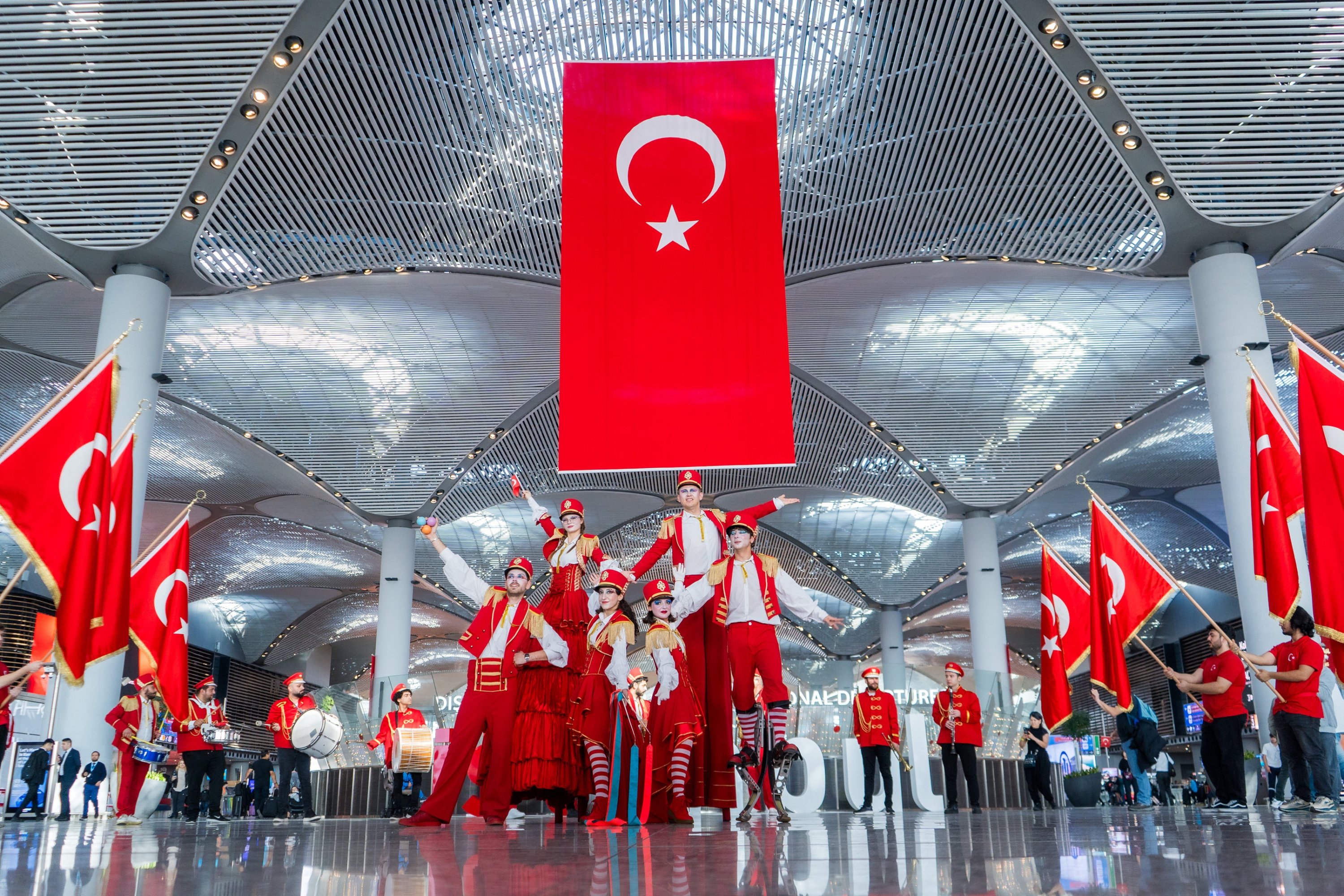
Istanbul hosts the Summer Olympics this week. The world should be paying close attention, not just to the games, but to what they mean.

When the Olympic flame arrives in Istanbul this weekend, it will illuminate something far more consequential than a sporting calendar. It will cast light on one of the most audacious bets the international community has made in a generation, a bet not merely on a city, but on an idea that a country can remake itself, and that the world should meet it halfway.

Less than a decade ago, Türkiye was a nation at war with itself and with its neighbors. The Millennium War, as historians have taken to calling it, saw a coalition of Western powers forced to dismantle a far-right nationalist government that had turned its military inward. The images from that period, of cities under curfew, of a mass incarcation of its own citizens, and of civil institutions gutted, are not so distant that they have faded from memory.

And yet here we are. Istanbul, 2008. The rings are up. The athletes have arrived from dozens of nations. And Prime Minister Ayße Çiller, whose government only a year ago was shepherding her country out of the wreckage of communist rule, is preparing to welcome the world.

To call this a gamble would be an understatement. It is, more precisely, an act of collective faith, extended by the Olympic Committee, ratified by the international community, and now put to the test in real time.

We do not use the word "faith" lightly, nor do we deploy it naively. Türkiye's democratic institutions, while reconstituting at a remarkable speed, remain fragile. The economy, though growing at a pace that has startled even its most ardent supporters in Brussels and Washington, is still absorbing the shocks of a brutal three-year dictatorship. The scars are not merely economic. They are social, political, and deeply personal for millions of Turkish citizens who lived through them.

Reports from Istanbul ahead of the opening ceremony this weekend paint a picture of a host city that is spending lavishly and securing heavily. More than a thousand soldiers have already been deployed across the city, with three thousand additional troops expected to arrive before the torch is lit. The security apparatus is, by any measure, formidable. Officials from the International Olympic Committee have privately described the logistical preparations as among the most thorough they have encountered.

Critics, and there are serious ones, will argue that Istanbul's Olympic bid was premature. That the Committee was swayed by geopolitical symbolism over institutional readiness. That awarding the games to a country still calibrating its democratic compass sent a confused message to the region and to the world.

These are not frivolous concerns. But they mistake the purpose of the moment. The Olympics have always been, at their best, an exercise in aspiration rather than certification. They reward not only what a nation is, but what it is trying to become. Athens was a city perpetually behind schedule. No host arrives without asterisks.

What distinguishes Türkiye is the velocity and sincerity of its transformation. Prime Minister Çiller has staked her political legacy on a vision of her country as a bridge between East and West, between Islam and secular governance, between a wounded past and an open future. Istanbul, straddling two continents, is almost too perfect a metaphor. She knows it. Her government has made certain the world will, too.

The symbolism is deliberate. The question is whether the substance will follow. The answer, of course, will not be delivered in the span of two weeks. Democracies are not built during opening ceremonies. But what can be built, what must be built, is a foundation of trust. Türkiye is asking the world to see it anew. The world, by sending its athletes and its cameras and its leaders to Istanbul, has agreed to look.

That compact carries obligations on both sides. It obliges Türkiye to protect the journalists, the activists, the minority communities, and the ordinary citizens who will watch these games from within its borders, and to sustain, long after the stadiums empty, the democratic norms that made this invitation possible. It obliges the international community, in turn, to remain genuinely engaged: to offer encouragement that is more than ceremonial, and criticism, when necessary, that is more than punitive.

For two weeks, the eyes of the world will rest on a city of seventeen million souls perched at the hinge of history. They will see stadiums and swimmers and sprinters and the full, glorious theater of the games. We hope they will also see something quieter and harder to broadcast that the people who have endured much, who are asking for a chance, and who, whatever the cynics say, have earned the right to be taken seriously.

Türkiye is not a finished story. Neither, for that matter, is any democracy. But it is a story worth watching. And for the next seventeen days, Istanbul will be where that story is told.
 

Jay

Dokkaebi
GA Member
Oct 3, 2018
3,816
485736379_18494559988017774_1415631775197222585_n.jpg

By late afternoon, the crowds along Istanbul’s Bosphorus promenade had begun to thin, the humid summer air softened by a breeze drifting in from the strait. Joggers passed beneath Turkish flags fluttering from newly erected Olympic banners, while vendors sold tea and simit to tourists gathered near the waterfront. It was there, midway through a routine run, that Prime Minister Ayşe Çiller briefly stopped to address a cluster of reporters trailing her along the path.

Türkiye's host year, once viewed with skepticism by foreign observers and domestic critics alike, has instead become a moment of national celebration. The Turkish delegation exited the day with 10 gold medals, 4 silver and 8 bronze, placing the host nation third overall behind a dominant Russian team that has led the medal standings throughout the week. Ukraine surged late with seven medals in a single day, tightening competition near the top of the table and dislodging the Russian juggernaut that has been dominating the Istanbul games.

Asked how she viewed the Games so far, Mrs. Çiller spoke first not of athletes or medals, but of volunteers.

“I am proud of all the volunteers who made this possible,” she said, pausing only briefly before continuing her run. “The Turkish people have shown warmth and hospitality to the world. I believe the months of preparation prepared us for this moment.”

The Prime Minister’s remarks reflected the broader mood in Istanbul, where organizers have sought to present Türkiye as both modernizing and internationally confident after years marked by economic instability and political uncertainty.

Reporters also pressed Mrs. Çiller on the recent decision awarding the next Winter Olympics to Sochi, a bid strongly backed by Russia. Türkiye had initially supported Austria’s candidacy before later aligning itself with Moscow, a shift that prompted speculation about Ankara’s growing regional relationship with Russia.

Mrs. Çiller declined to directly address the political maneuvering surrounding the vote. She said, “Türkiye is eager to help Russia learn from our preparations,” before adding, “And I am happy to see Türkiye playing a role in reigniting Olympic passion.”

Then, with a quick smile and a wave toward onlookers gathered behind the press line, she resumed jogging along the waterfront. Moments later, an Australian couple visiting Istanbul, apparently unaware they had just encountered the Turkish prime minister, asked Mrs. Çiller why nearby spectators were waving and taking photographs.

“I don’t know,” she replied jokingly before accelerating ahead and disappearing into the crowd.

For many Turks, the exchange captured the tone of a Games that has surprised even some of its organizers: energetic, relaxed and increasingly confident.

The Olympics have provided Mrs. Çiller with what may prove to be the defining political image of her tenure. Once criticized for overseeing painful austerity measures during one of Turkey’s worst economic crises in decades, her government is now benefiting from a sharp economic rebound tied in part to Olympic investment and renewed foreign tourism.

The Games have also provided a substantial economic boost. Analysts now expect Türkiye’s economy to grow by as much as 12 percent this year after three consecutive years of contraction, a dramatic reversal many supporters credit to Mrs. Çiller’s economic reforms and Olympic-driven investment campaign.

Importantly for Mrs. Çiller personally, her handling of the event has drawn praise both domestically and abroad, particularly as Turkiye seeks to project itself as a modern regional power capable of hosting a global sporting spectacle on the scale of any European capital.

Whether the momentum can outlast the closing ceremony remains uncertain. But for now, amid fireworks over the Bosphorus and swelling national pride, the Olympics have offered Türkiye a rare and unmistakable sense of confidence.
 

Jay

Dokkaebi
GA Member
Oct 3, 2018
3,816
624ffff9296d7837485102ff.jpg


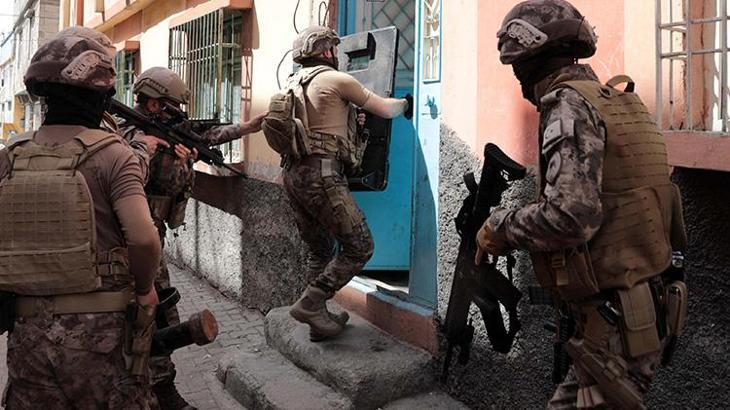
Turkish security forces launched one of the largest counterinsurgency operations in recent years across the country's southeast this week, arresting more than 300 suspected Kurdistan Workers' Party (PKK) militants and supporters in a sweeping series of pre-dawn raids that authorities described as a response to a dramatic escalation of violence throughout the region.

The coordinated operation, conducted by the Turkish National Police and the Jandarma General Command, spanned multiple provinces including Diyarbakır, Şırnak, Hakkâri, Mardin, Batman, Siirt and Van. Officials said hundreds of properties were searched and large quantities of weapons, ammunition and communications equipment were seized.

The crackdown follows months of intensifying unrest that has left dozens of security personnel and civilians dead in bombings, ambushes and armed attacks attributed to PKK militants. The violence has disrupted transportation networks, forced temporary closures of schools in several districts and heightened concerns about regional stability.

Interior and Community Minister Engin Altay told reporters in Ankara that the government would continue what he called a "relentless campaign" against armed groups operating in southeastern Turkey.

“We will not surrender any part of its territory to intimidation, terrorism or organized violence. Our forces have made significant progress in neutralizing the PKK’s operational capacity,” Interior Minister Altay stated in a press briefing. “The scale of these raids demonstrates our unwavering commitment to restoring peace and security in southeastern Türkiye.”

Authorities stated that the operation was supported by weeks of intelligence gathering involving surveillance, intercepted communications and information provided by local security units. Among those detained were individuals alleged to have served as regional coordinators, recruiters, logistics operatives and financiers for the PKK network.

Government Spokeswoman Şebnem Bursalı said the arrests represented a significant blow to militant infrastructure across the southeast.

"This operation targeted the organizational backbone that has enabled recent attacks," Bursalı said during a briefing. "The government remains committed to ensuring security while upholding the rule of law."

In several cities, armored vehicles and heavily armed security personnel established temporary checkpoints as raids unfolded. Witnesses in Diyarbakır reported hearing helicopters overhead before dawn, while residents in parts of Şırnak and Hakkâri described extensive security deployments around government buildings and transportation hubs.

The government has faced mounting pressure in recent weeks following a series of deadly incidents that officials say demonstrated increasing coordination among militant cells. Security analysts noted that the scale of the operation suggests Ankara believes the PKK had substantially expanded its operational capabilities in several provinces.

"No democratic society can tolerate the systematic use of violence against its citizens," Şebnem added. "Our objective is clear to dismantle terrorist networks, protect innocent lives and ensure that every community in southeastern Türkiye can live without fear."

Human rights organizations, while condemning militant violence, called on authorities to ensure that detainees receive due process and that investigations distinguish between armed operatives and civilians with no involvement in insurgent activities.

Officials said suspects would be transferred to processing centers for questioning over the coming days. Prosecutors are expected to pursue charges ranging from membership in a terrorist organization to weapons trafficking, financing terrorism and participation in armed attacks.

Despite the large number of arrests, security officials cautioned that operations would continue. Additional raids remain possible as investigators examine documents and electronic devices seized during the sweep.

By late Wednesday evening, government sources indicated that security forces remained on heightened alert throughout the region amid concerns that militant groups could attempt retaliatory attacks.

For residents of Türkiye's southeast, the operation marks the latest chapter in a conflict that has shaped the region for decades. Whether the arrests will significantly weaken insurgent activity or trigger a new cycle of confrontation remains uncertain, but officials in Ankara are portraying the crackdown as a decisive effort to reassert state control after a period of mounting violence.
 

Jay

Dokkaebi
GA Member
Oct 3, 2018
3,816

jfkjr1-1561670308.jpg

After Sixteen Years in the Wilderness, a Chastened G.O.P. Makes Its Move. Five years after a populist rout cost the party its strongholds, Republicans are betting on the political center, and on New England, to finally retake the White House.​


WASHINGTON — There is a particular kind of quiet that settles over a political party after it has lost not narrowly, but completely. Republicans have lived inside that quiet since November of 2004, when Calvin Sharp, a candidate built in the mold of an earlier, harder-edged conservatism, was not merely defeated but dismantled, watching Texas, Kansas, Missouri, Nebraska and Florida, the five pillars on which generations of Republican presidential math had rested, fall instead to a sitting vice president running as an independent.

That vice president, Benjamin Sinclair, will not be on a ballot again. Neither will his own vice president, Richard Blumenthal, who announced months ago that he had no interest in inheriting the office. For the first time in five years, the American electorate is being asked to choose between two parties rather than between a party and a phenomenon, and both of those parties have spent the intervening years trying to answer the same uncomfortable question: what does it mean to win back a country that given the choice chose someone who belonged to neither of them?

Inside Republican circles, the 2004 defeat is discussed less as a loss than as an excommunication. Mr. Sharp's ticket had promised a harder, leaner, more confrontational conservatism, doubling the Navy, shrinking the federal government to a fraction of its size, walking away from international entanglements that did not serve a narrowly defined national interest. It was a platform built to thrill the base and, its architects believed, to finally deliver the working-class realignment Republicans had been chasing for a generation.

Instead it delivered Louisiana, Mississippi and Alabama, and little else of consequence. The states that fell away, Texas and Florida above all, were not marginal targets. They were the floor beneath every Republican electoral map drawn since the Reagan era. When that floor gave out, it did not just cost the party an election; it convinced a generation of its strategists that the entire theory of the race had been wrong.

The ticket Republicans have assembled this year is, in nearly every particular, the photographic negative of Mr. Sharp's. Avery LaFleur, the governor of Louisiana, arrived in politics not through ideology but through law enforcement and the public defender's office, a biography Republican operatives describe as deliberately chosen to blunt accusations of radicalism. His running mate, Senator Susan Collins of Maine, was recruited for reasons that have little to do with balance of geography in the traditional sense and everything to do with where the party believes the election will actually be decided.

That decision is the most striking feature of this year's Republican strategy, and the one party elders describe as the clearest lesson drawn from 2004. Mr. Sinclair did not merely win New England that year, he swept it, carrying Vermont, Maine, New Hampshire, Rhode Island and Connecticut, leaving Massachusetts, the home state of this year's Democratic vice presidential nominee, as the only redoubt of traditional partisanship in the entire region.

Those voters did not move from one party to the other. They moved out of the party system altogether, and Republican strategists have concluded that they are the only bloc large enough, and detached enough from old loyalties, to be available for the taking. Placing a Maine senator a heartbeat from the presidency is, by the party's own private admission, less a tribute to Ms. Collins's record than a flag planted in territory Republicans have not seriously contested in decades.

Democrats are not conceding the point. Their own ticket, Senator John Edwards of North Carolina and Senator John F. Kennedy Jr. of Massachusetts, was constructed with the same defector voters in mind, pairing a Southern moderate with a name that still carries particular weight in the Northeast. Both parties, in other words, have reached the identical conclusion the road back to a durable majority runs through the voters Mr. Sinclair took with him, not through the bases either party already holds.

What makes this election unusual, political scientists studying the race say, is what it does not contain. There is no candidate this year auditioning to be the next Calvin Sharp, no serious effort to relitigate whether the Sinclair presidency was legitimate or accidental. That argument was settled, decisively, in 2004 and again in the years since, as the independent president built sustained approval ratings that neither party has been eager to challenge directly.

Instead, both tickets have converged on a subtler and in some ways more demanding message not that Mr. Sinclair was wrong, but that he did not go far enough. The Edwards-Kennedy platform layers expansions of the very promises Sinclair ran on. Promising broader health care reform, deeper environmental protection, a continuation of the military relationships he built with Canada and the United Kingdom. The LaFleur-Collins platform does much the same from the other direction, retaining the Gore Doctrine and the British relationship Mr. Sinclair prized while promising a larger Navy and a more assertive posture than the outgoing president was willing to take.

Beneath the contest between two well-funded, professionally managed tickets sits a question neither party says aloud but both are plainly organized around: whether 2004 was an aberration the system has now absorbed, or the first instance of something that can happen again. A second independent insurgency, mounted successfully by a sitting vice president, would have suggested that American politics was drifting toward a genuine three-party era. A second one defeated, or one that never materializes at all, would suggest the opposite, that the system had an anomaly in 2004 and another Sinclair is unlikely in the future.

For now, neither Mr. Edwards nor Mr. LaFleur is running against a phenomenon. They are running against each other, in a race with no incumbent on the ballot and no third candidate positioned to repeat what Mr. Sinclair accomplished. Whether that makes this a more conventional election, or simply one being fought more cautiously by two parties that remember exactly how unconventional the last one became, is likely to be argued for as long as the analysts have data to argue over.

What is not in dispute is the stakes each side has assigned to the outcome. For Republicans, a loss would mean an eighth presidential defeat in five tries since 1989, a run of futility punctuated by precisely one term in office in twenty years. For Democrats, a loss would mean ceding a White House their party has held, with one four-year interruption, since the first Bush administration left in 1993, and watching a coalition built over sixteen years scatter to a party it spent two decades insisting could never win again.
 

Forum statistics

Threads
24,298
Messages
118,190
Members
423
Latest member
Szalakota
Top