STATISTICS

Start Year: 1995
Current Year: 2009

Month: January

2 Weeks is 1 Month
Next Month: 28/06/2026

OUR STAFF

Administration Team

Administrators are in-charge of the forums overall, ensuring it remains updated, fresh and constantly growing.

Administrator: Jamie
Administrator: Hollie

Community Support

Moderators support the Administration Team, assisting with a variety of tasks whilst remaining a liason, a link between Roleplayers and the Staff Team.

Moderator: Connor
Moderator: Odinson
Moderator: ManBear


Have a Question?
Open a Support Ticket

AFFILIATIONS

RPG-D

Black Saturday

Owen

Commonwealth of Australia
GA Member
Jul 2, 2018
3,682
Late January 2009 would see an extreme weather pattern begin to form over the Australian continent. To the east, a slow moving high-pressure system was forming in the Tasman Sea. Over the northwest of the continent, a tropical low was forming and was directing hot, tropical air towards the southeast of Australia. The heat began building over western and northern parts of South Australia on Sunday the 25th of January, but was spreading eastwards and by January 27th would cover a vast area of southeast Australia. On the 25th, Woomera in outback South Australia would record 37.9 °C (100.2 °F), gradually increasing to 39.9 °C (103.8 °F) on the 26th and 43.8 °C (110.8 °F) on the 27th. Over on the west coast, Ceduna would record 44.8 °C (112.6 °F) on the 27th. In Adelaide, the capital of South Australia, the temperature was 36.6 °C (97.9 °F) on the 26th and 43.2 °C (109.8 °F) on the 27th. Other areas around the Riverland region of South Australia, Sunraysia region of Victoria and Riverina region of New South Wales would also record temperatures in the high 30s/low 40s from the 25th through to the 27th. Melbourne would record a high of 36.4 °C (97.5 °F) on the 27th. Heat was also beginning to build over northern and eastern parts of Tasmania.

Whilst these temperatures were not unusual for southeast Australia during the summer, the forecast was showing that they would be persisting well into the weekend and for some parts, like South Australia, well into next week. A weak cold front was expected to bring some relief for Melbourne on the weekend, but beyond that was hard to predict. Australia was bracing itself for a heatwave. The slow moving nature of the high pressure system over the Tasman meant that the high temperatures were here to stay.

 
Last edited:
Owen

Commonwealth of Australia
GA Member
Jul 2, 2018
3,682
Date: 27th - 31st of January 2009
Location: Victoria, South Australia, Australian Capital Territory, Southern New South Wales, Northern and Eastern Tasmania


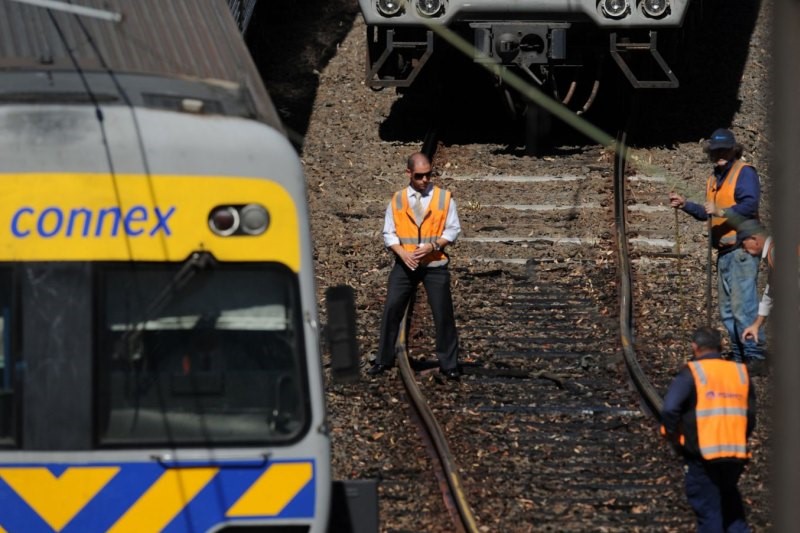
The heatwave would begin to settle in around southeast Australia. Temperatures would soar into the low 40s for most of the region and things would start becoming strained. Electricity demand would soar, putting strain on the grid and leading to rolling blackouts for many places. Train tracks would begin to buckle and bitumen roads would begin to melt. Things were struggling to cope. Over the course of the week, thousands of train and tram services were cancelled in both Melbourne and Adelaide, with more than 1,300 individual train services cancelled in Melbourne alone. The cancellations were due to buckling rail lines, air conditioner failures and power outages. On the 30th, all public transport in the city was free as the government admitted responsibility for failing to provide adequate infrastructure elements to cope with the heat, as well as long-standing issues with underfunding. On the 30th, 730 (40%) of rail services were cancelled, the worst day of rail operation in Melbourne's history.


Rail workers working to repair buckled train tracks


Passengers stranded at Flinders Street station in Melbourne

The State Emergency Service in each respective state would issue out heat advisories, urging elderly people to be looked after and for people to stay inside with air conditioning. Already the ambulance services were beginning to be stretched thin with many people taken to hospital with heat stroke. Ultimately, people would begin to die from the extreme heat, though the exact number was not very clear because determining if someone died of heat stroke or another underlying condition was hard. The temperatures recorded would be as follows:

Ceduna, South Australia:
  • 28th – 47.5 °C (117.5 °F)
  • 29th – 42.3 °C (108.1 °F)
  • 30th – 39.3 °C (102.7 °F)
  • 31st – 42.9 °C (109.2 °F)
Woomera, South Australia:
  • 28th – 44.6 °C (112.3 °F)
  • 29th – 42.3 °C (108.1 °F)
  • 30th – 42.4 °C (108.3 °F)
  • 31st – 41.9 °C (107.4 °F)
Adelaide, South Australia:
  • 28th – 45.7 °C (114.3 °F)
  • 29th – 43.4 °C (110.1 °F)
  • 30th – 43.1 °C (109.6 °F)
  • 31st – 41.1 °C (106.0 °F)
A record-high minimum temperature was recorded at around midnight on the 29th of January, when the temperature dropped to only 33.9 °C (93.0 °F) at the Bureau of Meteorology weather station in Kent Town, near the Adelaide city centre. Temperatures recorded in other parts of the city and other towns throughout South Australia were even higher.

Mildura, Victoria:
  • 28th – 43.7 °C (110.7 °F)
  • 29th – 42.8 °C (109.0 °F)
  • 30th – 43.3 °C (109.9 °F)
  • 31st – 44.1 °C (111.4 °F)
Swan Hill, Victoria:
  • 28th – 43.8 °C (110.8 °F)
  • 29th – 43.4 °C (110.1 °F)
  • 30th – 44.6 °C (112.3 °F)
  • 31st – 44.5 °C (112.1 °F)
Melbourne, Victoria:
  • 28th – 43.4 °C (110.1 °F)
  • 29th – 44.3 °C (111.7 °F)
  • 30th – 45.1 °C (113.2 °F) – third-hottest day ever recorded in Melbourne.
  • 31st – 30.5 °C (86.9 °F)
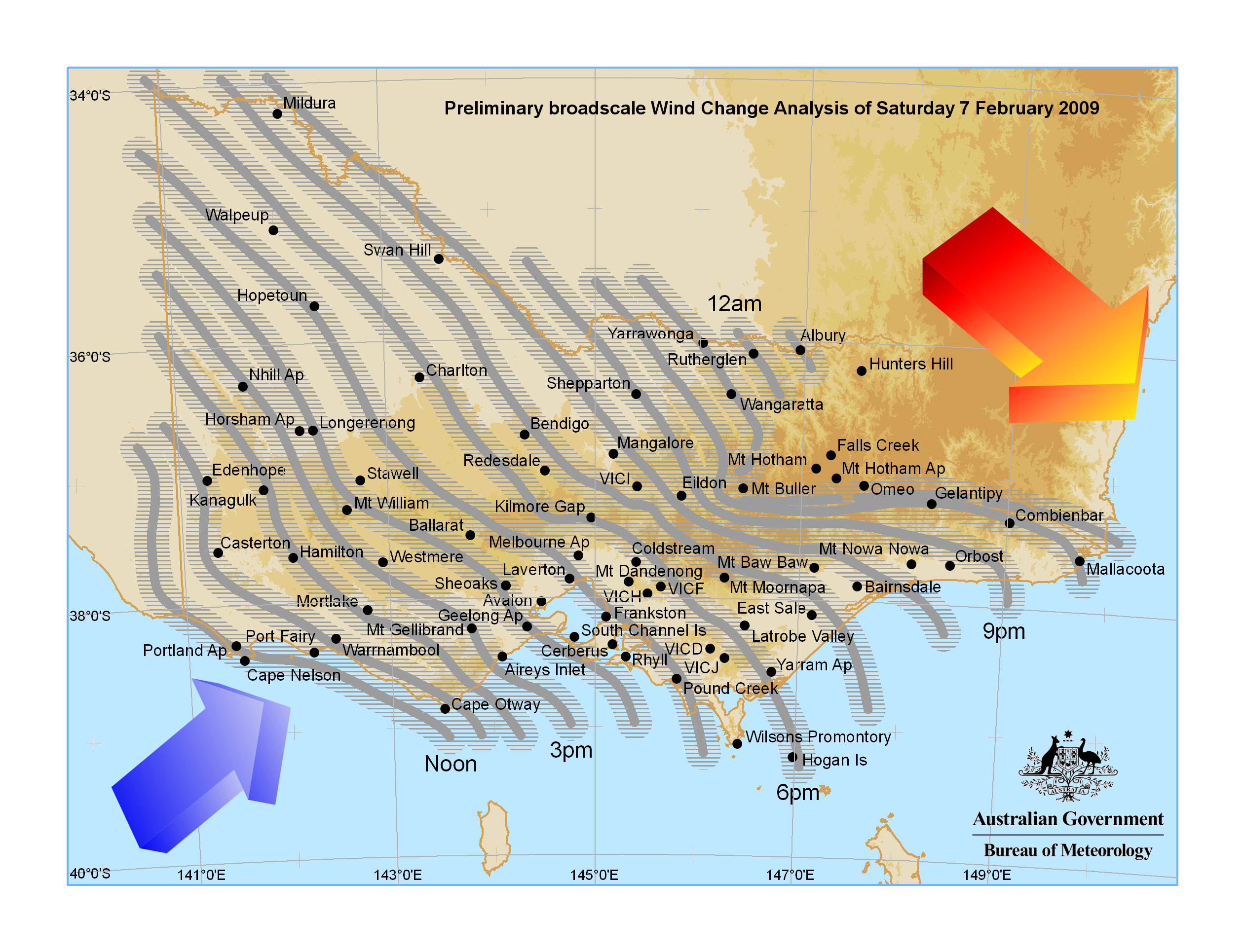
A weak cold front would make its way through southern parts of Victoria on the evening of the 30th of January, with temperatures dropping in Melbourne by more than 10 degrees. However the heat was still persistent in inland parts of Victoria and the cold front was not enough to completely flush the heat out from southeastern Australia.

Deniliquin, New South Wales:
  • 28th – 43.0 °C (109.4 °F)
  • 29th – 42.7 °C (108.9 °F)
  • 30th – 44.5 °C (112.1 °F)
  • 31st – 44.2 °C (111.6 °F)
Wagga Wagga, New South Wales:
  • 28th – 39.2 °C (102.6 °F)
  • 29th – 40.7 °C (105.3 °F)
  • 30th – 41.2 °C (106.2 °F)
  • 31st – 41.6 °C (106.9 °F)
On the 31st of January, Wagga Wagga broke the all-time January record for the most days above 40.0 °C (104.0 °F) with six days recorded (the record previously being five days, which was set in 1952 and equalled in 1979 and 2001).

Albury-Wodonga, New South Wales-Victoria:
  • 28th – 40.7 °C (105.3 °F)
  • 29th – 41.5 °C (106.7 °F)
  • 30th – 42.9 °C (109.2 °F)
  • 31st – 42.7 °C (108.9 °F)
Canberra, Australian Capital Territory:
  • 28th – 34.8 °C (94.6 °F)
  • 29th – 37.0 °C (98.6 °F)
  • 30th – 37.2 °C (99.0 °F)
  • 31st – 38.2 °C (100.8 °F)
Launceston, Tasmania:
  • 28th – 33.8 °C (92.8 °F)
  • 29th – 36.9 °C (98.4 °F)
  • 30th – 39.0 °C (102.2 °F) – hottest day recorded in Launceston since records began.
  • 31st – 38.2 °C (100.8 °F)
Several Tasmania-wide records would also be broken during this heatwave. Tasmania recorded its highest-ever temperature: 42.2 °C (108 °F) in Scamander on the 30th of January, and the long-standing Tasmanian record of 40.8 °C (105.4 °F) (recorded in Hobart on 4 January 1976) was broken five times within two days at Flinders Island, Fingal (twice), St Helens and Scamander. St Helens would record the second highest-ever Tasmanian temperature at 41.8 °C, also on the 30th of January. 7 of the 8 highest temperatures recorded in Tasmania occurred on the 30th of January.

It is estimated that over 500,000 residents in Melbourne were without power for the evening of the 30th of January. The outage affected much of central Melbourne with train and tram services cancelled, the evacuation of Crown Casino, traffic light failures, people being rescued from lifts and patrons of the Victorian Arts Centre evacuated and shows cancelled. The outage occurred only an hour after the National Electricity Market Operator issued a statement saying load shedding was ending and power had been restored. Blackouts also occurred in the city's west, caused by the three-day heat wave. It is believed an explosion at South Morang contributed to the power problems along three transmission lines supplying Victoria's west and Victorian power supplier SP AusNet shed 1,000 megawatts. On the 30th, Victorian Energy Minister Peter Batchelor announced consumers who lose power for more than 20 hours would be eligible for compensation. Areas that did not experience blackouts still had problems with abnormally low voltage (due to increased air-conditioner usage).

Several outdoor matches during the 2009 Australian Open on the 29th and the 30th were cancelled due to the heat. A number of players, including number 3 seed Novak Djokovic, cited the temperature as reason for withdrawing from matches. Serena Williams was quoted as saying it was so hot on court she felt like she was having an "out-of-body experience". After these retirements and an intensification in the heat, the organisers responded by closing the roof and allowing players longer breaks and icepacks.

Whilst Canberra didn't experience temperatures in the low 40s, the high 30s temperatures were not normal for Canberra, which was located in the higher elevations. The ACT State Emergency Service's Woden Unit would make courtesy calls to all embassies in Canberra to check on the welfare of those working there.

Date: 28th of January 2009
Location: Delburn, Victoria


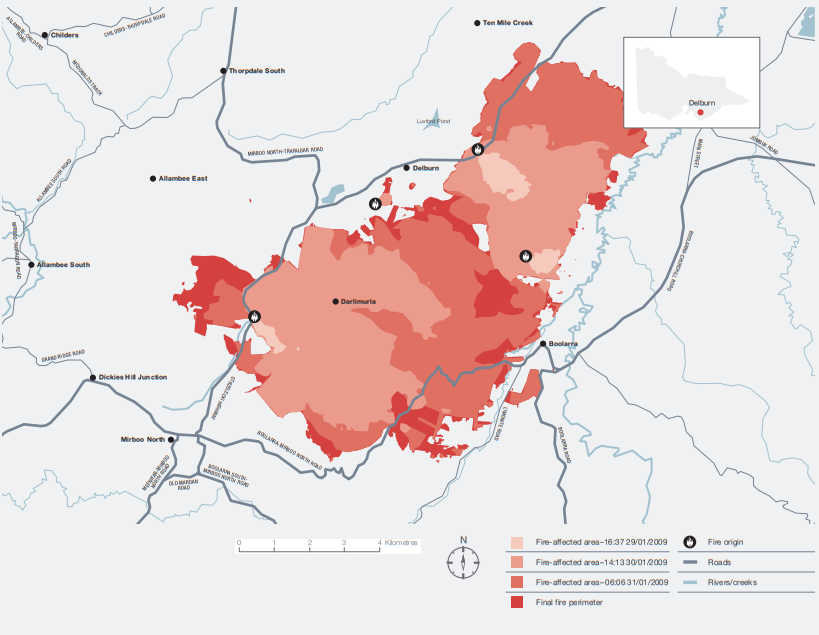
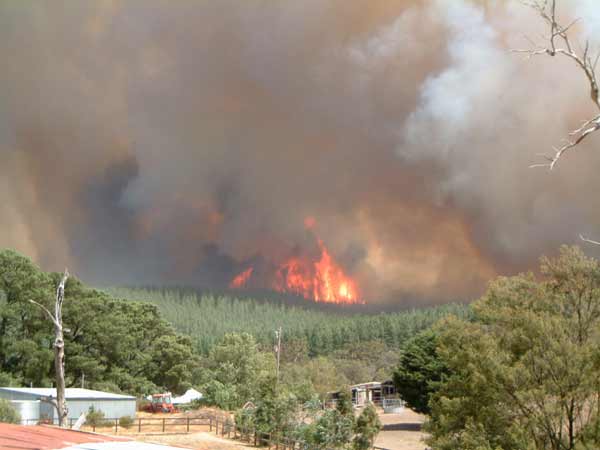
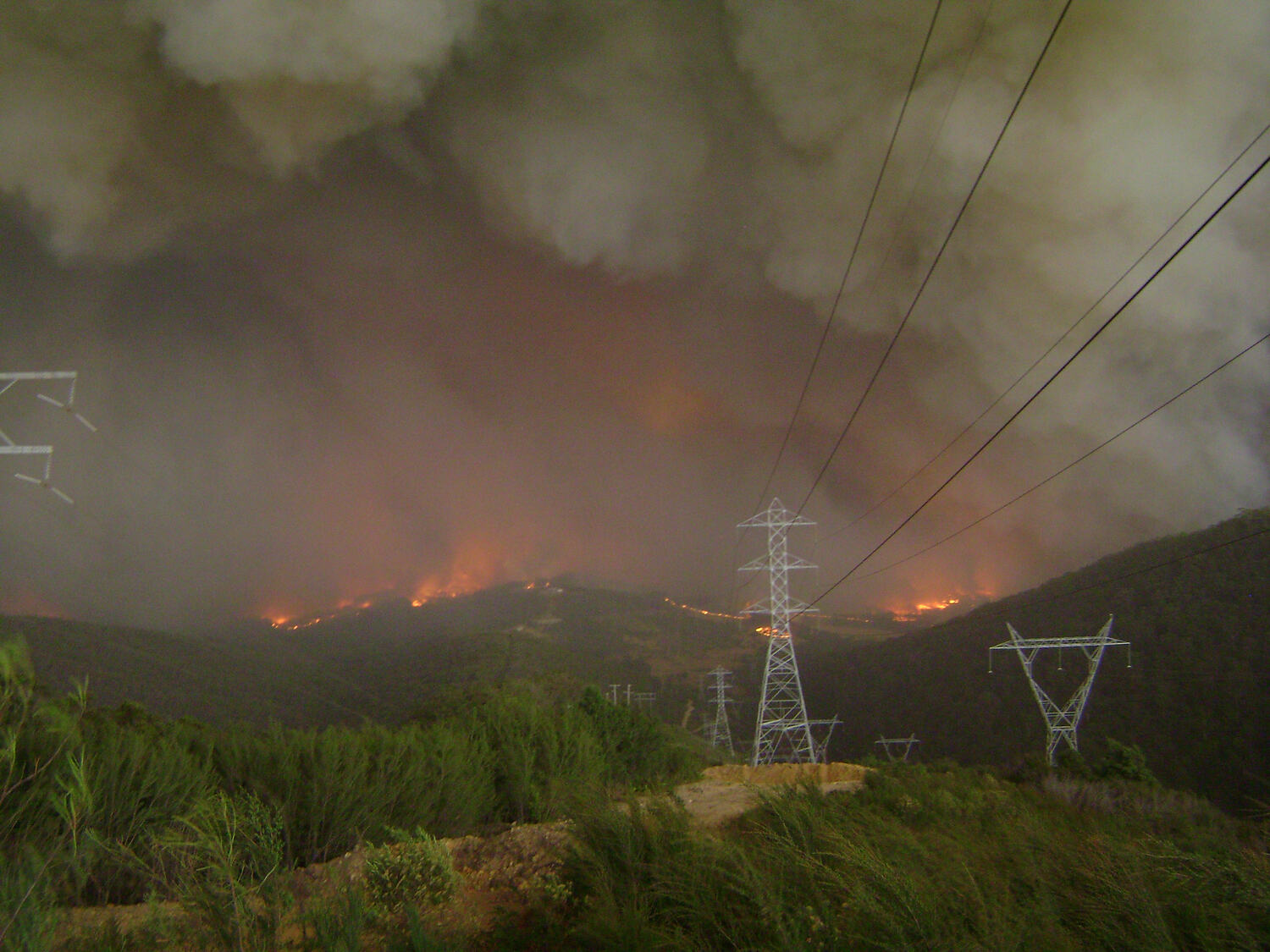
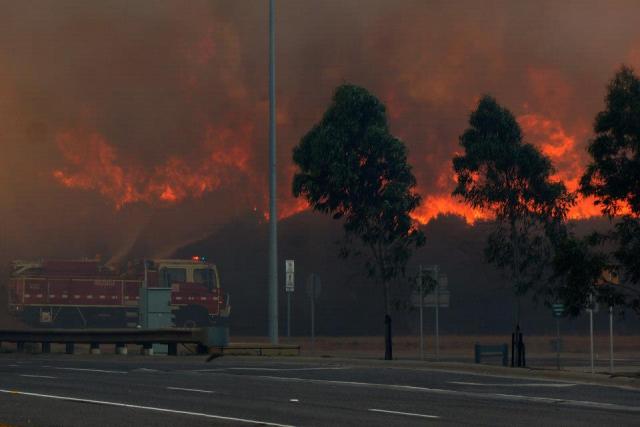
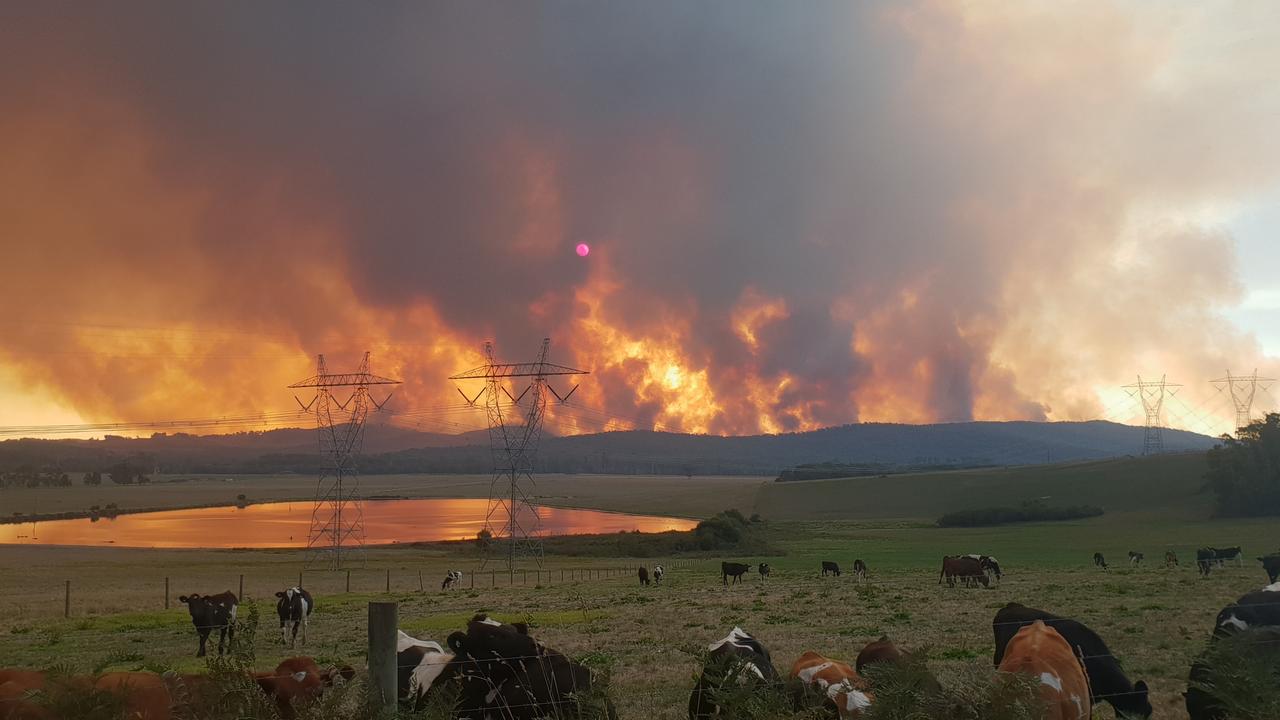
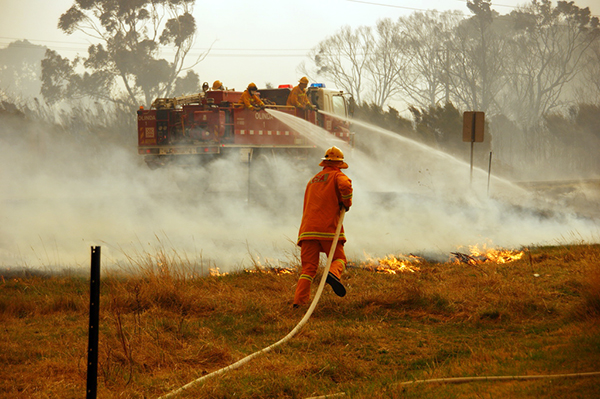
On Wednesday the 28th and Thursday the 29th of January, there were six deliberately lit blazes south of Morwell near the townships of Yinnar, Mirboo North and Boolarra. While three of these fires were quickly extinguished by the Country Fire Authority, the other three at Ashfords Road, Creamery Road and Lyrebird Walk developed, and ultimately merged to become the Delburn Complex. Victoria Police would quickly apprehend the suspected arsonist. Timber plantations operated by Hancock Victorian Plantations would come under immediate threat. CFA firefighters would be joined by Forest Fire Management Victoria and firefighters from Hancock Victorian Plantations to bring the fire complex under control. A Level 3 Incident Control Centre was set up in the town of Traralgon.


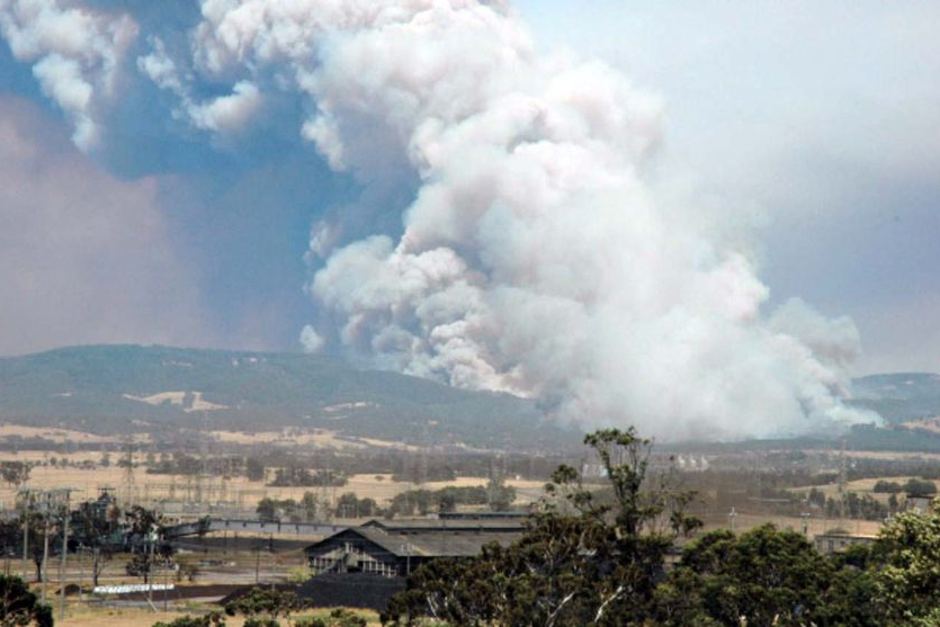
The Delburn fire seen from the town of Churchill

The main fire activity increased during Friday the 30th of January when the temperature reached 42 degrees with low humidity and moderate winds. The Forest Fire Danger Index reached 52 (extreme). The fire area nearly tripled from 2,150 hectares just before dawn, to approximately 5,750 hectares close to midnight. However with the cool change moving through on the evening of the 30th of January, the fire was able to be brought under control. The final fire area was 6,350 hectares with approximately 60% in HVP plantations, and 44 houses were lost. There was no reports of injuries or death.


Approximate extent of the Delburn fire


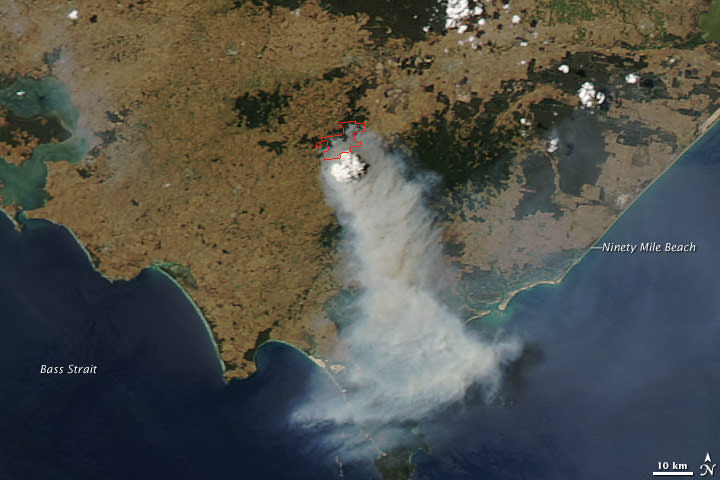
Satellite image of the Delburn fire on the 30th of January


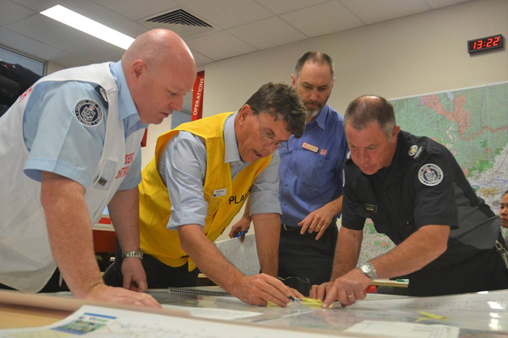
Forest Fire Management Victoria working to mop up the blaze on the morning of the 31st of January
 
Last edited:

Latest posts

Forum statistics

Threads
24,335
Messages
118,402
Members
423
Latest member
Szalakota
Top