STATISTICS

Start Year: 1995
Current Year: 2009

Month: February

2 Weeks is 1 Month
Next Month: 12/07/2026

OUR STAFF

Administration Team

Administrators are in-charge of the forums overall, ensuring it remains updated, fresh and constantly growing.

Administrator: Jamie
Administrator: Hollie

Community Support

Moderators support the Administration Team, assisting with a variety of tasks whilst remaining a liason, a link between Roleplayers and the Staff Team.

Moderator: Connor
Moderator: Odinson
Moderator: ManBear


Have a Question?
Open a Support Ticket

AFFILIATIONS

RPG-D

United States | 2008 Presidential Election

Odinson

Moderator
GA Member
World Power
Jul 12, 2018
10,805
960px-Seal-of-the-President-of-the-United-States-svg.png
7JzI6cv.png
500px-Seal-of-the-Vice-President-of-the-United-States-svg.png


2008 Presidential Election
Edwards|Kennedy vs. LaFleur|Collins


Both major American political parties had breathed a metaphorical sigh of relief when President Sinclair announced that he would not be seeking a second term as President of the United States, and that Vice President Blumenthal would not seek the office of the presidency. This meant that there were no serious independent contenders for the White House and that either a Republican or a Democrat was guaranteed to win the office. The Democratic Party nominated South Carolina Senator John Edwards and Massachusetts for President, and Senator John F. Kennedy Jr. for Vice President. The Republican Party nominated Louisiana Governor Avery LaFleur for President and Maine Senator Susan Collins for Vice President. All of the candidates travelled across the country from Puerto Rico to Guam, from Alaska to Florida. The Edwards and LaFleur campaigns had worked tirelessly to earn the trust of the American People, but now it was out of their hands and in the hands of the American People to choose who would be President of the United States for the next four years (as well as who would be Vice President). While President Sinclair had served as Al Gore's Vice President, he was fiercely independent and never affiliated with either party. Neither party had an advantage when it came to an incumbent. now it was up to the American People to vote.


DEMOCRATIC TICKET
"Our Best Days are Ahead"
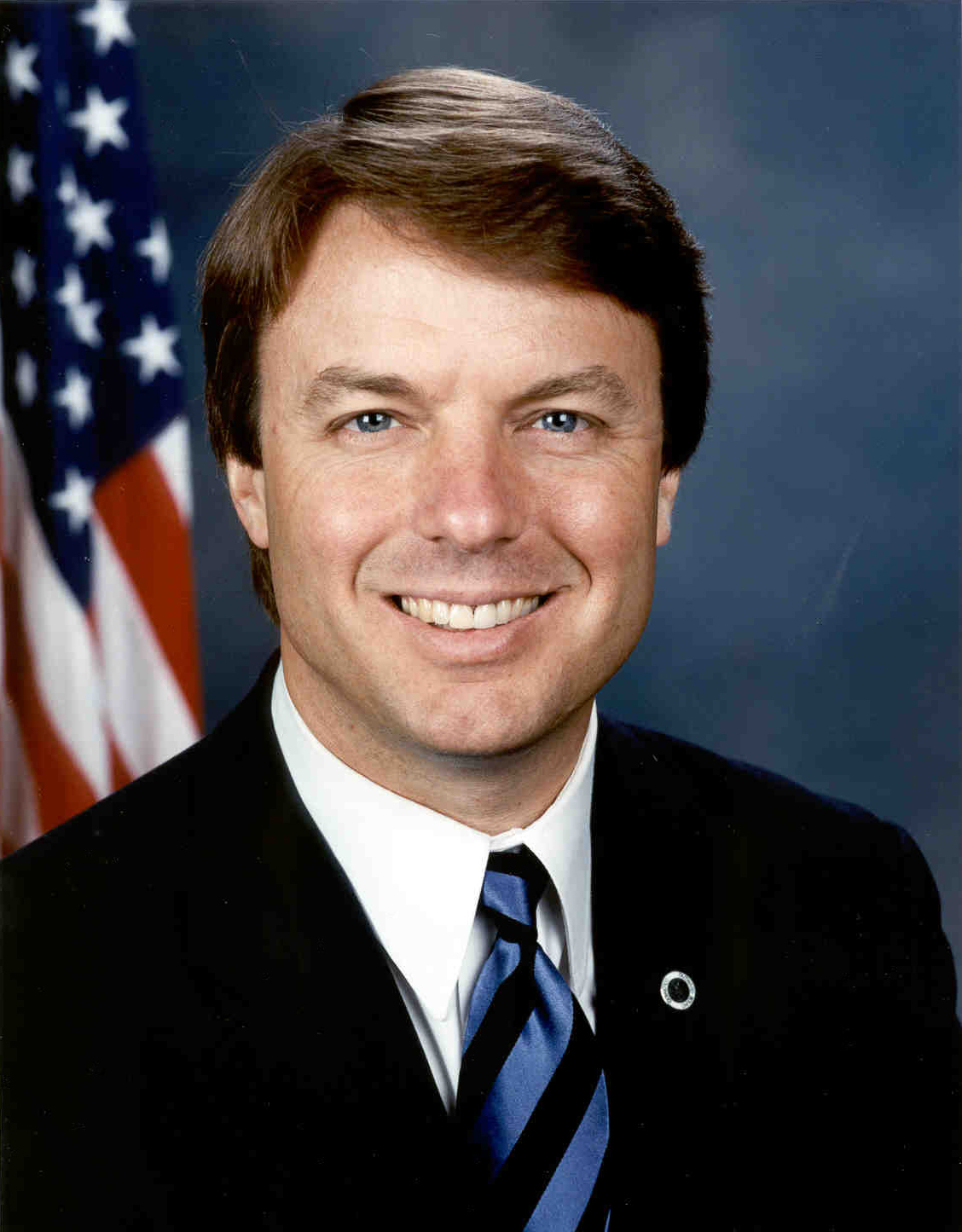
John-Edwards-official-Senate-photo-portrait.jpg
john-f-kennedy-jr-john-fitzgerald-kennedy-junior-jackie-robinson-foundation-endowment-scholarship-waldorf-astoria-new-york.jpg

Presidential Nominee | Johnny Reid Edwards (D-NC)

Vice Presidential Nominee | John Fitzgerald Kennedy Jr.
(D-MA)


MAJOR POLICY POSITIONS

FOREIGN AFFAIRS - Global Diplomacy, For The World.

Strongly supports special relationship with the United Kingdom,
Strongly supports a military relationship with Canada and Sweden,
Strongly supports non-proliferation of strategic weapons,
***
Supports Global Assembly & GA reform,
Supports a military relationship with Australia,
Supports international free trade agreements,
Supports nominal expansion of the Navy and Air Force,
Supports the Gore Doctrine,
Supports TASA Membership,
***
Somewhat supports nominal reform of the Army and Marine Corps,
Somewhat supports expansion of the Coast Guard,
Somewhat supports a military relationship with Turkey and Korea,
Somewhat supports normalization of relations with Thailand,
***
Opposes normalization of relations with India.


DOMESTIC AFFAIRS - Liberal, Status-Quo.
Strongly supports maintaining high taxes,
Strongly supports regulating fast food industry & increasing FDA regulations,
Strongly supports healthcare reform,
Strongly supports environmental protections,
***
Supports subsidizing higher education,
Supports more legal immigration,
Supports path to citizenship for some illegal immigrants,
Supports government subsidization of new housing projects,
Supports more "Restore America" projects,
Supports unions,
***
Somewhat supports more secure border.
***
***
REPUBLICAN TICKET
"Onward to Greatness"
La-Fleur4.png
8e1f1239f68025004b1fce723177ad98.jpg

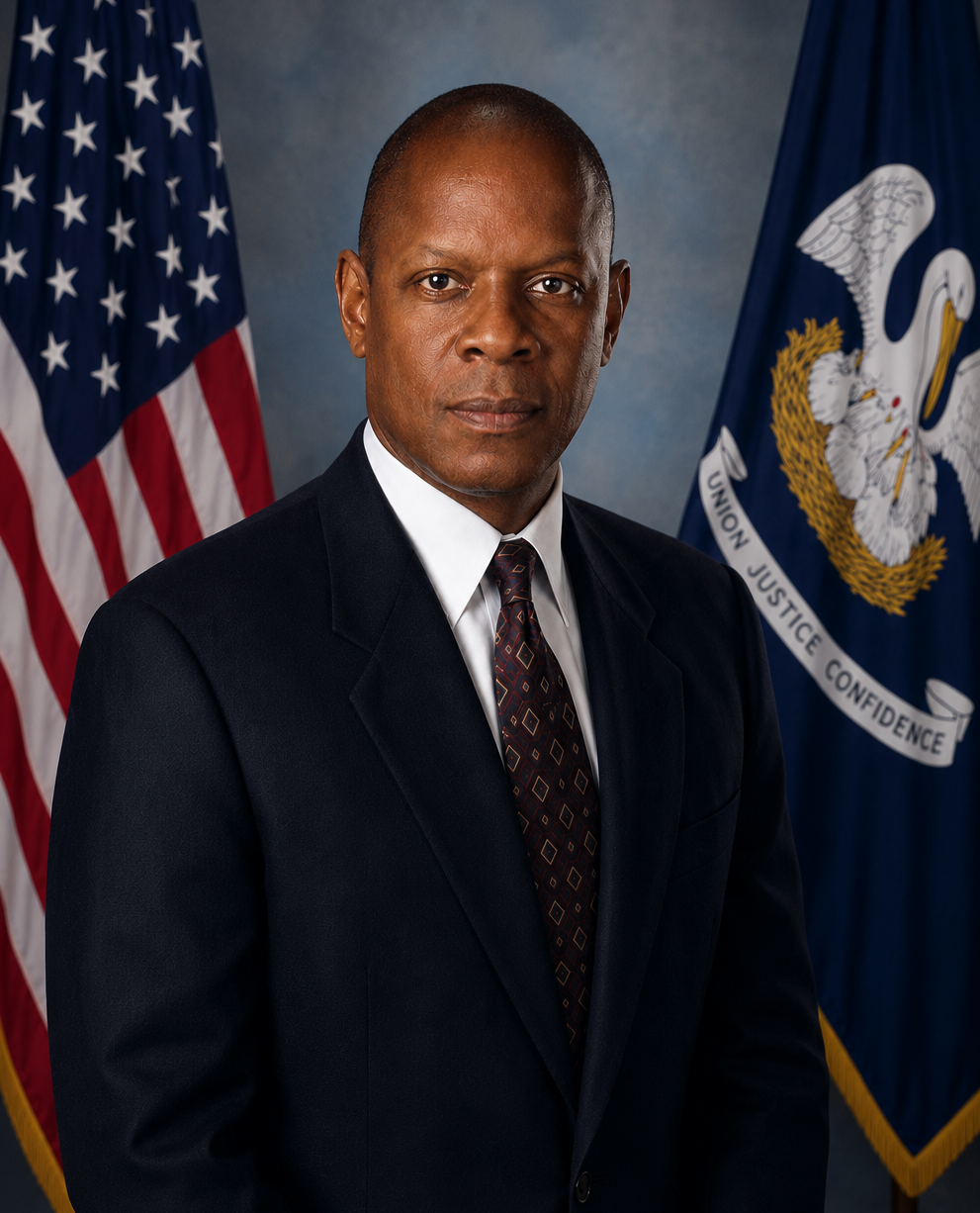
Presidential Nominee | Avery Louis LaFleur (R-LA)

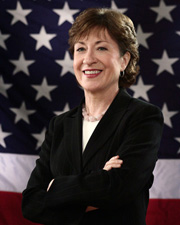
Vice Presidential Nominee | Susan Margaret Collins
(R-ME)


MAJOR POLICY POSITIONS

FOREIGN AFFAIRS - Restore Western Greatness.

Strongly supports special relationship with the United Kingdom,
Strongly supports a military relationship with Canada and Australia,
Strongly supports non-proliferation of strategic weapons,
Strongly supports the Gore Doctrine,
***
Supports a military relationship with Sweden, Poland, Turkey, and Korea,
Supports significant expansion of the Navy,
Supports updating the Air Force,
Supports updating the Army,
Supports specializing the Coast Guard and Marine Corps,
***
Somewhat supports TASA Membership,
Somewhat supports the creation of a space-based military branch,
Somewhat supports normalization of relations with India,
***
Opposes normalization of relations with Thailand,
Opposes international free trade agreements without protections.


DOMESTIC AFFAIRS - Conservative, Populist.
Strongly supports tax cuts,
Strongly supports hardline stance on illegal immigration & border protection,
Strongly supports immigration reform,
Strongly supports certain trade unions,
Strongly supports fishing and farming industries,
***
Supports making housing more affordable,
Supports physical fitness in public schools,
Supports inner-city renewal,
***
Somewhat supports healthcare reform,
Somewhat supports environmental protections,
***
Opposes foreign and corporate ownership of single-family homes,
Opposes more legal immigration.


Johnny Reid Edwards
Experience & Education


U.S. Senator
1997-Present

Various Law Firms
1978-1997

Clerk for Federal Judge
1976-1978

University of North Carolina Chapel Hill
[Graduated with J.D. with honors]
1974-1976

North Carolina State University
[Graduated with B.A. in Textile Technology]
1970-1974


John F. Kennedy Jr.
Experience & Education


U.S. Senator
2007-Present

U.S. Ambassador to The Kingdom of The Netherlands
2001-2007

Founder and Chief Editor of George Magazine
1995-2002

Assistant District Attorney in the Manhattan DA's Office
1989-1993

President of Reaching Up Nonprofit
1989

New York University School of Law
1988-1990

Named Sexiest Man Alive by People Magazine
1988

Summer Intern at Manatt, Phelps, Phillips & Rothenberg Law Firm
1988

NYC Office of Business Development
[Graduated with J.D. with honors]
1984-1987

Brown University
[Graduated with B.A. in American Studies]
1979-1983

Avery Louis LaFleur
Experience & Education


Governor of Louisiana
2004-Present

Louisiana Attorney General
2001-2004

Louisiana State Senator
1994-2001

Orleans Parish Public Defender
1991-1994

Tulane University School of Law
[Graduated with a J.D. with honors]
1989-1991

Tulane University
[Graduated with B.A. in Political Science, Minor in African Studies]
1985-1989

Detective at New Orleans Police Department
1981-1985

Police Officer at New Orleans Police Department
1978-1981

Louisiana Army National Guard
1978-1983


Susan Margaret Collins
Experience & Education


U.S. Senator
1996-Present

Executive Director of Richard E. Dyke Center for Family Business
1994-1996

Deputy State Treasurer of Massachusetts
1993-1994

New England Regional Director for Small Business Administration
1992

Cabinet Member of Governor John R. McKernan Jr.
1987-1992

Legislative Assistant
1975-1987

St. Lawrence University
[Graduated with B.A. in Government]
1971-1975


Last edited:

Odinson

Moderator
GA Member
World Power
Jul 12, 2018
10,805
Private

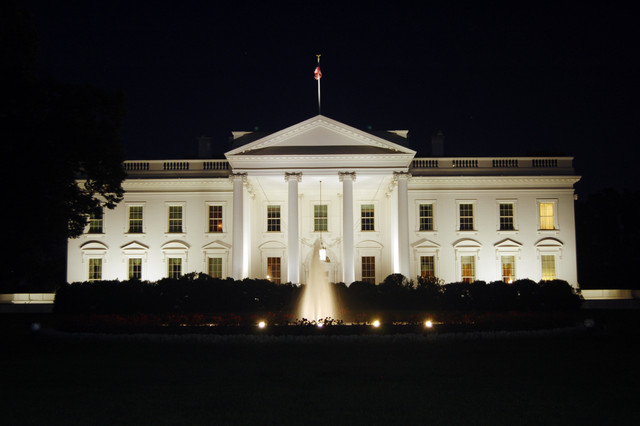
WASHINGTON D.C.
The White House
November 3, 2008
2:43 A.M. EST​

The-White-House-at-night-2011.jpg


The election was taking much longer to call than Sinclair or anyone else in the White House thought. The President had seen plenty of strange and close elections, but this one had taken the cake. The Republican candidate, Avery LaFleur, won the State of Vermont which a Republican had not won in a national election since the George H. W. Bush presidency. At the same time, however, Edwards won his home state of South Carolina and the Democrats also held onto Pennsylvania. There were states where both sides did amazing and states where both sides lost miserably - the election was unique in many ways, if not bizarre. One thing was for sure: this election would not be a blowout for anyone.

In order to watch all of this unfold, President Sinclair went to a seldom talked about room in the White House called the Game Room, or Billiards Room, that was located on the third floor. He invited his old friend Al Gore and his Chief of Staff, Harvey Baker, to play pool, drink expensive scotch, and smoke cigars while the news played in the background. All three men left their jackets on a coatrack and had their sleeves rolled up. Sinclair, who always was in a three-piece suit, still had on a black vest with a gold pocket-watch chain dangling down from it each time he took a shot at a ball. Sinclair had experience at the game, Baker had youthful strength, and Gore was somewhere between both men.

"Are you going to miss the office?" Baker asked Sinclair as he leaned back against the wall, puffing on his cigar.

"Absolutely not," Sinclair said, and then pocketed a ball with precision.

"Not even a little? You know, all of the pomp and circumstance that comes with the job?" Baker replied.

"I like formality, but pomp and circumstance is a good way to develop an ego - just ask Al," Sinclair said, unable to contain his smirk.

"I have an ego, huh?" Gore cracked back.

"Nope, you're the must humble man in Washington," Sinclair said as he stood up, pool cue in hand. All three of the men laughed.

"What about you, sir," Baker said as he looked at Gore, "do you miss the job?"

"I don't miss the stress, that's for sure. There's nothing else like it. No one can prepare you for the stress... The best part to me, though, was when we would help people and I could see those results first-hand," Gore said.

"My favorite part about having this job is that it gave the Democrats and the G-O-P a stroke when I won. 'An independent as President? Some guy from Maine? That'll never happen!' I've heard that my entire time in the Senate. That was satisfying," Sinclair noted.

It was Gore's turn to shoot. He had three balls left. "You're not some guy from Maine, you're an American hero."

"If he's such a hero, why is he losing this round?" Baker asked. Gore and Baker both laughed.

"I won the first two, I thought I'd give you guys a chance," Sinclair retorted. He poured himself another shot of scotch and watched as Gore pocketed one ball and missed the next.

"Letterman really did a good one when he read off your resume on The Late Show. He went on and on with those adjectives," Gore said, thinking back. "He said: 'Benjamin Sinclair: he's a veteran, teacher, senator, vice president - he was struck by lightning, twice, he was awarded the Medal of Honor and the Medal of Freedom, he saved the U.S. Capitol during the riots, and most importantly... a lighthouse keeper,'" Gore said, starting to laugh, "and then, for the next ten minutes, he went through interviews of people from Castine about you and your lighthouse. I think that episode won you more votes than any speech."

"I can't wait to retire from this, eat lobster in my lighthouse, write, and read books. That's about all I have left to do," Sinclair said.

Both Sinclair and Gore turned to baker when they heard the sound of his pool cue smacking on the ground.

"Had enough to drink?" Gore teased.

Baker didn't say anything. He looked back at the two presidents, seriously, and then gestured towards the TV. "Can you turn that up, sir?"

Sinclair turned up the volume - it was on PBS. Ohio and Nevada had already been called for LaFleur earlier. There was almost no doubt at all that the West Coast and Hawaii were going to go for Edwards, which meant that the only states that were still in play were Florida and Alaska.

An older female news anchor cleared her throat. "Our decision desk has two more calls to make... PBS can now confidently project that Louisiana Governor Avery LaFleur has won the State of Alaska and also the State of Florida."

"Oh my God... You've got to be kidding me," Sinclair said. He closed his eyes, turned his head down, and let out a deep sigh.

The television screen updated and showed that both candidates had 269 electoral votes - 270 votes were what was necessary to win the election.

"A tie... The tied," Gore said in disbelief. He set his drink down.

Baker stayed quiet for a few seconds. He didn't want to look stupid, but he honestly didn't know. Maybe it was the scotch, so he finally asked it.

"So... Does this mean you stay President, sir?" Baker asked.

Sinclair remained still, his head facing down with his eyes closed, almost like he was in prayer. His fist was clinched tightly around his pool cue - Gore could see the grip tightening.

"No, Baker, at least there's that. I'm out of a job no matter what by lunch on January 20th..." Sinclair said softly, almost mumbling. At least that was some good news, there's no way they could keep him in.

"What this means is that Congress gets to choose the President and Vice President," Gore said.

"Together?" Baker asked.

"No," Sinclair said. He took a seat next to the billiards table and sighed. "The House of Representatives chooses the President and the Senate chooses the Vice President."

"Well... Democrats have the House, so I guess-" Baker was cut off by Gore.

"It's more complicated than that. Each congressman in the House doesn't get one vote, each state delegation gets one vote. That'll definitely work in the Republicans favor."

"Which congress gets to vote?" Sinclair asked.

Gore and Baker both looked at Sinclair like his question didn't make any sense, so he clarified. "The elections for President and Vice President were not the only ones tonight - plenty of House and Senate seats were up for grabs. Before inauguration, the new congress is sworn in. Does this congress get to vote to break the tie, or will it be that new congress?"

All three men were confused now.

Sinclair stood back up and rolled his sleaves down. "Call Langley and Blumenthal - I want them both here for 6:00 A.M." Sinclair said, referring to the Attorney General and Vice President respectively. "Tell the networks that we need air time at noon tomorrow."

"What are you going to speak about?" Baker asked.

"Well, if you, me, and President Gore don't know exactly how this is going to work, how confused do you think the rest of the country is going to be? I want a briefing in the Situation Room at 6:00. Bring a copy of the constitution," Sinclair said. The President buttoned his sleeves and put his jacket back on. He slept for a few precious hours in the Residence before he met with the Vice President and Attorney General at 6:00.​
 

Odinson

Moderator
GA Member
World Power
Jul 12, 2018
10,805
Private

WASHINGTON D.C.
The White House
November 3, 2008
6:00 A.M. EST​

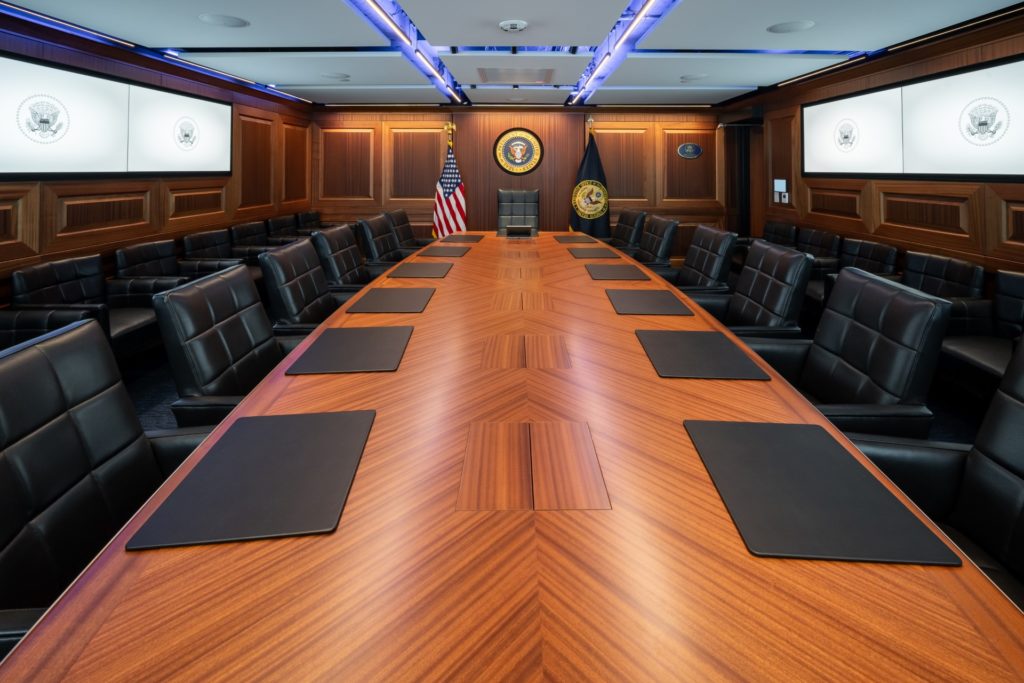
JFKConference-Room-1024x683.jpg


The Situation Room had updated dark wood paneling, television monitors that could be used to display graphs, charts, and other important information as well as capable of being used for video conferencing, and dimmable lighting. The black leather seats in the room were notably more comfortable than the ones that Al Gore had during his presidency. Gore had been invited by President Sinclair to come to the White House and stay up with him and Baker while they waited for the election results to come in. Sinclair invited Gore to come to join them in the Situation Room that morning - he thought that the former President could provide some valuable insight, or at the very least it would be a good excuse to keep his old friend around a while longer.

Gore and Baker were already seated inside of the Situation Room along with Vice President Richard Blumenthal and Attorney General Sean Langley. In front of all four men on the table, as well as the spot at the head of the table that would soon be occupied by Sinclair, were: an ink pen, a note pad, and a pocket-sized copy of the United States Constitution. The doors to the Situation Room opened and the four men in the room stood up as Sinclair walked into the room. He was wearing a different suit from last night and a dark orange tie. The President's fiancée, Olympia Snowe, recommended it so that it didn't look like he was favoring the Republicans or the Democrats when he would give a public address at noon.

"Thank you all for coming at this hour, on such short notice," Sinclair said. "Langley, how is all of this going to work?"

Attorney General Sean Langley cleared his throat. He was wearing a blue, pinstriped suit. Even though he was in his late 50s, he still had a thick, full head of hair, although it was salt and pepper. He adjusted his glasses and cleared his throat a second time.

"Well, Mister President, we haven't done this in about 200 years, but it shouldn't be an impossible feat. There will be some complications that we can hopefully overcome in the modern age, though. I can... well, Mister President, should I just give the finer points?" Langley asked.

"Normally I don't enjoy hearing lawyers ramble, but I know that you know what you're talking about. Give us the entire layout of what is happening - in fact, explain it to us like we're a bunch of fifth-graders or golden retrievers," Sinclair replied.

Vice President Blumenthal asked if anyone wanted coffee. He poured a cup for himself and President Gore and then sat back down to listen to Langley.

"A unique feature about our system of government is that the popular vote does not elect the President and Vice President. Instead, a group of 'electors' make up an entity called 'The Electoral College.' Each state has a certain number of electoral college votes which is roughly based off of its population, however larger states like California and Texas are underrepresented, and smaller states like Wyoming and Alaska are overrepresented. When someone casts a ballot in a national election, they are technically not voting for the candidates that they want, but instead they are actually voting for an elector who says that they will vote for their candidate. To make this matter less complicated, every state in the country - except for Nebraska and Maine - have laws on the books which state that if a majority of the votes in that state go for one candidate, then all of the electors who have pledged support for that candidate will be chosen to represent that state in the electoral college," Langley said.

"Sorry, Mister Attorney General... Can you give a more concrete example?" Baker asked.

"Sure," Langley continued. "In this election cycle, it looks like eight-million people voted in Texas. Over half of those people voted for the Republican, Governor LaFleur. This means that all 34 of the Electoral College votes in Texas are given to electors who pledged that they will vote for Governor LaFleur. That is how it works for every state, except for Maine and Nebraska. In Maine and Nebraska, they will roughly divide their Electoral College votes by how many votes go for each candidate, but they are outliers. Another thing to consider is that when a citizen is voting for President, they are actually casting a ballot for President and Vice President at the same time. Those candidates run together on one ticket.

"Anyway, there are numerous fun-facts and interesting things to consider about the Electoral College, but I'll just cover the most important ones that are relevant to this situation. First, the Electoral College is not like a legislative body that meets together in one place in the country. Instead, after the Electoral College members for each stated are 'elected,' they will gather in their respective state capitals and vote by secret ballot for President and Vice President. Then their job is done. The physical ballots casted by the electors from all 50 states, plus D.C., are taken to the Capitol Building in Washington D.C. On January 6, the ballots are counted before a joint session of Congress with the Vice President presiding over it. Once the votes are counted, objections can be made by congressmen and senators as to the veracity of the votes. For example, during the Civil War the House and Senate objected to, and rejected, Electoral College votes from Louisiana and Tennessee because those states were in open rebellion. Rejections of Electoral College votes have not occurred in the 20th and 21st centuries, though.

"Finally, once these votes are counted in the joint session for President and Vice President, those two individuals are now formally the President-elect and Vice President-elect until they are sworn in two weeks later on January 20th, at noon," Langley concluded.

"Well... The current electoral vote is 269 for Edwards and 269 for LaFleur. The Electoral College members haven't met in their respective state capitals yet... What if one of them gets the idea that they can choose the next President and Vice President, and they don't vote how they promised they would?" Gore asked.

Everyone in the room looked back to Langley.

"That is called a 'Faithless Elector.' Faithless Electors are rare, but not unheard of. Throughout the history of the United States, there have been over 25,000 individual Electoral College votes. Of all of those votes, only 165 electors have been faithless by voting for someone other than their party's nominee. Of that group, 71 did so because the nominee that they were going to vote for had died. The reason this is so rare is because the parties choose the electors and they are pretty good at making sure that the electors are die-hard Republicans or Democrats. However, I agree that in this case Faithless Electors could be an issue. Technically, there is no legal mechanism to stop a faithless elector from casting a different vote. However, some states have laws on the books that punish faithless electors after the fact with either fines, jail time, or both," Langley replied.

"What about... bribing or threatening the electors? I mean, if I had just a limited amount of resources, I could threaten an elector or his family if he didn't vote how I wanted him to, or on the other hand I could bribe him to vote how I wanted him to, right?" Vice President Blumenthal asked.

"Threatening an elector or his family would obviously be a serious federal crime and, if it was revealed after the votes had been cast and approved, could cause a constitutional crisis. Bribing an elector would also be a serious federal crime. However, keep in mind that these electors are devout party members - they aren't random guys taken off the street and told to vote for LaFleur or Edwards. They are trusted party members who are given the job of elector as a kind of honor. It's an easy, short-term job and you probably get some kind of ornate certificate that you can hang on your office wall," Langley noted.

"Honestly, depending on how he voted, a faithless elector could solve our problems here," Sinclair said.

"How so, Mister President?" Langley asked, feeling perplexed.

"Well, we all know that LaFleur won the popular vote. So if one elector was faithless and voted for LaFleur instead of Edwards, then that means on January 6, LaFleur will be elected President. That means that Congress won't have to choose the President and Vice President, and everything moves along as it should," the President said, contemplating it.

"Mister President," Langley warned, "if you or anyone else in the country did anything to try to achieve that outcome, it would not only be illegal, but I must emphasize that it would cause a serious constitution crisis, and a dangerous precedent for the future. That is not an option."

"Alright, Mister Attorney General," Gore said, "let's say there's no faithless electors and the vote remains 269 to 269. Vice President Blumenthal certifies the votes, and it is officially a tie. What happens next?"

"Then the 12th Amendment to the constitution is activated," Langley said. He opened his pocket constitution and told everyone else in the room what page to turn to in their own copies.

The Electors shall meet in their respective states and vote by ballot for President and Vice-President, one of whom, at least, shall not be an inhabitant of the same state with themselves; they shall name in their ballots the person voted for as President, and in distinct ballots the person voted for as Vice-President, and they shall make distinct lists of all persons voted for as President, and of all persons voted for as Vice-President, and of the number of votes for each, which lists they shall sign and certify, and transmit sealed to the seat of the government of the United States, directed to the President of the Senate; -- the President of the Senate shall, in the presence of the Senate and House of Representatives, open all the certificates and the votes shall then be counted; -- The person having the greatest number of votes for President, shall be the President, if such number be a majority of the whole number of Electors appointed; and if no person have such majority, then from the persons having the highest numbers not exceeding three on the list of those voted for as President, the House of Representatives shall choose immediately, by ballot, the President. But in choosing the President, the votes shall be taken by states, the representation from each state having one vote; a quorum for this purpose shall consist of a member or members from two-thirds of the states, and a majority of all the states shall be necessary to a choice. And if the House of Representatives shall not choose a President whenever the right of choice shall devolve upon them, before the fourth day of March next following, then the Vice-President shall act as President, as in the case of the death or other constitutional disability of the President.-- The person having the greatest number of votes as Vice-President, shall be the Vice-President, if such number be a majority of the whole number of Electors appointed, and if no person have a majority, then from the two highest numbers on the list, the Senate shall choose the Vice-President; a quorum for the purpose shall consist of two-thirds of the whole number of Senators, and a majority of the whole number shall be necessary to a choice. But no person constitutionally ineligible to the office of President shall be eligible to that of Vice-President of the United States.

"So," Blumenthal said curiously, "if the Senate votes for Vice President, and it's a 50-50 split, do I get to break the tie like I would for normal legislation?"

"Nobody knows," Langley said.

"What?" responded Sinclair, who was a two-time Vice President himself. "The constitution is clear that the Vice President gets to break ties."

"Yes," Langley said, "but the 12th Amendment specifically states a quorum of senators when voting for Vice President, it does not mention the President of the Senate. However, it does not necessary exclude him either. That's why I'm saying nobody knows. If there were a 50-50 vote, and Vice President decided to exercise his theoretical right to vote, it would likely result in another constitutional crisis. The loser would immediately sue and it would quickly get bumped up to the Supreme Court to decide if the Vice President has the power to break ties in the event of a 50-50 split. If the Supreme Court decides against you, then the Senate would have to convene again for the vote, which would draw out the process even more... As interesting as it would be for that to happen from a legal perspective, I'm not sure that it would be healthy for the country, sir."

Sinclair sat back in his chair and set down his copy of the constitution. He rubbed his face and sighed. "I understand why they planned all of this out this way," Sinclair said, "but by God is it complicated... How am I going to explain this on television?"

Everyone in the room was quiet for a few minutes. "I have a suggestion, sir, but it's not for the speech," Langley said.

"Go ahead, I'm all ears," Sinclair said without looking up.

"First, before anything else, order the FBI to provide personal protection to all 538 electors around the country, and have the protection last until they cast their ballots - I would suggest giving that order before your speech. It'll be a logistical nightmare, but the FBI has extensive reach and should be able to figure it out," Langley concluded.

Sinclair gave a thumbs up, "Alright, so ordered Mister Attorney General. Call Director Cash after we finish up here and coordinate that with him. Now, back to the speech, how do I explain the faithless electors?"

"Mister President," Gore chimed in, "I suggest that you don't bring it up at all in the speech. If it happens, deal with it then, but hopefully this will all work out and the House and Senate get to do their jobs."

Sinclair contemplated that for a moment, "That's a pretty good point... Baker, let's go with that approach."

"Yes sir," Baker responded. "One more question, sir... What happens if the House and the Senate don't choose the President and Vice President before January 20th? I know that the constitution says your term as President, and Vice President Blumenthal's term as Vice President ends, no matter what, on January 20th at noon."

"Well," Langley said, "if the Senate has at least chosen a Vice President, then the Vice President will be acting-President until the House chooses a President. If the Senate has not chosen a Vice President, then the Speaker of the House will become acting-President. If the House has failed to choose a Speaker at that time, then the President Pro-Tempore of the Senate would become acting-President," Langley concluded.

The President Pro-Tempore of the Senate was Senator Olympia Snowe, Sinclair's fiancée.

"We'll burn that bridge when if get there, thank you everyone," Sinclair said, stood up, and then left the room.
 

Odinson

Moderator
GA Member
World Power
Jul 12, 2018
10,805
Private

WASHINGTON D.C.
The White House
November 3, 2008
9:07 A.M. EST​

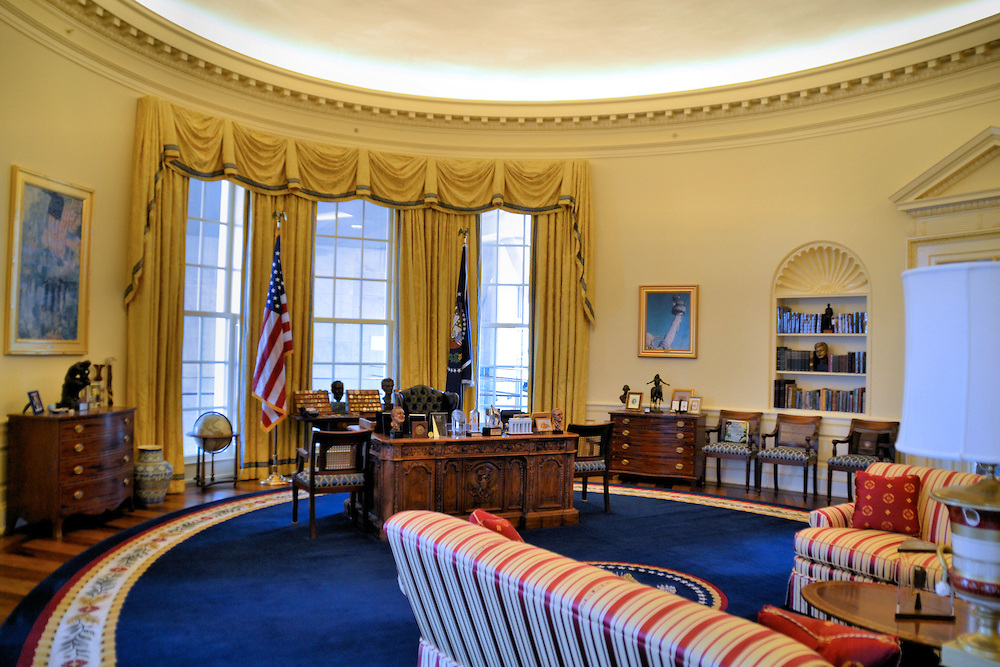
Arkansas-Little-Rock-Oval-Office-William-Clinton-Presidential-Library.jpg


President Sinclair was sitting behind the Resolute Desk in the Oval Office, wearing his reading glasses, as he made some edits to his speech that he and his staff had been working on. He had only gotten a few hours of sleep that morning, but one of the few physical advantages that he had over his younger political colleagues is that the elderly don't need nearly as much sleep as the middle-aged or the youth. The President swiveled his Montblanc ink pen several times over the hardcopy of the speech that he was planning to give at noon. He sighed and knew that large parts of it were going to need to be rewritten. There was a knock at the door to the Oval Office. Sinclair didn't say anything. Harvey Baker opened the door.

"Mister President, the Vice President, Speaker Williams, Majority Leader Cole, and Minority Leader Landry are here. Should I send them in?" Baker asked.

"Yes, go ahead," Sinclair said. He took off his reading glasses and set them down on the Resolute Desk while he waited.

Vice President Blumenthal came in first. He was wearing a dark blue suit and conservative, dark blue tie. Blumenthal was an independent like Sinclair and had the best interest of the country at heart. He also had nothing to win or lose in this election and was probably interested in either returning to the Senate or running for Governor of his home state of Connecticut after his term was up.

Next, Edmund Williams, the Speaker of The House of Representatives walked in wearing a gray suit and bright blue tie. Williams was a Democrat from Michigan. He was a salt of the Earth Union man that received a higher education later in his life and had climbed the rungs of political power by force, not luck. Unlike other countries, the Speaker of The House was very much a political position that was not expected to be objective. While the Speaker was the presiding office of the House, he more importantly had significant control over committee appointments and setting the legislative agenda for the House. While Williams had been reelected in his district, his chances of being the next Speaker in January when the new congress was sworn in were virtually zero. The Republicans had swept the House elections that had occurred last night and would become the majority in the House. Once the new House was sworn in in January, the Republican majority would elect a new Speaker.

After the Speaker came Majority Leader Patrick Cole, a Democrat from New Hampshire. Cole was dressed more like a college professor than a United States Congressman - he was wearing a gray wool sportscoat, a white dress shirt with blue stripes, a dark green tie, and dark blue pants. Like Speaker Williams, Congressman Cole was certain to lose his spot of Majority Leader in the House. However, he was likely to be the Minority Leader of the Democrats.

Finally, after Cole, Jack Landry walked in. Landry was wearing a black, conservative suit with a white shirt and a red and white regimental-looking stripped tie. While the Republican candidate for President, Governor LaFleur, was a creole from New Orleans, Landry was a Cajun from Acadiana (South Louisiana). Landry was a likely candidate for the next Speaker of The House which would make Louisiana politics go from being a backwater afterthought to the forefront of American national politics.

All four of the men walked in. Sinclair stood up behind his desk and shook each of their hands, starting with Blumenthal. Four chairs had already been arranged in a strategic position to give an air of prominence to Sinclair and, to a lesser extent, Blumenthal who sat next to the Resolute Desk, facing the other three men.

"Thank you, gentlemen, for coming on such short notice," Sinclair said. The other men nodded politely in acknowledgement.

"It looks like this race will be a genuine tie, and the House will choose the next President, and the Senate will choose the next Vice President of the United States - I think that is obvious to everyone. I've asked you all here to... well, gentlemen, I haven't gotten much sleep so I don't have time to beat around the bush, I've asked you all here to make sure that you're not going to fuck this entire thing up," he said bluntly. It was rare for Sinclair to curse, in fact no one in the room other than Blumenthal had heard him say "fuck" before.

"Well, Mister President," said Speaker Williams, "what exactly are you asking from us?"

"This system that we have for breaking a tie," Sinclair said, "is functional, but archaic. What this country needs is a swift resolution to this election in which a President and Vice President are elected. This will not be the time to draw things out or make your political rivals look like idiots. 131-million Americans have voted for their next leader. The worst thing all of you can do is drag this on for ages and make it look like their vote was entirely irrelevant," Sinclair said.

"Well, Governor LaFleur won the popular vote handedly. I think that pretty much settles it," said Minority Leader Landry said in a Cajun accent.

"The Founding Fathers and the Constitution gave us the ability to choose the President and Vice President in this situation, we're going to take that job seriously. But I cannot guarantee any kind of results," said Speaker Williams.

"What, do you think you'll be able to out-vote us?" asked Minority Leader Landry.

"I think that the country might have buyer's remorse between now and January, and we can revisit who the President and Vice President will be," Speaker Williams said. He didn't like LaFleur because of his populist politics and he despised the Republican candidate for Vice President, Senator Susan Collins. Unfortunately for Williams, he wouldn't have any power over voting for the new Vice President.

"I think that we should consider what the President just said more carefully," Vice President Blumenthal chimed in. "Your job is to execute the will of the people. The people have just showed their will by casting over 130-million votes. The way I see it, this tie is in name-only. Governor LaFleur won the popular vote. That ends it."

"I disagree entirely, Mister Vice President. Go tell that to your constituents in Connecticut. By the way, do you think they're going to want a Governor who sided with the Republicans?" asked Speaker Williams, implying that this entire thing could end Blumenthal's future career in politics if he wasn't careful.

"Alright, that's enough," Sinclair said. "If you all are going to make this some kind of public bickering match, so help me God I will do everything in my power to ruin the offenders. Elect who you are going to elect, but do it swiftly. We don't need 50 ballots for President. Do you think you can manage that?"

"I think that we can manage that in the House," said Minority Landry with confidence.

"I think so too," said Majority Leader Cole with noticeably less enthusiasm.

"What about the Senate, Mister Vice President? There's still three Senate elections that are too close to call. You're really the one at risk of having a split chamber," said Speaker Williams.

"I am going to have my own meeting with Senate leadership. This meeting was making sure that the House isn't going to make a bunch of unnecessary political theater," Blumenthal replied.

"That sounds like something the President of the Senate would say," Williams quipped back.

"I think that we have an understanding, then," Sinclair said. He stood up which triggered everyone else in the room to stand up as well. The meeting was over.
 

Odinson

Moderator
GA Member
World Power
Jul 12, 2018
10,805
Private

WASHINGTON D.C.
The White House
November 3, 2008
10:02 A.M. EST​

Arkansas-Little-Rock-Oval-Office-William-Clinton-Presidential-Library.jpg


President Sinclair stood next to the Resolute Desk and looked outside at the South Lawn of the White House Grounds. He considered how close he was to leaving office - something he was looking forward to - yet he was now consumed by this final task that was, in many ways, overwhelming. He felt like a college senior taking finals during his last semester of classes, and that there was one test that he forgot to study for. While Sinclair was now a lame duck President in many ways, his popularity with the public still brough forth a significant amount of soft power with the country and with congress. He always preferred for the threat of using his authority to be what won things for him in politics. In some cases, if you have to actually do something, then you have already lost and you are just bringing someone down with you. This philosophy crossed the President's mind as there was a knock on the door to the Oval Office. His chief of staff opened it.

"Mister President, Senator Edwards and Governor LaFleur are here," Baker said.

"Send them both in. I just want it to be the three of us," Sinclair said, still staring outside at the greenest lawn in America.

"Yes sir."

Two men walked into the Oval Office. One was Senator Johnny Edwards from white man from South Carolina. He wasn't necessarily the most charismatic person that the Democrats had to offer, but he was widely respected and seen as a continuation of Al Gore's Democratic Party. His policy stances were sensible and he wanted to mostly maintain the status quo that had brought America through the turn of the century. The Democrats were so afraid of trying something new that, at what felt like the last minute, Senator Edwards was chosen over Senator John F. Kennedy Jr. to be the Democratic nominee for President.

The other man was Avery LaFleur, a black man from New Orleans. He was a desperate ploy by the Republican Party which didn't have a man in the White House since the George H. W. Bush presidency. LaFleur had been a police officer and a detective in one of the most dangerous cities in America which was in one of the poorest and most corrupt states in the country. Louisiana was also the deep south - it was one of the most parts of the entire country, yet his charisma and morals brought him to become the governor of that state through intense politicking, sheer will, and populism that hadn't been seen in Baton Rouge since Huey Long.

Edwards was wearing a conservative dark blue suit and a dark blue tie. LaFleur was in a black suit with a Mardi-gras themed tie that was purple, gold, and green with small fleur-de-lis embroidered into it.

Sinclair turned around and faced the two men who had been summoned to the White House around 3:30 that morning. "Thank you both for coming here on short notice. Did either of you sleep?"

Sinclair shook both of their hands and then walked over to a pitcher of iced tea - neither one of them had slept except on the way to the White House. He poured all three of them a glass and then, instead of walking over to the sofas in the Oval Office that would normally be appropriate for this type of discussion, he walked behind the Resolute Desk and took his seat. "Please, join me," he said. LaFleur and Edwards looked at each other and then each took a seat in wooden chairs that were on either side of the Resolute Desk. LaFleur was on Sinclair's right and Edwards was on the left.

"You're both from the south, so I had some iced-tea made. We don't have iced-tea in Maine - when I heard about it I thought the idea was hilarious. Why would you want to put ice in tea? I thought I had to try it with our country's future, southern President - whomever it may be," Sinclair said. He took a sip of the tea.

"It's actually ice tea, Mister President," LaFleur said.

Sinclair tasted the tea. He wasn't really impressed. "That's what I said."

"No sir," Edwards added, "you said iced tea. It's ice tea."

"It's spelled i-c-e-d," Sinclair said. "I read about it."

"Well, sir," LaFleur said, "it might be spelled that way, but it's not pronounced that way."

The room was silent for a few moments while everyone thought about how clear Sinclair's annunciation had to be for both Edwards and LaFleur to notice that he was saying iced tea strangely.

"I feel like we're rehashing the Civil War or something... How does it taste? I'm not sure that I like it," Sinclair said and inspected his own glass.

"Well, sir, normally you'd put some sugar and maybe some lemons in the tea. Right now we're just drinking cold leaf water," Edwards said. LaFleur chuckled and Sinclair frowned.

The President picked up the landline phone on his desk and pressed a button. He waited a few seconds until someone answered.

"I need three lemons and some sugar packets in the Oval Office, please," Sinclair said.

Edwards cringed, but decided that he had said enough. LaFleur, however, wasn't going to settle for that. "No, sir. Tell them we need a whole bag of white sugar."

"Actually, we need a bag of white sugar... Alright, thank you," Sinclair said and hung up the phone.

"Well damn, I forgot to ask for cream," Sinclair said and reached for the phone again.

"No!" Edwards said, almost jumping out of his seat. LaFleur and Sinclair both stared at him.

"Mister President, you don't put cream in iced tea... That's just not something you do," LaFleur said as Edwards regained his composure.

There was a knock at the door to the Oval Office. One of the White House butlers, a black man, pushed a cart into the Oval Office and near the Resolute Desk. It had on it three lemons and a bag of white sugar, just as the President had requested.

"Can I get anything else for you, sir?" the butler asked.

"No Eddie, thank you," Sinclair said. LaFleur Eddie made eye contact for a couple of seconds as the butler turned around to leave the room. Eddie, who was almost as old as Sinclair, gave a subtle nod of acknowledgement to LaFleur who returned it back to him. Eddie couldn't imagine what it would look like for a black man to be sitting behind that desk.

"So do we need to grind up the lemons, or something like that? Or scrape the zest into the pitcher?" Sinclair asked curiously.

Both Edwards and LaFleur shook their heads. Edwards got up, took off his suit jacket, and folded it onto the wooden chair that he had been sitting on. LaFleur watched for a second or two and then did the same. Both of them men rolled up the sleaves of their dress shirts and walked over to the cart.

"I've never made iced tea on a silver platter before," Edwards said. He grabbed a knife and started cutting the lemons.

LaFleur opened the bag of sugar and inspected the inside of it.

"Mister President," LaFleur said, "it might not get too hot up in Maine, but if you're in south Louisiana or South Carolina, and it's 110 degrees in the summer with 100-percent humidity and you just finished working on a farm or your daily shift, an ice-cold glass of sweet iced tea is better than a beer. It's like cold lightning."

Edwards dropped the sliced lemon wedges into the iced tea. LaFleur poured a generous amount of the bag of sugar into the pitcher. Sinclair's eyes grew bigger with the more sugar that LaFleur poured inside until he finally stopped. Both Edwards and LaFleur looked at the silver spoon on the cart that they could use for stirring.

"You want the black man to stir it for you, Senator?" LaFleur asked, very seriously. The atmosphere in the room grew awkward for five or so seconds until a smile cracked on LaFleur's faced and he started laughing. He smacked Edwards's shoulder and grabbed the spoon. "I'm just kidding," he said. LaFleur stirred the concoction for about twenty seconds in both directions. Everyone in the room watched the combination of ice, tea, sugar, and lemons swirl around in the pitcher and finally slow down. Edwards grabbed everyone three new glasses, and poured a glass for each man. Edwards gave a glass to the President as he and LaFleur took their seats again. All three of them tasted the iced tea.

Sinclair tasted the tea and swallowed a healthy gulp of it. He licked his lips and stared off in the distance for a few seconds, like he was remembering something. "Like cold lightning," he said, quoting LaFleur. "Well gentlemen, I don't know about all of this presidential business. Why don't we open an iced tea company together?"

Edwards and LaFleur both smiled.

"Well, I'm in a much better mood now," Sinclair said, and took another sip. "I'm sure that you both have things that you need to be doing, but I needed to speak to you before my speech at noon. So this couldn't wait," he said. Both Edwards and LaFleur stared at the President and silently wondered if he was going to give a last-minute endorsement.

"The Founding Fathers," Sinclair said, "created our electoral system with crises in-mind. Regardless of what the popular vote is, the Electoral College vote is what decides who will be the President. The vote of a few-hundred people, which is watched carefully by each state, is not something that can easily be manipulated or falsified. Even if someone dropped a million fake votes for President, the Electoral College is the ultimate voting bloc that decides who becomes the next leader of this country of ours. They also came with up with this mechanism, in case there is a tie. Congress will decide who is President and who is Vice President. While it may seem archaic and time-consuming, it gives a definitive and exact answer to who won this election. There will be no way to contest it once it is done," Sinclair said, before taking another sip of his iced tea. "Do you understand what I'm saying, gentlemen?"

Edwards and LaFleur both shifted uncomfortably in their seats and remained silent.

"In my speech at noon, I am going to say that both of you agreed with me that you will respect the vote of the House and the Senate, whatever it may be, and that you will concede the election with grace if you lose, and that you will accept it with that same grace if you win," Sinclair said. Edwards was smiling while LaFleur had a neutral, if not negative look on his face. Even though the Republicans controlled the House, Edwards felt that he had enough pull to have a chance at winning the chamber over. Meanwhile LaFleur, who had next to no connections in Washington, felt that he was entitled to win simply based off of the fact that he had won the popular vote.

"Another thing," Sinclair said, "if I find out that either of you are lobbying congressmen or senators to vote for you or your Vice President, I will use every remaining measure of my political capital and the prodigious power of this office to make sure that not only your opponent wins, but that your political career is destroyed and that you can never walk into this city again unless it is to hang your head in shame. What happens now, from this point forward, is more than history - it is the very essence of our republic. The American People expect congress to do the right thing and expect both of you to act like a President, even though only one of you will be by the end of the month."

Edwards was also unhappy now - the only chance he has of winning the House vote for President was whipping votes.

"Mister President," LaFleur said, unable to contain himself, "Senator Collins and I won the popular vote by over two-million. I have a mandate from the American People to assume this office and to govern."

"That's not what the constitution says," Edwards quipped. "You heard him, the House chooses the President and the Senate chooses the Vice President."

"And the party of Lincoln has the House!" LaFleur snapped back, raising his voice.

"This isn't open to negotiation," Sinclair said. "You can both agree to these terms right now, or my sway will effortlessly carry the weight of this election - I can assure you of that."

Both of the candidates, begrudgingly, agreed to Sinclair's terms and left the White House a few minutes later. Sinclair's chief of staff, Baker, joined the President in the Oval Office to make some last-minute changes to his speech. Baker poured himself a glass of iced tea.

"Have you never had iced tea before?" Baker asked.

"Of course I have," Sinclair said as he sat down on one of the sofas in the Oval. "In Korea, most of my unit were southern boys. I taught at West Point, I've been all over the country and the world. I've had iced tea. I just wanted to see if I could get them to set aside their differences for just a minute."


Odinson

Moderator
GA Member
World Power
Jul 12, 2018
10,805
Private

WASHINGTON D.C.
The White House
November 3, 2008
12:01 P.M. EST​

President Sinclair sat behind the Resolute Desk as he looked over his speech. A television crew had set up residence in the room temporarily while members of his senior staff mulled around. The entire country was waiting to hear from President Sinclair. Some rumors were that he was going to handpick the next President while others said that he was going to demand a recount in in Florida or Washington D.C. No one in the nation could agree on what the President was going to say or what he was going to propose to resolve the result of this election, except the academics who already knew that constitutional process that was now destined to unfold. At noon, television stations across the United States interrupted their normal broadcasting to bring a live address from the White House. President Sinclair was sitting behind the Resolute Desk where he delivered a speech that explained what would happen next.​
 
  • Wow
Reactions: Jay

Odinson

Moderator
GA Member
World Power
Jul 12, 2018
10,805
WASHINGTON D.C.
The Capitol Building
January 3, 2009
5:30 P.M. EST

1280px-Flickr-USCapitol-U-S-Capitol-Building-in-Snow-February-2010-Blizzard.jpg


After delays due to a brutal blizzard in Washington D.C., the 111th Congress was sworn in. The first duty of the new congress was to now assemble jointly as the Vice President announced the electoral college votes for President and Vice President of the United States. This occasion was almost always a formality and, occasionally, included some political grandstanding, but it was always the final formal stamp of approval from the congress to the result of the presidential election. This time, however, that was not the case. America's two presidential hopefuls had both received 269 electoral college votes - the election was a tie. Now it was up to the 111th Congress to ultimately decide who would become the next President and Vice President of the United States.

The House Chamber was energized, to say the least. The chamber, which had gone from being controlled by the Democrats to being controlled by Republicans, had just elected its new presiding officer: Speaker Jack Landry from Louisiana. While this ceremonial reading of the electoral votes was normally nothing more than a ceremonial procedure, it mattered today. The Vice President and the Senate were welcomed into the House Chamber. A joint session of the United States Congress began. Congressmen and senators mulled about while Vice President Blumenthal, who had the constitutional role as President of the Senate, and Speaker Johnson stood at their places behind the podium. Several young congressional aides walked in with several small wooden chests. These chests contained the physical electoral college votes that had travelled from all 50 states, plus Washington D.C., to the Capitol Building for the ceremony.

Blumenthal gaveled several times, "The House will come to order." The congressmen and senators began taking their seats.

Blumenthal gaveled again, "Mister Speaker and members of congress, pursuant to the constitution and laws of the United States, the Senate and House of Representatives are meeting in joint session to verify the certificates and count the votes of the electors of the several states for President and Vice President of the United States. After ascertainment has been had that the certificates are authentic and correct in form, the tellers will count and make a list of the votes cast by the electors of the several states. The tellers on the part of the two houses will take their places at the clerk's desk."

The tellers took their places and began the procedure as directed by the President of the Senate.

"Without objection, the tellers will dispense with reading formal portions of the certificates after ascertaining that the certificates are regular in form and authentic, the tellers will announce the votes cast by the electors for each state, beginning with Alabama," Blumenthal said.

A senator from Alabama was recognized by Blumenthal, who came up to a podium below Blumenthal and Landry. "Mister President, the certificate of the electoral vote of the State of Alabama seems to be regular in form and authentic, and it appears therefrom that Mister Avery Louis LaFleur of the State of Louisiana received nine votes for President and Senator Margaret Collins of the State of Maine received nine votes for Vice President."

This process happened for all 50 states, plus Washington D.C.

Blumenthal stood up to speak again. "The state of the vote for the President of the United States as delivered to the President of the Senate is as follows: the whole number of the electors appointed to vote for President of the United States is 538. Within that whole number, the majority is 270. The votes for President of the United States are as follows: Avery Louis LaFleur of the State of Louisiana has received 269 votes," he said, which was followed be noticeable applause and cheers from the Republicans in the chamber.

"Johnny Reid Edwards of the State of North Carolina has received 269 votes," Blumenthal said, followed by applause and cheers from the Democrats in the chamber.

"The whole number of electors appointed to vote for Vice President of the United States is 538. Within that whole number a majority is 270. The votes for Vice President of the United States are as follows: Senator Susan Margaret Collins of the State of Maine has received 269 votes... John Fitzgerald Kennedy Junior of the State of Massachusetts has received 269 votes..." Blumenthal said, hearing similar applause for both candidates for the vice presidency.

"Mister Speaker, members of the Senate and House of Representatives," Blumenthal said, "neither candidate for President of the United States and neither candidate for Vice President of the United States has received at least 270 votes - the candidate for President have tied, and the candidates for Vice President have tied. Therefore, neither candidate for President of the United States and neither candidate for Vice President of the United States has been elected by the Electoral College. In accordance with the constitution and laws of the United States, the Senate and House of Representatives will divide and return to their respective chambers and take the following action: the Senate will elect the Vice President by a simple majority of the senators assembled, provided that a quorum is present. The only candidates for Vice President that can be voted for by the Senate are Susan Margaret Collins of Maine and John Fitzgerald Kennedy Junior of Massachusetts. The House of Representatives will elect the President in which each state delegation will receive one vote, and a simple majority of such votes will elect the President, provided that a quorum of at least one member from two-thirds of the states is present."

As the Vice President directed, the joint session of congress ended. The Senate returned to their own chamber while Speaker Landry retook control of the House Chamber. It only took one round of voting for Avery Louis LaFleur to be elected the 45th President of the United States by the House. To make the announcement official, a 19-year-old congressional staffer was dispatched from the House of Representatives to the Senate. The message was passed along. Blumenthal announced the progress of the House of Representatives to the Senate. The Democratic candidate for President, Johnny Reid Edwards, was a Democratic senator. He gracefully accepted defeat on the Senate floor, mostly in silence. Edwards let out a deep sigh and looked down at the ground for a few seconds before sighing, looking back up, and smiling at several of his fellow senators who came over to console him. All that was on Edwards mind now was ending the day and getting home to his wife. While the result was not what he wanted, at least all of this was over now.

While the House of Representatives of the 111th Congress had a solid Republican majority, the Senate was not the same case. The Republicans did indeed have a microscopic simple majority of 51 Republicans (out of 100 senators total), but United States senators were notoriously independent and, even more especially than congressmen from the House, narcissists. The Senate also had four independents who had some significant sway in the vote. Even if every independent voted with the Democrats, the Republicans would still have a simple majority by one vote. If the Democrats managed to get one Republican to defect and vote for Kennedy for Vice President, then there would still be a tie. As previously discussed in the White House, the sitting Vice President would typically break a tie in the Senate, however the constitution was not entirely clear if this was the case. In addition to that, Blumenthal was an independent who didn't belong to either political party. When he had been a senator, he had typically caucused with the Democrats and, professionally, he disliked Senator Collins. However, she had technically won the popular vote with now President-elect LaFleur.

To Vice President Blumenthal's horror, a tie in the senate is exactly what happened. As the clerk called the vote for each senator, all four independents voted for Kennedy, followed by a Republican senator from Colorado: Spencer Hampton. Over the past few elections, Colorado had increasingly gone from a reliable Republican state to a solid purple state that regularly changed its mind in state and federal elections. To adapt to changing demographics and politics in the state, Republican congressional candidates had become increasingly more moderate to appeal to independents in the state. Senator Hampton was indeed a moderate and had a personal vendetta against Susan Collins, who was the Republican nominee for the Vice Presidency. While voting against Collins would most likely doom him in his next election for the senate, he had other political aspirations within Colorado itself.

Blumenthal could see the writing on the wall. Several clerks and staffers looked at Blumenthal as everyone realized that it would be up to him now to choose the next Vice President - an action that would likely cause a constitutional crisis that would have to go to the Supreme Court to ultimately decide if he even had the authority to do so. Blumenthal could hear a line that his late father had repeated in his childhood: If both doors damn you, break down a wall and make a third door.

Before the clerk finished calling the votes, Blumenthal stood up. "The President pro tempore of the Senate will preside in my absence and until I return to resume my duties as President of the Senate. Senator Olympia Snowe from Maine will take the gavel," Blumenthal said, and then gaveled. The clerk continued to call the role as if nothing else happened as intense murmuring arose in the chamber.

Both Republicans and Democrats in the chamber were infuriated. Everyone figured that Blumenthal would side with the Democrats and put Kennedy in as Vice President. Republicans, on the other hand, was gnashing their teeth as they considered the possibility of the Democrats finding a way to spoil the first Republican presidency since 1993. Moreover, they had a democratic mandate from the people to have a Republican as President and Vice President. Susan Collins was also a United States senator and was assembled in the chamber with everyone else. Under intense pressure, she kept her cool and had cast her vote for herself for the vice presidency. She calmly walked over to Senator Edwards who had just lost the election for president. While the chamber was an open floor, Collins came up close to Edwards when he didn't have someone right next to him and took the opportunity to speak to him softly.

"Johnny," Collins said, "we have to end this. President-elect LaFleur and I won the popular vote. You can end this - just cast your vote for me. It will be an exceptional show of humility from you and will be something to unite the country, and unite us across the aisle," she said. Collins continued talking to Edwards who hadn't said anything since he had lost. The Democratic Senate Minority Whip - the senator chosen by the Democrats to "whip" votes for them on crucial legislation - saw Collins speaking to Edwards. He immediately started walking over to both of them. It was approaching time for Edwards to vote. The whip gestured over to Senator Kennedy - the Democratic nominee for Vice President - who had just cast his vote for himself for the vice presidency. Kennedy saw what was taking place and quickly started making his way over to Edwards as well. Kennedy beat the whip there.

"What's going on?" Kennedy said calmly. Edwards didn't say a word.

"John, we need to end this," Collins said. "I won the popular vote. I was telling Senator Edwards that," she said.

"Yeah, well thanks for telling him," the whip snapped back at her. Collins didn't react and instead walked away back to her desk.

"Johnny, I'm sorry," Kennedy said. He shook Edwards's hand.

"We saw the writing on the wall," Edwards said, "it was a pipe dream to think we could win in the House."

Kennedy nodded and patted Edwards on the shoulder and said, "It's close, but it was a pipe dream to think we could win in here too."

Edwards smiled and shook his head. He spoke softly to Kennedy, "Fuck them, you're winning this thing."

The clerk called for Edwards and he cast his vote for Kennedy, as expected. Edwards and the minority whip went to several Republicans who they thought were most likely to defect. Kennedy didn't want to seem desperate, so he retook his place in some kind of neutral stance, similar to Collins. None of the Republicans budged, but several seemed to be on the fence. Senator Olympia Snowe, President Sinclair's fiancée, watched helplessly from the presiding chair as Democrats and Republicans began swarming in the senate to try whipping votes. This first round of voting ended in a tie. As Snowe announced the tie and that a second round of voting would there begin, Vice President Blumenthal walked back into the senate chamber. He retook his seat.

Senator Snowe was still next to him. "Kennedy is actually going for this thing," Snowe said to Blumenthal in a hushed voice.

"Mister Vice President," she continued, "they're going to make a spectacle of this, if they tie again you need to break it," she said.

Blumenthal made sure that his microphone was off and then put his hand over it just in case before he whispered back to Snowe. "I'm not breaking a tie in here. The loser will sue and then the vice presidency will get stuck in limbo while the Supreme Court makes a national show of it. It'll destroy LaFleur's honeymoon period," Blumenthal said in reference to a new President's first 100-days in office.

"This is not what President Sinclair would want," Snowe said in measured frustration.

"Well, President Sinclair should consult Article 1, Section 3 of the constitution. Now please, return to the floor, Senator," Blumenthal said as he contained his frustration from being visible. The senate floor was already starting to get rowdy, he didn't need it to look like the presiding officer was losing control of his area as well. Blumenthal gaveled several times and demanded that the chamber bring itself to order. A senator from Texas and a senator from California started raising their voices at each other in the middle of the senate floor, to the point that Blumenthal and most everyone else could hear it.

"The senators yelling on the floor will cease immediately, or I will instruct the sergeant-at-arms to remove them from the chamber," Blumenthal said without missing a beat. Both senators ceased speaking and looked up at Blumenthal who stared down at both of them. The two men looked at each other. The Democrat offered his hand to the Republican, they both shook, and walked back to their respective sides of the chambers without further altercation. That would be one for the history books. The second vote ended in a tie, with the same votes as the first. Blumenthal made sure to leave and put Snowe in charge as presiding officer just as before. He returned to the chamber once the third vote began.

Senator Edwards approached the front of the floor and faced Vice President Blumenthal. "Mister President, I would like one minute of time to address the Senate," he said.

Blumenthal shook his head, "Mister Edwards, you are out of order. The roll call has begun. The clerk will continue to call the roll," he said, and then gaveled. Edwards turned around and went back to his seat.

The voting continued. Edwards and the senate minority whip made their way to several other Republican senators. They stopped at some point and returned to their desks very calmly. The Republican majority leader and the Republican whip frantically began going over to different senators to make sure that they were standing true. Senator Snowe, a Republican, joined the whip and majority leader to make sure that her fellow senator from Maine, Susan Collins, would be elected Vice President. In a remarkable turn of events, a Republican senator from Nevada ended up being the one to break ranks. The Senate had made Kennedy the Vice President-elect.

Democrats in the room became ecstatic, cheering and clapping with exceptional fervor. Republicans were outraged. Several stormed up in front of the Vice President and began demanding a recount and other things.

Blumenthal gaveled and demanded order until he could finally speak, "The Senate has elected John Fitzgerald Kennedy Junior of Massachusetts the Vice President of the United States. We will now rejoin the House of Representatives, in joint session, for the final announcement of these results."

Fearing for the personal safety of the Vice President, the sergeant-at-arms of the Senate personally escorted Vice President Blumenthal to the House chamber via a number of secret passages and tunnels throughout and underneath the Capitol Building so that he could make it to the House Chamber without harassment. After some time had went by, the Vice President and the Senate was welcomed back into the House Chamber. Blumenthal retook his place behind the podium.

"Members of congress: in accordance with the constitution and laws of the United States, the House of Representatives has elected Avery Louis LaFleur of Louisiana the President of the United States; and, in accordance with the constitution and laws of the United States, the Senate has elected John Fitzgerald Kennedy Junior of Massachusetts the Vice President of the United States. This announcement of the state of the votes from the House of Representatives and the Senate by the President of the Senate shall be deemed a sufficient declaration of the persons elected President and Vice President of the United States, each for a term beginning on the 20th day of January, 2009, and shall be entered together with the list of the votes of the journals of the House and the Senate.

"With the business of the joint session having been concluded, pursuant to Senate Concurrent Resolution Number Two of the 111th congress, the chair declares this joint session dissolved... Thank you."

After the joint session was dissolved, Senator Edwards called President-elect LaFleur and conceded the election to him. Senator Collins found Senator and Vice President-elect Kennedy in person on the House floor and shook his hand. She conceded the election to him with an exceptional amount of dignity and grace, moments after some of her colleagues had begged her not to so that the election could be challenged in the courts. It was now over. For the first time since Republican Abraham Lincoln had chosen Democrat Andrew Johnson as his running mate in 1864, the President and Vice President of the United States were from different political parties.​
 

Latest posts

Forum statistics

Threads
24,367
Messages
118,568
Members
423
Latest member
Szalakota
Top